How a Fort Worth adoption case could ‘undermine’ Native American sovereign rights
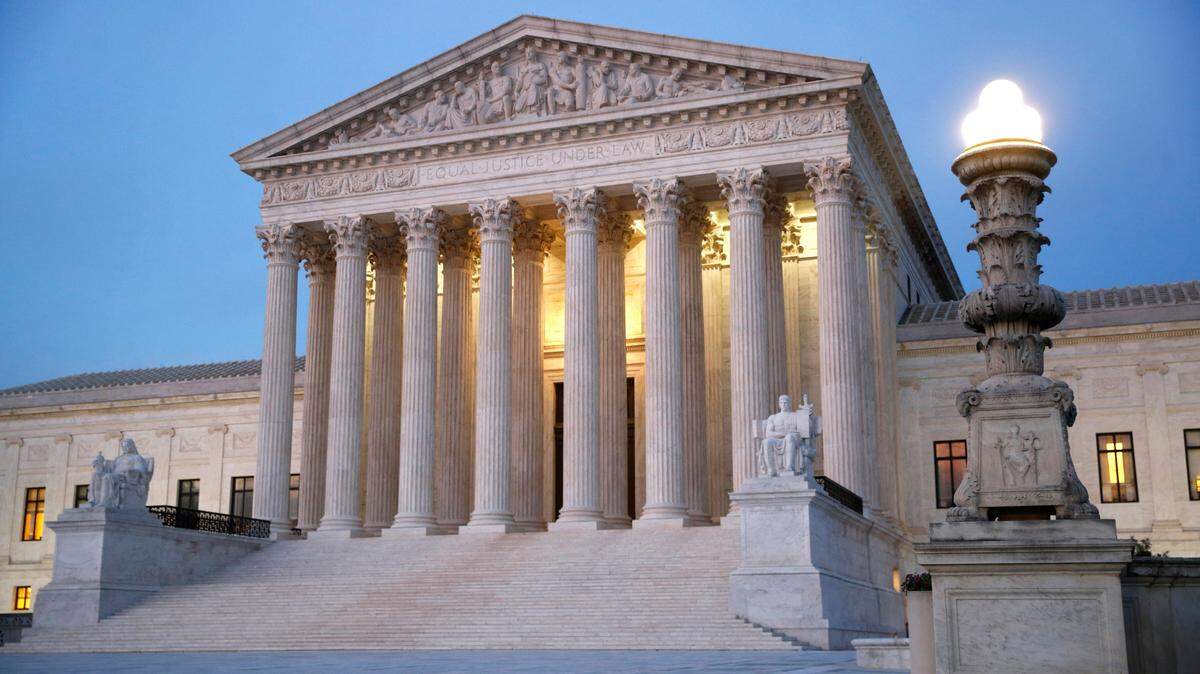
The U.S. Supreme Court announced this week it will hear a case involving a Fort Worth couple’s adoption of a Native child that experts say has the ability to undermine Native American sovereignty.
On one side of the legal case stand Native American tribes, child welfare groups and the Indian Child Welfare Act, a federal law designed to prioritize Native American families in the adoption of Native children. On the other side of the case, which originated in Fort Worth in 2017, are the Fort Worth couple and three states, including the state of Texas.
The Indian Child Welfare Act, or ICWA, gives priority in adoptions of Native American children to Native families. The law was created in 1978 to protect Native American families and children from disproportionate separation rates. Native American tribes are sovereign nations, and ICWA serves to coordinate child welfare cases between those sovereign nations and state welfare agencies.
“In a coordinated, well-financed, direct attack, Texas and other opponents aim to simultaneously exploit Native children and undermine tribal rights,” The National Congress of American Indians said in a statement on its website Monday. “Their goal, weakened protections for Native children, would be a certain outcome of dismantling ICWA, clearing the way for bad actors to grow their control of Native land, Native industry, and Native futures.”
Chad and Jennifer Brackeen, an evangelical white family in Fort Worth, applied to adopt a child they had fostered for 16 months who is a member of the Navajo and Cherokee nations, according to the federal lawsuit. The Brackeens were eventually able to adopt the child, but pursued a lawsuit against the Indian Child Welfare Act under the argument that it is based on racial discrimination.
The Brackeens’ case has gained national attention and is the subject of the podcast “This Land” by Crooked Media and journalist Rebecca Nagle. Since the couple first filed a lawsuit in 2017, the Brackeen family successfully adopted the child, referred to as ALM in court documents. In 2019, the Brackeen family began to seek custody of ALM’s biological sister.
While this specific case may have originated with the Brackeen family, experts say opponents to ICWA — mostly made up of several corporate law firms and private adoption agencies — have been trying to dismantle the law for years. The Brackeen case has become about far more than ALM’s adoption, experts say, and a Supreme Court ruling on the case could have far-reaching ramifications for Native American sovereignty.
“If ICWA is ruled to be unconstitutional,” said Nagle, a reporter who has been investigating the Brackeen case since 2017, “It could be the beginning of the end for tribal sovereignty.”
The Brackeens and their attorneys could not be reached for comment.
Adoption of ALM
In a video posted by the Texas Attorney General’s Office in 2019, the Brackeens talked to Attorney General Ken Paxton about ICWA and their experience fostering and adopting ALM.
In the video, Chad Brackeen said the couple started fostering in 2014 due to a profound calling from God. The Brackeens, who had two biological children at the time, fostered their first child in 2015, according to a post on Jennifer Brackeen’s blog.
In June 2016, a case worker assigned 9-month-old ALM to the Brackeens’ Fort Worth home and told the Brackeens they would likely foster him for about 10 months.
During that time, ALM’s parents had their parental rights revoked due to drug problems. The adoption agency found a tribe member, who was not related to ALM, who was deemed suitable to adopt him. However, the Brackeens had decided they wanted to adopt ALM.
In her blog, Jennifer Brackeen talked about the decision to foster and, eventually, to adopt ALM.
“After a year in our home, we decided to fight for our little man,” she wrote in a 2020 blog post. “He thought we were his family... and we thought the same.”
The Brackeens first filed for custody of ALM in July 2017, but the court ruled against them since there was a Native family in New Mexico who was able to adopt him. The Brackeens appealed and were backed in the subsequent lawsuit by Texas. Before the case went before the next court, the Native family pulled out of the adoption and the Brackeens were granted custody of ALM.
In January 2018, the Brackeens finalized the adoption of the toddler. However, they continued to pursue the case alongside two other families who say that ICWA hindered their adoption processes and caused them harm.
“We understand that culture is important and the historic tragedy of Native families being separated,” Chad Brackeen said in the video. “But at some point, the repeated breaking of attachments has to outweigh those benefits.”
The case was further complicated when ALM’s birth mother gave birth to another child in 2019. The Brackeens sought to adopt the baby, but the baby’s great-aunt, who is a Native American tribe member, also wanted to adopt her. The Brackeens took the case to family court. In March 2019, Tarrant County Judge Alex Kim ruled in favor of the Brackeens and against ICWA, according to the Austin American-Statesman, going against federal law. Kim ruled the state’s requirements in ICWA were unconstitutional.
The custody case of ALM’s sister is still ongoing. In a May 2019 hearing, the baby’s great-aunt testified that she wanted to adopt her.
When asked why, she answered, “Because I love kids,” according to court testimony, “and when I saw her picture, I started loving her.”
What is ICWA?
To understand ICWA requires a look back through several generations, said David Simmons, the director of government affairs and advocacy for the National Indian Child Welfare Association, or NICWA.
Since the 1800s, Native American children have been forcibly separated from their families and tribes, first through boarding schools and then through removals by state welfare programs. According to NICWA, 25-35% of all Native children were being removed from their families prior to ICWA; of these, 85% were placed outside of their families and communities even when fit and willing relatives were available.
In response, the federal government passed a series of regulations for state welfare agencies to follow when working with Native American tribes. The ICWA regulations, such as requiring state agencies to involve the child’s tribe and the child’s parents in case proceedings, aim to keep Native American children within their communities when possible.
“ICWA recognized that Native children are best served and understood by Native communities and tribal nations,” Simmons said. “It is understood (ICWA) needed to put checks and balances on things that were happening in these child welfare systems to make sure they didn’t continue to happen.”
Many states, Simmons said, support ICWA because the law helps state agencies partner with sovereign Native American tribes and help vulnerable children and families. A ruling against ICWA, Simmons said, “has the potential to unravel all of that good work... To the detriment of native children.”
Even with ICWA in place, Native children are still disproportionately taken from families, according to data from NICWA.
“What happened in these underlying custody cases shows how much bias in the system still exists,” Nagle said. “And how much bias in the system exists for white and middle class families.”
History of the case
The Brackeen case has several layers. What began as a custody case in 2017 now focuses on the alleged damages the Brackeens, and other families, say they faced because of ICWA in their adoption process. Texas, Minnesota and Indiana joined the case when it was appealed.
The Brackeens, joined by two other families involved in ICWA cases in their home states of Indiana and Minnesota, pursued the case in the Texas Northern U.S. District Court in 2017. The families, who are all non-Native American, argued ICWA placed burdens on them during the adoption process and discriminated against them based on race.
The plaintiffs also argue that ICWA and its federal regulations violate the Tenth Amendment, which says the federal government cannot regulate state adoption and foster care placements. Supporters of ICWA say it does not replace state adoption regulations or foster care placements, but instead adds further protections to the existing system.
In October 2018, Judge Reed O’Connor ruled in favor of the Brackeens and ruled ICWA unconstitutional. The case was appealed.
In August 2019, the Fifth Circuit Court of Appeals ruled on the Brackeens’ case. The ruling was split on a variety of policies within ICWA, effectively coming to no final ruling. The court found some aspects of ICWA to be constitutional and others to be in violation of the Constitution.
Stakeholders
The public opponents of ICWA are made up of a handful of large corporate law firms, private adoptions firms and a select number of politicians, including Texas Attorney General Paxton. The primary arguments in the Brackeen case are that ICWA relies on race-based discrimination because it gives priority to Native American families in adoption cases involving a Native child.
However, Native American is a political status, not a race, according to legal precedent. ICWA, like other federal laws, is based on the understanding that Native Americans are part of a sovereign nation, Simmons said.
The Goldwater Institute, a conservative think tank backing the families in the Texas v. Haaland case, claims ICWA potentially harms Native children who are in unsafe conditions. The Goldwater Institute has been involved in at least 13 adoption ICWA cases, according to its website, and declared in a blog post it has “done more work on this issue than any other group nationwide.”
Throughout the case’s history, 486 Tribal Nations, 59 Native organizations, 31 child welfare organizations, 26 states and the District of Columbia and 77 members of Congress have offered support for ICWA in court filings.
In a brief filed in support of ICWA, 11 child welfare groups said ICWA’s standards have “exemplified evidence-based best practices in child welfare.”
“These supporters recognize that ICWA is firmly in the best interests of Native children,” The National Congress of Indian Americans said in a statement Monday. “In keeping them connected to their extended family and cultural identity, the positive outcomes are far-reaching and include higher self-esteem and academic achievement.
The defendants in the case are the United States, Cherokee Nation, Morongo Band of Mission Indians, Oneida Nation, Quinault Indian Nation and the Navajo Nation, the United States Department of Health and Human Services, the Bureau of Indian Affairs and the United States Department of the Interior.
This story was originally published March 3, 2022 at 1:11 PM.