How UT Arlington will use AI to capture New World screwworms
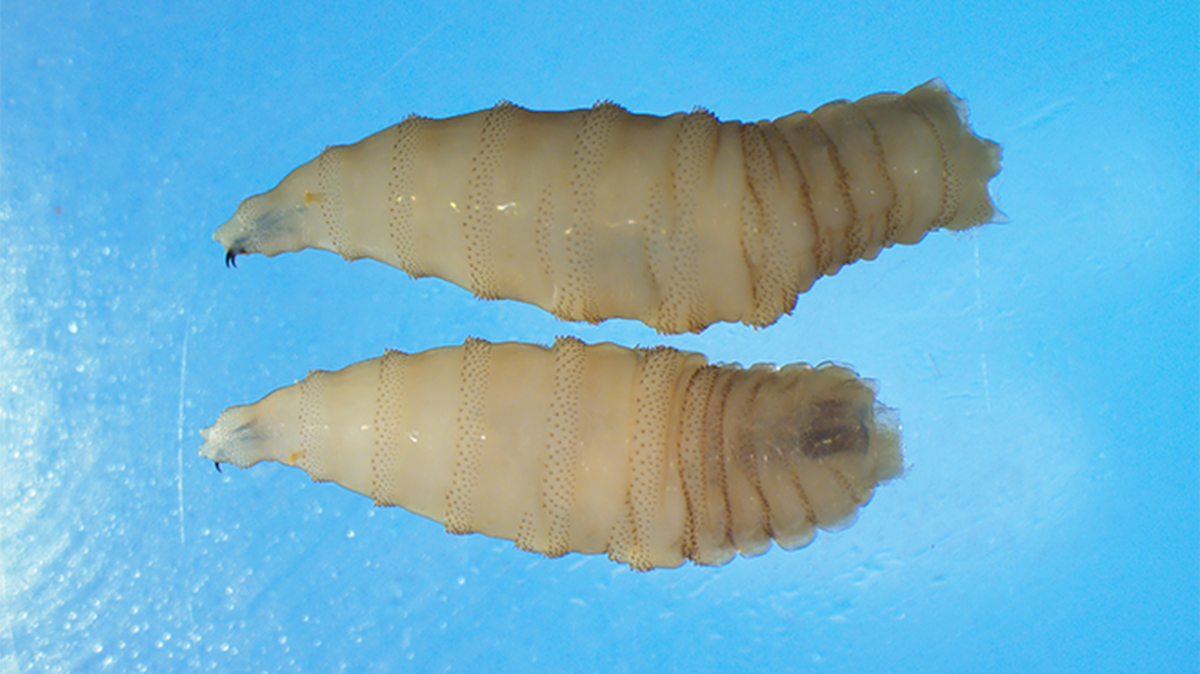
The University of Texas at Arlington received a grant from the U.S. Department of Agriculture to tackle New World screwworm, the parasitic fly that has spread from South America to Texas, Gov. Greg Abbott announced Thursday.
UTA’s project was one of 40 funded by the USDA, which distributed a total of about $105 million in funding. UTA’s project will focus on screwworm surveillance.
UTA’s funding will go toward building a “smart trap,” that can recognize wild screwworm flies and trap them for further study, said Shouyi Wang, Ph.D., an associate professor at UTA. In particular, the trap will have an AI-camera that can recognize whether a fly is wild or sterile and whether it is male or female. This will allow the smart trap to capture wild, female flies, which are the flies that spread the infected larvae. The smart trap will build on a previous trap Wang developed that used AI to recognize fruit flies, he said.
UTA will be the core developer of the smart trap, Wang said, but they will also work with other collaborators.
Wang said he expects to have a prototype of the smart trap ready by next spring.
“Texas is no stranger to the New World screwworm threat and we are prepared to push this danger out of our state for good,” Abbott said in a statement. “These grants will empower Texans on the front lines to eradicate the screwworm and protect our livestock industry.”
The New World screwworm is a flesh-eating maggot that was previously declared eliminated from the U.S. in 1966. Recently, it has been detected in at least 12 animals in the U.S., most of those in Texas, according to the USDA’s dashboard of cases.
An infection occurs when an infected fly burrows, or “screws,” into the flesh of warm-blooded animals. The flies are attracted to, and lay eggs in, open wounds. The flies can also lay eggs in “body cavities with mucus membranes, such as the nose, ears, eyes, or mouth,” according to the U.S. Centers for Disease Control and Prevention. If left untreated, infections can be fatal.
“They will burrow or screw into healthy tissue and actually eat into the healthy tissue,” said Dr. Varun Shetty, the chief state epidemiologist for the Department of State Health Services, during a public health meeting earlier this year. “That can cause a lot of pain and then a lot of secondary problems, secondary infections that can lead those animals to become very, very sick.”
This story was originally published June 18, 2026 at 12:55 PM.