‘Whose children are we harming?’ Arlington council to vote on gas wells near daycare
When she opened Mother’s Heart Learning Center in east Arlington 18 years ago, Wanda Vincent had a clear mission. She wanted to provide a safe, nurturing environment for kids and to be their “home away from home.”
Now, she worries the expansion of natural gas drilling at the property next door could be putting her children in harm’s way.
“We put up with the dust, we put up with the loud noise. It wakes our babies up from nap time,” Vincent told members of Arlington’s planning and zoning commission last month. “Can we promise these children 10, 20, 30 years from now that you can be healthy, that you can be safe?”
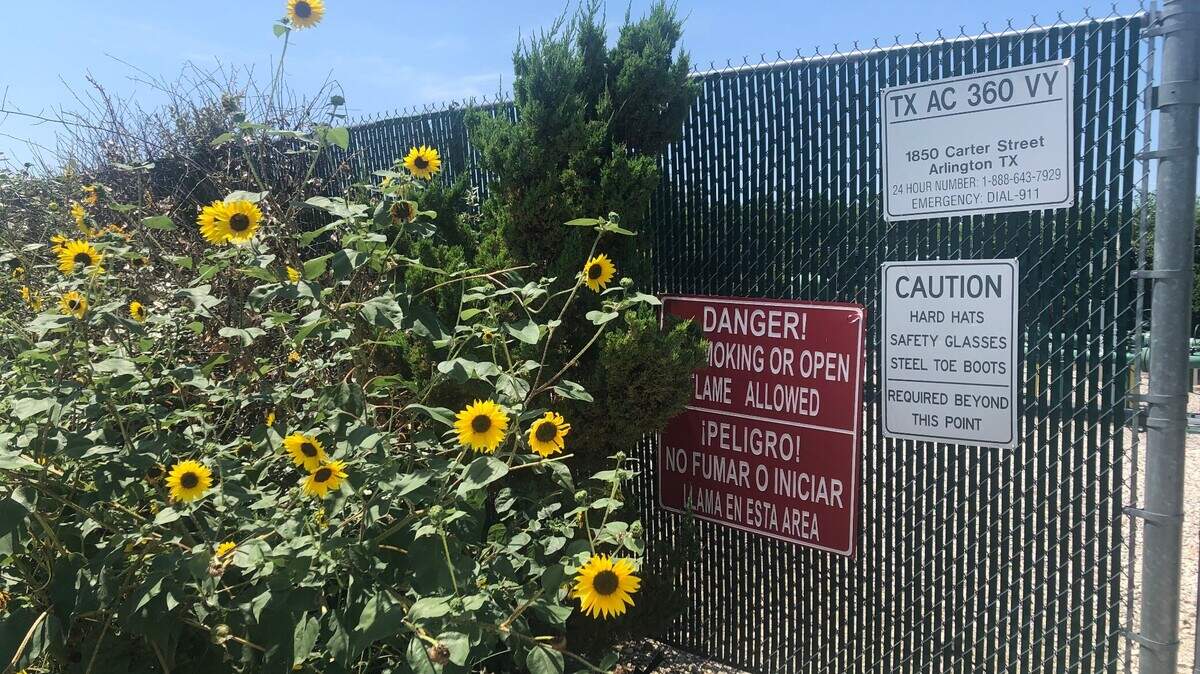
Shortly thereafter, the commission voted 9-0 to approve French energy giant Total Energies’ request to drill three additional gas wells at its AC360 site, located at 2000 South Watson Road. The permit request was filed under Total’s Fort Worth branch, TEP Barnett.
Hundreds of residents, including dozens living outside of Arlington, have already weighed in with letters opposing and supporting Total’s permit. The heated debate will culminate with a City Council vote Tuesday night — a case of déjà vu for the activists who successfully fought Total’s attempt to expand drilling at the same site nearly 18 months ago.
A lot has changed since Arlington’s City Council voted 6-3 to deny Total’s request to expand drilling in June 2020, including four new members elected since last fall. The decision earned national media attention and reinvigorated concerns about childhood asthma, leukemia and birth defects associated with drilling near schools and daycare centers.
During a public hearing last year, council members responded to residents worried about health risks, particularly in communities of color hit hard by COVID-19, said Ranjana Bhandari, executive director of the environmental advocacy group Liveable Arlington. Those arguments should remain just as compelling now, she added.
“That last council had some members who were very ardent supporters of fracking, and even they found this one problematic,” Bhandari said. “I want them to remember that last year, they committed to working more seriously on racial equity in Arlington. Here’s an opportunity for them to make good on that promise. 100% of these toddlers (at Mother’s Heart) are children of color.”
Since Total assumed ownership of the drill site in 2016, the company has operated it in a safe and environmentally responsible way that is compliant with local and state requirements, said TEP Barnett spokesman Kevin Strawser.
Three new wells will be placed more than 600 feet from all “protected uses,” which includes buildings like schools, hospitals and homes, Strawser said. The company is also using an electric-powered rig required by Arlington officials, which further reduces emissions from the drilling process, he added.
“Our team members and families live in the communities throughout the DFW region, and we work diligently to ensure the safety and quality of life for all our neighbors near every one of our sites,” Strawser said in an email. “We look forward to discussing the drill zone and the natural gas well permits with the City Council and the public at the November council meeting.”
Arlington officials have openly expressed anxiety over potential legal action from oil and gas companies if the council does not approve permits that meet all technical requirements.
House Bill 40 — adopted in 2015 as a response to Denton’s fracking ban — prohibits cities from banning drilling within city limits and from implementing any regulations that are not “commercially reasonable.” Typical city regulations include issues like noise control and the distance between a drill zone and another building.
Arlington has already implemented regulations on how companies drill near daycares. Since March, operators have been required to measure 600 feet between the daycare building or the area designated for a playground and the drill zone. Previously, drillers did not have to include playground space in their measurements and, in some cases, could drill less than 300 feet away from play areas if they received a waiver.
Dr. Ignacio Nuñez, a member of the planning and zoning commission, served a term on City Council and voted in favor of Total’s permit request in 2020. He approved it again last month, explaining that his personal opposition to fracking could not outweigh his desire to keep Arlington out of an expensive lawsuit that he said the city would likely lose.
“How much harm is going to happen if we take $500,000 from the people of Arlington that really need it?” Nuñez said during the meeting. “The real power is going to be at City Council. If City Council says no, I fear what comes next.”
He added that Total is “playing the game” by changing its drill zone shape from a rectangle to a “little weird trapezoid” that is further away from Mother’s Heart. The shape of the drill zone, which outlines where the company seeks to drill gas wells, may come into play when the council prepares to vote on Tuesday night.
In a city staff report, Arlington officials state that Total’s proposed drill zone is less than 600 feet from protected buildings. In that case, seven council members, or a supermajority, must approve the permit for it to move forward.
However, Total has agreed to limit all future wells to areas that are more than 600 feet away from protected buildings, according to the staff report. With that in mind, council members could modify the size or shape of the drill zone to include only those sections and approve Total’s permit with five votes rather than seven, per the staff report.
Before the council votes, they will hear from community members in what is expected to be an emotional public hearing. More than 300 people have submitted letters opposing Total’s expansion, while 189 others sent letters supporting Total’s expansion. Many supporters said they were royalty holders with the company and stood to benefit financially from more drilling.
Sixty-nine parents who send their children to Mother’s Heart signed a petition voicing concerns about health risks resulting from natural gas production, Bhandari said. If Total’s request is approved, the company will begin drilling in January and continue for at least six more months, according to permit documents.
“The elephant in the room is environmental justice,” Bhandari said. “Whose children are we harming?”
Rosalia Tejeda, a mother of three who lives in the neighborhood adjacent to the east Arlington drill site, said she moved to Texas from New York because she was “running away from pollution.” She told the planning and zoning commission that the city needs to keep her children’s best interests in mind when voting on gas drilling.
“Just as I put a mask on my children and send them to school to keep them from getting COVID, I would do anything to keep them from getting anything: asthma, leukemia, any of the health effects and risks they run into living in a neighborhood so close to this drill zone,” Tejeda said. “I’m just mortified to think that not just my children, but everyone else’s children, can be at risk for any of these things.”
This article has been updated to reflect the number of council members elected since June 2020.
This story was originally published November 29, 2021 at 5:00 AM.