She had federal protection from eviction. Why was this Arlington woman forced out?
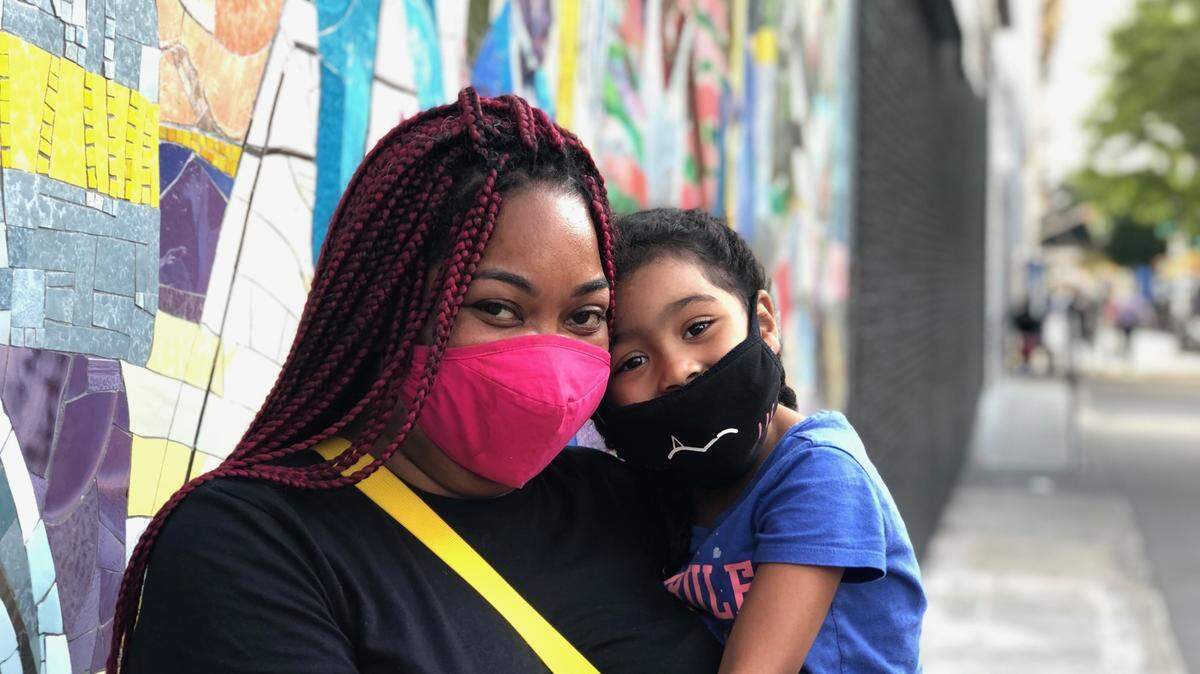
Alexys Hatcher found a surprising note on the door of her Arlington apartment Wednesday afternoon. It warned she had to be out within 24 hours, or a constable would remove all her belongings and place them on the curb.
“I kind of thought,” Hathcher said, “I was like in the Twilight Zone.”
But this was real. On Thursday afternoon, Hatcher, a 31-year-old single mother, was forced out.
It was a sign of new troubling circumstances for Texas renters. Just few weeks ago, Hatcher’s eviction was suspended when she filed a federal renter protection known as the CDC declaration. The difference now is Texas judges were recently advised not to enforce the declarations, even though the federal government still considers them valid. Meanwhile, tens of thousands of renters, including Hatcher, started applications for rental assistance from the state but have not received anything.
“I’m following everything ordered for me to do by the judge in my original hearing in January. Here it is in April, and we’re still waiting on funding from the state,” she said. “I feel like I’m in limbo. What am I supposed to do?”
Until last week, Texas renters affected by the COVID-19 pandemic counted on the CDC declaration for protection from evictions. Passed in September through a President Donald Trump executive order, it allowed renters throughout the United States who meet certain criteria — such as having lost a job or lost wages — to suspend evictions by filling out a declaration. The Biden administration recently extended the order’s expiration date until June 30.
When the CDC declaration was first passed, the Texas Supreme Court filed an emergency order, outlining enforcement procedures. Texas tenants could give the declaration directly to their landlord or, if an eviction had been filed against them, turn in copies to their landlord and to a Justice of the Peace Court. Although tenant advocates claim the declaration has many flaws, it is basically the only defense for Texas renters affected by the pandemic.
In January, Hatcher filed a CDC declaration, and her eviction case was suspended. (She had lost her retail job last summer and was still behind on rent in the fall despite finding a new job.) In February, she says, she applied for rent assistance from the state, which had just set up its statewide rent relief system that month.
Despite having $1.3 billion in federal funding, the Texas rent relief program had provided payments to just 250 households by the end of March, according to a study by the House Committee on Urban Affairs. About 175,000 households had started applications but not received anything, held up by paperwork requirements, software problems, and long wait times to communicate with the staff managing the program. Hatcher’s application got sidetracked, she says, when she could not get a copy of her lease from her landlord. Still, she believed she was protected by the CDC declaration while she waited.
Then, on March 31, the state Supreme Court let its emergency order lapse. Without the Supreme Court’s backing, the Texas Justice Court Training Center, which advises the Justice of the Peace courts that oversee evictions, recommended JPs stop enforcing the CDC declaration. It also advised them to schedule hearings for renters whose evictions had previously been abated. (JPs are not required to follow the Justice Court Training Center’s recommendations.)
“They have basically said the CDC order is no longer a valid defense in Texas,” said Mark Melton, an attorney who has assisted renters through his organization Dallas Evictions 2020 and sent a letter with other organizations challenging the Justice Court Training Center’s guidance.
On March 31, Hatcher got an email from Tarrant County Justice of the Peace Mary Curnutt scheduling a “CDC reset.” At the virtual hearing, Hatcher says Curnutt explained she could no longer accept her CDC declaration, and the matter was between her and her landlord. (Curnutt’s office did not respond to a voicemail or email requesting an interview).
After the hearing, Hatcher says her landlord requested a writ of possession to evict her out of the apartment, even though she had been covered by the declaration. According to federal guidance, a landlord may not evict a person covered by the declaration out of a home. Anyone who violates the order may be prosecuted by the Department of Justice and receive fines or a jail sentence. (Staff at Hatcher’s complex, Dolce Vita at Three60, did not respond to an interview request.)
When the constable came on Thursday afternoon, Hatcher showed her CDC declaration a final time. She says the constable called the court and then proceeded with the eviction, warning the landlord about potential punishments if they were not following the rules of the CDC order.
Soon, Hatcher’s possessions were all over the grass. Her uncle later rented a U-Haul and they went to a storage facility.
Curnutt scheduled several CDC declaration status hearings this week, and Melton said he saw a Dallas County JP doing the same. Hatcher, however, appears to be the first Tarrant County person evicted after previously being covered by the declaration. Melton says the number could rise, especially if the pace of rental assistance payments from the state does not pick up.
“What could happen and what likely will happen is we’re about to see a whole lot of people protected by the federal (CDC order) get evicted anyway,” he said.
As of Thursday night, Hatcher didn’t know what she would do next. She was thankful she had sent her 5-year-old daughter, Aliyah Grace, to stay with a relative for the day, but she was already dreading telling her what happened.
“It’s going to be hard,” Hatcher said, “to explain to a 5-year old why we’re not in our house anymore.”
This story was originally published April 9, 2021 at 8:59 AM.