Black pastors say UNTHSC made a crucial mistake in Tarrant County vaccination effort
Leaders representing numerous Black churches in Tarrant County say the county and the UNT Health Science Center never tried to work with them on COVID vaccination efforts, despite a mission to reach vulnerable populations.
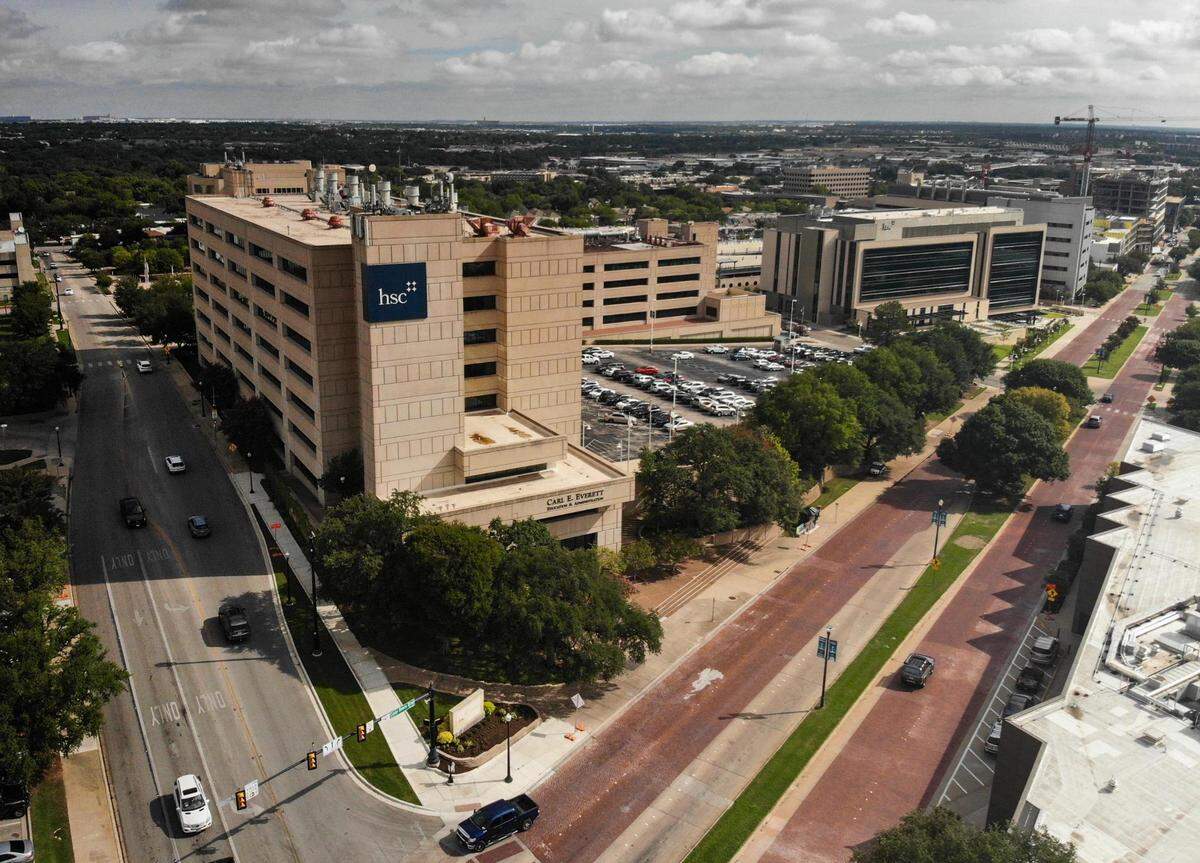
In early 2021, the county tasked the UNT Health Science Center with vaccinating Tarrant County’s most vulnerable residents, which included homebound people and residents of color. A Star-Telegram investigation, published at the end of September, found that the center’s efforts fell far short of its mission in several areas.
The vaccination project, which used more than $7 million of the county’s federal COVID relief funds, laid out a vision to administer more than a quarter of a million vaccines. But the center ultimately administered just 23,265 vaccines, less than 10% of what the center envisioned. The vaccinations that were administered also did not significantly reach Black residents; while the county’s population is 18% Black, 11% of the center’s vaccinations went to Black residents.
In the end, the county and the center stopped the project two months prematurely, which officials said was largely due to a lack of demand for the vaccines.
But some Black pastors told the Star-Telegram that the county and the center never asked to work with them to reach Black neighborhoods — and that they hadn’t even heard about the center’s vaccination program.
Pastor Michael Bell, of Fort Worth’s Greater St. Stephen First Church, said he hadn’t heard of that effort until a Star-Telegram reporter asked him about it.
“If the intent was to reach the underserved communities, then they failed miserably and they failed, really, in their first step,” Bell said. “They did not promote it, we have not heard of it. What else are they going to do? They have to end it prematurely.”
Pastor Patrick Moses, of Fort Worth’s First Missionary Baptist Church, similarly said he hadn’t heard of the center’s 2021 vaccination project until he read the Star-Telegram investigation.
He said the Health Science Center made a critical error by not reaching out to Black churches and working with them to increase vaccine uptake, because of how ingrained many churches are in their communities and neighborhoods.
“That’s community ignorance,” Moses said. “It might be 25 people in the congregation, but those 25 people have grandchildren and great-grandchildren and other folks, and we can spread the word.”
He suggested that the people who led the outreach portion of the center’s vaccination project “ought to find employment elsewhere.”
Pastor Parish Lowery, at Greater Friendship Missionary Baptist Church in Fort Worth, said he never heard from the Health Science Center either — even though he’s also the president of the Fort Worth Baptist Ministers Union. That organization includes 40 to 50 Black churches, Lowery said.
“No one ever contacted us,” Lowery said. “It would’ve been a really easy connect.”
The UNT Health Science Center’s spokespeople did not respond to several requests for comment for this story.
Magaly Ayala, a spokesperson for the Tarrant County Public Health Department, pointed to the county’s partnerships with numerous community organizations, school districts and churches. Ayala said the county’s goal, both when the vaccines first became available and now, is to “remove any barriers preventing vaccine access.”
She also noted that the county’s website still features a page where community members can request pop-up vaccination clinics for either public or private events. That form has been open since 2021, Ayala said.
But those efforts exist at the county level, outside of the contractual work that the Health Science Center performed on behalf of the county. And that work, some community leaders say, still failed to reach its target audience.
Bell, of Fort Worth’s Greater St. Stephen First Church, believes that the center’s lack of outreach led directly to its low vaccination numbers and ultimately caused the county and the Health Science Center to end the contract early. The center attributed the low vaccination numbers to high general availability of the vaccine and to a lack of interest among the targeted populations.
But by attributing the low turnout in part to a lack of demand, Bell said he feels that the center was essentially blaming Black residents for not signing up — even though they might not have even known about the effort.
“When they cancel the program for lack of response, then the onus falls on us. And here we are saying, ‘What in the heck has gone on?’ because we haven’t heard anything about it. So what did we not respond to?” Bell said. “It really paints an erroneous picture of the community.”
Both Bell and Pastor Kyev Tatum — a community activist and the pastor of New Mount Rose Missionary Baptist Church in Fort Worth — said the lack of communication or outreach also results in the Black community’s increased mistrust of medical and governmental institutions, which have historically under-served and discriminated against people of color.
Tatum, who leads a group of pastors called the Ministers Justice Coalition of Texas, said he did hear from Tarrant County’s public health department early in the vaccination efforts. But he said the department and the Health Science Center didn’t follow through to coordinate a clinic or other outreach. (Ayala said the public health department did reach back out in 2021, but couldn’t get in touch with Tatum.)
After reading the Star-Telegram investigation into the county-Health Science Center efforts, Tatum published a news release critical of the work.
By not widely partnering with Black churches, the center sent a message to congregation members, Tatum said. “Here’s what the people said: If you don’t trust the people we trust, we’re not gonna trust you. Because there’s gotta be something wrong, when you don’t trust the people who are helping us the most,” Tatum told the Star-Telegram.
The lack of outreach “widens the chasm,” Bell said.
Other advocates
Two other prominent people in local Black and Hispanic communities also told the Star-Telegram that the Health Science Center never reached out about the vaccination efforts.
Roxanne Martinez, who is now a Fort Worth school board member, spent much of the pandemic organizing pandemic assistance events for her Diamond Hill neighborhood, which is majority Hispanic. She said the center did not reach out to ask about partnering or to gauge community need.
Estella Williams, president of the Fort Worth-Tarrant County chapter of the NAACP, also said she and her organization did not hear from the Health Science Center. The NAACP — which has more than 400 members, according to Williams — wouldn’t have been able to hold a vaccine clinic on-site due to national guidelines that the offices stay closed. However, Williams said, the organization could have helped spread the word about the center’s clinics and related efforts.
“We could have easily publicized it,” Williams said. “Depending on … how they wanted to handle it, it would have been something that we could have worked with them to try and initiate something as a partnership.”
Churches that did work with HSC
Two churches that did work with the Health Science Center both reported delays on the first day of their clinics.
In the summer of 2021, the center hosted a vaccine clinic at All Saints Catholic Church, in Fort Worth. The church’s now-business manager, Deacon Rick De Leon, said he stopped by the clinic partway through the first of its two days. When he walked in, though, he was told that the clinic had not yet vaccinated anyone, because clinic organizers didn’t have the proper drugs on hand in case of any adverse patient reactions.
“They came to offer the vaccines and then they were not able to, so from that standpoint it was not well-planned,” De Leon said.
According to internal reports from the Health Science Center, the center administered 32 vaccines at the All Saints clinic.
Also in the summer of 2021, the center hosted a clinic at Como First Missionary Baptist Church in Fort Worth. Ella Burton, who works as the office manager at the church, said there was a similar delay at that clinic. On the first day of the two-day clinic, Burton said, there was about an hour-long delay because the clinic staff did not have the drugs needed in case of any adverse patient reactions.
Some people who had appointments waited during the delay, Burton said, while others left and were told they could return later.
Aside from that delay, Burton said the clinic went smoothly, although turnout was low.
“They did a super job,” Burton said. “They came at the tail end when things were really settling down, so they may not have had as many as they expected or wanted. … My heart went out to them because that was July of last year, so things had calmed quite a bit.”
The Health Science Center’s internal reports show that 35 vaccinations were administered at the Como First Missionary clinic.
About half of the vaccinations that the center administered did come from another church-affiliated site. The Ebenezer Missionary Baptist Church/Brighter Outlook vaccine clinic, in Stop Six, administered 11,265 vaccinations, according to HSC documents.
The center’s internal reports also list Arlington’s Cornerstone Baptist Church as a vaccine site. The center reported in one document that it administered 39 vaccines at that church; in another of the center’s documents, the church is listed by its address on Matlock Road.
However, a representative of the church said Cornerstone has not worked with the Health Science Center and did not hold a clinic in partnership with the center.
The center’s spokespeople did not respond to questions about this clinic.