‘Two beautiful souls.’ Fort Worth family loses father, son to COVID-19, 11 days apart
Henry and Johnny Lee Lopez always had a special connection within their four-person family, a bond between a father and his only son closer to that of best friends. Circumstances in life brought them even closer.
Johnny Lee learned in elementary school that end-stage renal disease was the reason his legs and knees ached with pain, and why he no longer could keep up with classmates in his favorite sport, baseball. For a big chunk of his adolescence, until he got a kidney transplant at 15, he endured eight- or 10-hour dialysis treatments every night that did the work his kidneys couldn’t. He lay on their couch, tubes in his stomach connecting him to the small machine that sustained his life but robbed him of energy. His father often sat by his side, trying to think of ways to help him.
Henry would come home with new video games to distract him from the pain and solitude of his treatments. He pulled him out of school on days he didn’t feel good to get an Eggs Over My Hammy sandwich at Denny’s, not always with the approval of his mother, Maria Lopez Sr.
They were alike in so many ways, Henry’s daughter, Maria Rosales, told the Star-Telegram. The pop culture Henry loved — from Bruce Lee, his son’s partial namesake, to the classic rock and MoTown of his youth — Johnny Lee grew to love too. They were both lighthearted but deeply empathetic people, Rosales said, shaped in part by tough childhoods. They had contagious laughter.
“My brother, he had my dad’s disposition,” Rosales, 34, said over the phone. “He was always positive and very cheerful.”
In late October, Henry, 54, started to feel like he had the flu, with a fever and chills. He and the rest of the family at first believed his own diagnosis, feeling assured they had been taking precautions, until he started to show signs of something more. He lost his appetite and had trouble breathing.
He tested positive for COVID-19, along with everyone else who lives in their home, including the 29-year-old Johnny Lee, 52-year-old Maria and her 79-year-old mother, Victoria Hernandez. Maria lost her sense of taste for one or two days, and Victoria, who has diabetes, had a minor cough.
But the father and son developed pneumonia.
“And it just worsened for them,” Rosales said.
Maria took Henry to Texas Health Harris Methodist Hospital on Nov. 4 as his breathing became more labored and he told family he could see bright lights, scared it meant he was going to die. Four days later, Johnny Lee went to John Peter Smith Hospital, a mile and a half away in Fort Worth, because his fever hit 104 degrees.
Henry showed signs of progress but Johnny Lee got worse, immediately needing to be moved to the ICU, and at the end having to go back on dialysis because his kidneys were failing. He died on Nov. 23.
His father, though it at times seemed like he was going to make it, died 11 days later.
‘My foundation crumbled beneath me’
Stories like the Lopez family’s have become a chillingly familiar part of the coronavirus pandemic in the U.S., from a Dallas-area family mourning four loved ones in six weeks to NBA star Karl-Anthony Towns announcing seven of his family members have died. The stories show the human toll behind more than 323,000 American deaths, more than were killed during World War II.
They also illustrate the hard reality that — though somewhere around 98.5% of COVID patients may survive — that number can rise within some circles, because of health factors or reasons unknown.
More than 1,000 residents of Tarrant County have died of the coronavirus as of last week, with each death an absence and a new normal not reflected in the data.
Losing Johnny Lee, Rosales said, meant realizing plans have been upended — the assumption she would share the milestones of life with her brother, to grow old enough to one day say goodbye to their mother and father when it was their time.
Losing her father was like losing a childlike feeling of safety. He taught her how to throw a baseball, change a tire, put oil in her car. He showed her how to drive at 11, in their boxy white minivan, as she moved at a crawling pace in the empty parking lot of Mount Olivet Cemetery, where he worked.
Rosales, now a mother to a 3-year-old son with her husband in Fort Worth, believes she has become an independent person specifically because of her father, who told her he wanted her to be strong like her mother. But she also thought he would always be there for her.
The feeling that “my foundation just crumbled beneath me,” or “half my foundation,” is perhaps the best way to describe it, Rosales said. It’s hard for her to put into words what she and her mother are going through without tears interrupting her.
“The pain my mom and I are going through, and to know there are so many families out there who are going through the same thing,” Rosales said, her voice trailing off. “It’s heartbreaking.”
Rosales, along with her uncle and aunt, Juan and Jennifer Hernandez, said during phone and Zoom interviews with the Star-Telegram they wanted to share their story in part because Texans and Fort Worth residents should understand the devastating impact the coronavirus can have. Juan, who’s Maria’s brother, said, “It’s a 99% percent survival rate, but this is the 1% right here.” The loss of “two beautiful souls,” he said.
Johnny Lee and his father were both like loyal and caring friends, and sometimes it could be hard to tell them apart, according to Juan, who grew up knowing Henry.
“To know Henry was to know Johnny Lee,” he said, “because they were one and the same.”
A father and his son
Though Henry didn’t speak much of his childhood, his family knew he never had a close relationship with his parents growing up, and it weighed on him. There were also societal pressures, living in a north Fort Worth neighborhood notorious then for its crime, to choose a path of gangs or drugs that attracted some of his peers.
Maria, Henry would say, represented his chance to escape a life that seemed destined for him. He took it.
“My dad always said if it wasn’t for my mom he didn’t know where he’d be today,” Rosales remembered. “He probably would’ve had a short life, or be behind bars.”
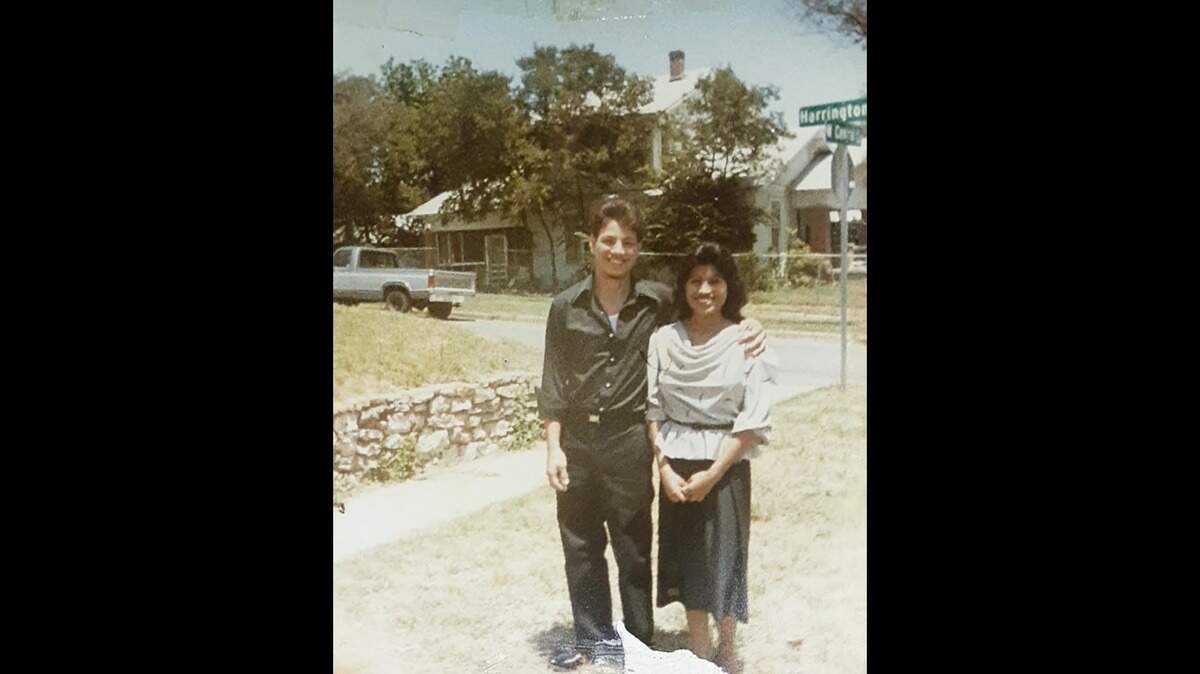
He first became friends with Maria in middle school, when he was 14 and she was 12. Rosales’ aunts and uncles remember him standing around inside of their home, with scraggly hair that fell down to his shoulders, patiently waiting to bid hello to Maria. She grumbled whenever he showed up, as if to say, “Oh, there he is,” Rosales said with a laugh.
Then there was a short period in high school when he seemed to disappear, as Rosales can recount from the tales of her parents’ courtship.
The next time Maria saw him, his hair was clean-cut, his intentions clear. He knew, Rosales said, “If he wanted my mom in his life, he had to change his life.”
After the two became a couple, he would tell Maria she was the most beautiful person he had ever seen, that he knew from the minute he saw her he had to have her in his life in some way.
They had Rosales when Maria was 18 and then Johnny Lee when she was 22.
“What made my dad really happy was, because of what he grew up with, he was able to find someone who could love him and who accepted his love,” Rosales said. “They were able to make a family together, to create the family that he lacked.”
He worked for around a decade at the Mount Olivet Cemetery as a gravedigger before he started a job at Vandervoort Dairy in Fort Worth. He told his kids he never wanted them to want for anything in life.
That was true even when, around 2001, his son’s kidney disease forced him onto dialysis.
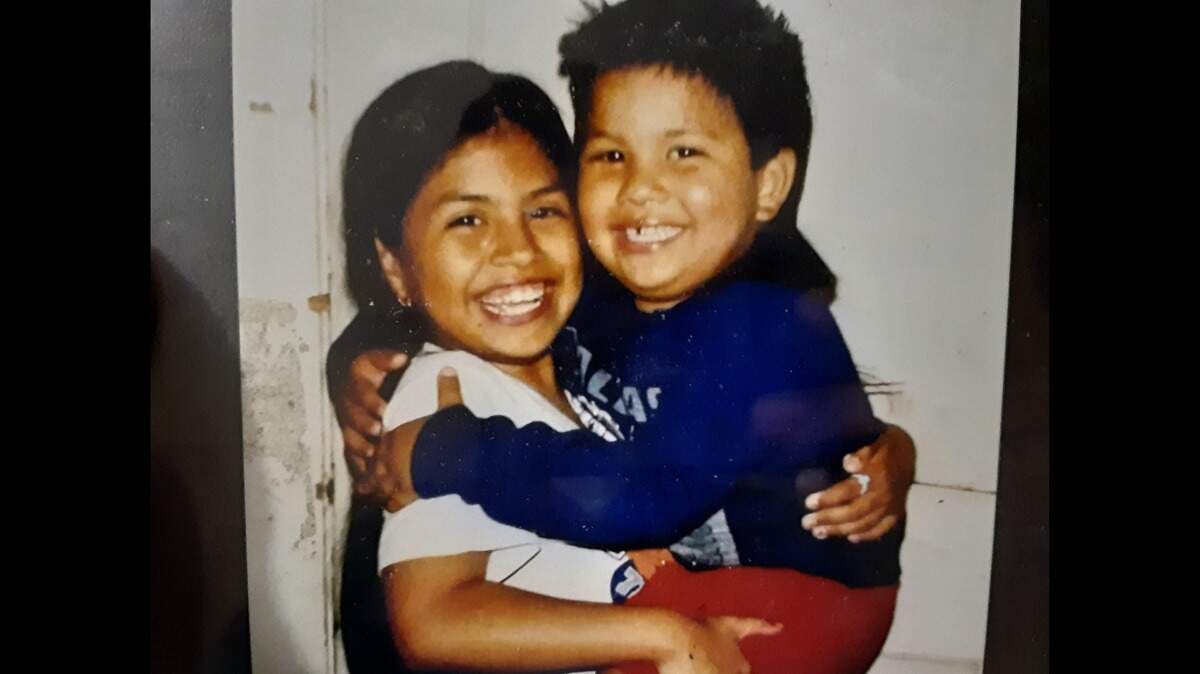
It was scary for Johnny Lee to rely on the machine each night and to go to bed with it still pumping. He hated thunderstorms, afraid the power would go out.
But his father, family said, would sit on the couch with him in the evenings to watch WWE wrestling on TV, or their favorite scary movies, or to play video games like Mario Kart or Call of Duty. He took on his son’s pain, family said, and showed him how to persevere through a lifetime of health obstacles.
Johnny Lee found purpose in family like his dad, becoming one of the main caretakers to his grandmother, and a proud uncle to his sister’s 3-year-old son.
His sister gave her son the middle name Lee, after him.
“That was one of the things he really wanted in life, was to be an uncle,” Rosales said. “He wanted to show my son a lot of things.”
‘It’s not going to be that way anymore’
After Johnny Lee was rushed to the ICU on Nov. 8, FaceTime became the main mode of communication between him and the family. He would hold his iPhone close to his face as he spoke with Maria, telling her about his condition, learning how his dad was doing. Johnny Lee and Henry were able to get in contact too.
The day Henry was moved into the Texas Health Harris ICU in late November, he spoke with his son, who was still in the ICU of JPS, Rosales said. Johnny Lee told him, “Keep fighting, keep fighting. You can do this.”
Rosales spoke with her father a little later in the afternoon, wanting to keep her composure on such a big day. But she started crying before they hung up the phone.
“I was upset with myself that the last thing he saw was me crying,” Rosales said. “I didn’t want him to worry about me on top of everything he was going through.”
Around 10 that night, they spoke again, when Henry called her. He said he couldn’t be on the phone much longer but that he was going to get better. She apologized for crying.
“It’s OK, mija,” Rosales can remember him telling her. “I just don’t want you to worry about me.”
“OK, Daddy,” she told him. “We’ll be OK, too.”
His condition steadied in intensive care over the next couple of weeks as Johnny Lee, whose immune system offered him little protection against illness, needed a ventilator to breathe. He was still able to contact his mother then, nodding in response to her questions, but soon had to be intubated. Doctors put him on dialysis toward the end as a last resort.
Maria told her father over FaceTime, even though he was sedated. She could see his eyes squeezing shut, his head shaking left and right.
Johnny Lee died two days later and Maria tried again to tell Henry over FaceTime though he was sedated. He was unable to show a reaction.
Henry declined for around two weeks before he died. Rosales saw his weight decline with each FaceTime call. She saw him struggling to breathe.
“I won’t lie, I did feel anger when my dad passed,” she said. “Because my dad was getting better at one point, and then it was just like he took a turn for the worse.”
In the two weeks since his death, the empty space in Rosales’ life still doesn’t feel real, revealing itself in the reminders in the world around her.
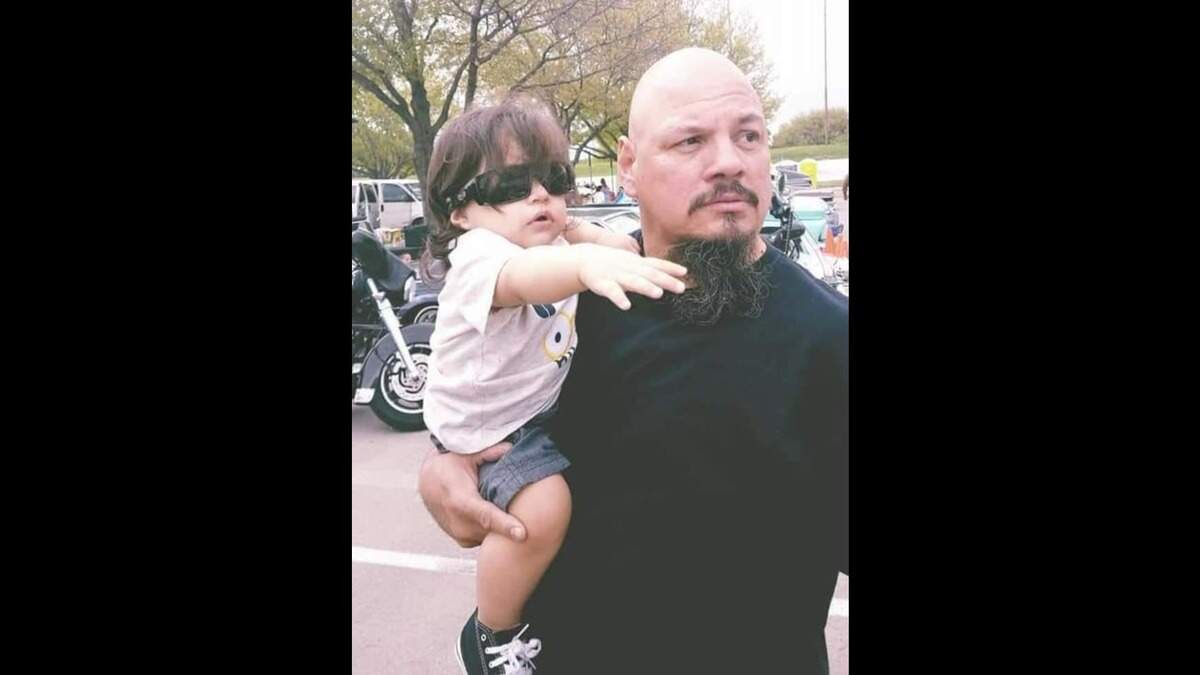
She and her son were watching a movie last week her father gifted her, the 2015 direct-to-DVD flick, “Scooby Doo! and KISS: Rock & Roll Mystery.” She was fine, for a little while, until the face-painted members of KISS started to play along to, “I Was Made for Lovin’ You.” It was one of her dad’s favorite songs, the kind of thing he would play for her in his Chevy Impala.
“I just started tearing up,” Rosales said.
Jennifer recently caught herself thinking about the next time she would go to the shooting range with Johnny Lee, who like her enjoyed firing off guns. She remembered, she said, that her shooting buddy is gone.
“I don’t know how to describe it,” Jennifer said. “It just keeps hitting you, constantly, throughout the day, a reminder that it’s not going to be that way anymore.”
‘Until it’s happened to you’
The father and son were buried in the same plot at Mount Olivet, the cemetery where Henry used to work.
Their funerals were funded in part by more than $2,200 in donations to a GoFundMe from family and north Fort Worth community members. Some of Johnny Lee’s friends he met playing video games online contributed money, a “testament to what kind of character my brother was,” Rosales said. They followed up to ask if the family needed anything.
Rosales, Jennifer and Juan told the Star-Telegram this kind of community support has meant everything, and they also mentioned the nurses and doctors of Texas Health Harris and JPS who made their situation more bearable.
Rosales and her mother still can’t say how the coronavirus came to infect their family, or who became infected first. Henry was continuing to report to work at Vandervoort Dairy, where his co-workers were preparing to give him a pin marking 20 years of work. He and Maria were going to the grocery store each week. Johnny Lee worried he caught it from a food delivery person or at a doctor’s appointment.
When Rosales thinks back to her father’s early symptoms, and how the family wrote it off as the flu, she acknowledges she wishes they had responded more seriously. But she wishes, above all else, they weren’t put in such risk in the first place.
Rosales said she has seen people talk about the low death rate, and even read “insensitive” jokes about the virus being like survival of the fittest. She has seen some arguing that COVID is overblown, or argue against the efficacy of masks, or say it’s not right to live in fear.
She also says she doesn’t like masks, which fog up her glasses, and she too doesn’t want to live in fear.
Part of why she wanted to share her story was to show taking precautions, however inconvenient, may be worth it.
“Until it’s happened to you, people won’t take notice,” Rosales said. “I feel like if people saw what I saw, maybe then they would reconsider not going into the store without a mask.”
This story was originally published December 24, 2020 at 6:00 AM.