COVID study cautious about fall projections in DFW despite decreased hospitalizations
UT Southwestern Medical Center projects coronavirus hospitalizations will continue to decline over the next two weeks in both Dallas and Tarrant Counties.
In a study released this week, UTSMC researchers predict COVID-19 hospitalizations will continue to decrease and eventually flatten to about 280 to 510 concurrent cases in Tarrant County by Aug. 25.
UTSMC has released multiple studies during the pandemic, offering analysis and projections for the North Texas region. The researchers in May correctly predicted the rise in cases and deaths if safety measures weren’t in place and again in June predicted the massive surge that struck DFW in mid-July.
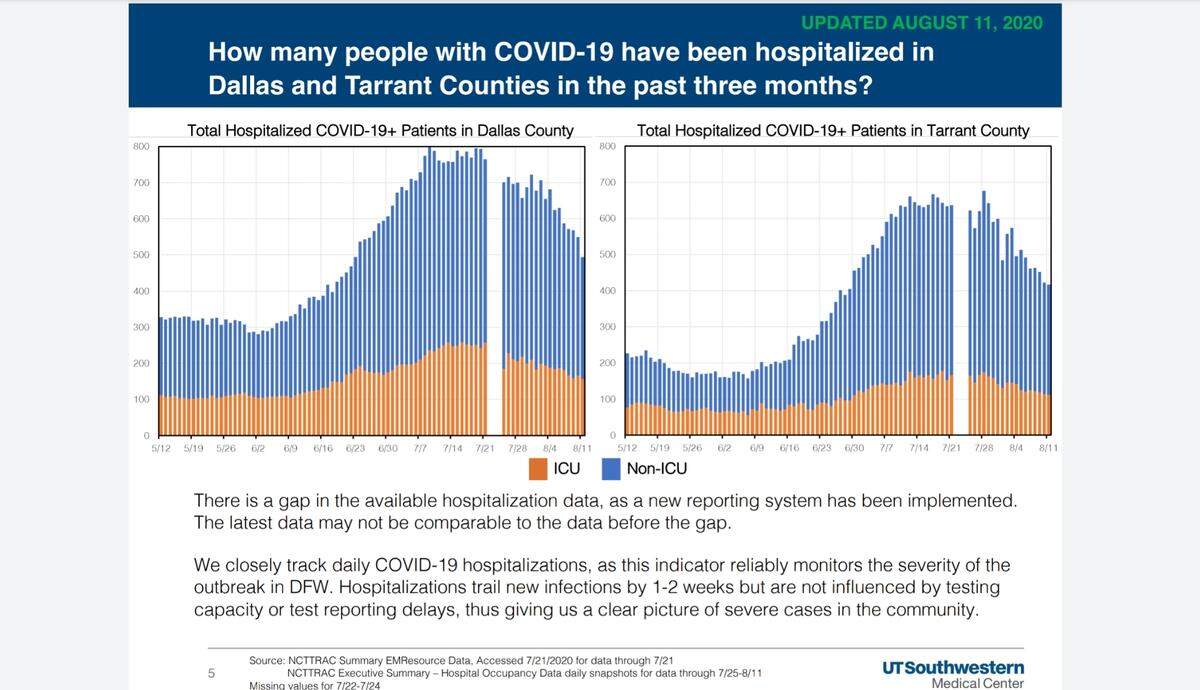
The latest study predicts COVID-19 ICU patients in Tarrant County will continue to decline the rest of August and projects about 470 new coronavirus cases a day by Aug. 25.
“In both Dallas and Tarrant Counties, hospitalizations remain high but are currently declining and are projected to continue this gradual decline over the next two weeks,” the study said. “The percent of COVID-19 tests coming back positive continues to drop but is still high enough to suggest that more infection is present in the community than can been seen through testing data alone.”
The study reports that COVID hospitalizations have declined 20% compared to the first week in August and 33% compared to the last week in July.
Researchers suggest that doctor visits for COVID-like symptoms, which they report have increased significantly, could “precede another rise in cases and hospitalizations.”
“Though hospitalizations are declining now, visits to the doctor are rising sharply, so we are watching carefully for any potential impact on hospitals,” researchers said in the report.
The study says social distancing and other prevention measures are currently 66% effective at slowing the spread of the coronavirus. If that effective rate holds steady, the study projects fewer than 500 new cases daily in Dallas County by late November. But the projections swing wildly in opposite directions if the safety measure effectiveness is slightly altered. For example, if the effectiveness rate decreases by 3%, the study projects another massive surge in daily cases — up to 1,500 a day — by October. A decrease of 5% in effective safety measures pushes the projections to more than 3,000 new cases a day by mid-October. Conversely, a 2% improvement in safety measure effectiveness would decrease daily new cases to about 100 by Nov. 20.
“It is important to remember that people arriving at the hospital today were likely infected 1 to 2 weeks ago,” the study said. ”Our collective actions now are critical to changing the course of the outbreak in North Texas.”
The study notes that hospitalization data is the most reliable way to monitor “the severity of the outbreak in DFW. Hospitalizations trail new infections by 1 to 2 weeks but are not influenced by testing capacity or test reporting delays, thus giving us a clear picture of severe cases in the community.”