‘Never-ending cycle.’ For Fort Worth woman, COVID-19 has been 2-month fight to breathe
Sandra Castro couldn’t sleep, kept awake by her gasps for breath and the fear her lungs weren’t going to make it to sunrise.
She lifted her iPhone to her face to call her husband at home.
He was the first person on the 35-year-old’s to-call list sometime around 2 a.m., before her father in Mexico and grandmother in Fort Worth. Sandra, who lives with several conditions including severe nerve damage on her left side, had spent her first six days in the coronavirus wing of Medical City Fort Worth in a medically induced coma, a ventilator delivering her oxygen. Now, she was pushing 36 hours of no sleep without one.
It felt as if her insides were tearing apart, as she would later describe it, with a persistent stabbing pain in her chest and dry coughing that ended with her spitting up blood. “Every time I breathed,” Sandra said, “I just thought, ‘This is my last breath.’”
On this night back in early April, she wanted to say goodbye to her husband, 36-year-old Manuel Castro, her high school sweetheart she met at age 13. He would have to tell their four children.
“I told, exactly, to him that I was going to die and for him to be strong for the kids,” Sandra said. “I fight lupus every day, and I fight asthma, and I fight epilepsy, and I have a clotting disorder that took my arm ... I couldn’t be tested no more. I was like: ‘How much more do I need to go through?’”
It was the fourth or fifth time she had called Manuel to say she was going to die since learning she contracted pneumonia caused by the virus 11 days earlier, a surprising diagnosis for a woman who rarely leaves her Fort Worth home, needing the aid of her walker or her crutches to get around. She hopes it’s her last.
But, as she struggles to breathe and regain her strength more than two months after she was diagnosed with COVID-19, it’s easy for doubt to creep into her mind.
Two days after what Sandra thought was going to be her last night, her symptoms stabilized and she tested negative for the virus, leading staff at Medical City to send her home. But — as doctors warned her was possible — her symptoms have continued long after she supposedly recovered.
Throughout April, May and June, Sandra has been hospitalized around 10 times times at three different Fort Worth facilities. She has stayed as little as 24 hours and as long as a few days, suffering from symptoms such as seizures, nausea and dry-heaving. The common denominator has been trouble breathing.
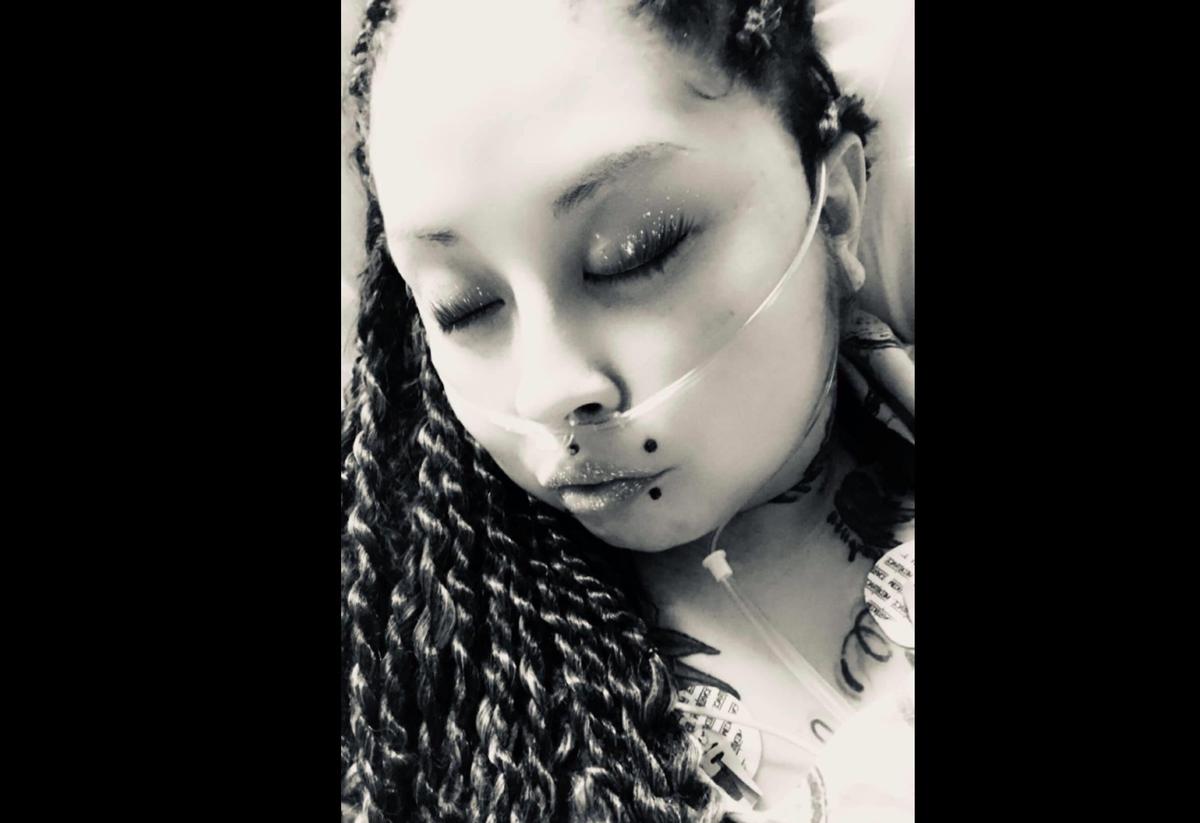
The feeling, she said, is like someone is sitting on her chest. Her inhalers and breathing machines can’t help her.
“I’m literally losing my breath,” Sandra said. “It feels like somebody just hit me and knocked the wind out of me.”
She’s used to living with chronic pain, from the tender swelling in her joints caused by lupus, to the unannounced seizures of epilepsy, to the blood-clotting disorder that took away her ability to move her left arm or leg without great effort and involuntary shaking.
COVID-19 “is a different type of pain,” Sandra said. A physical and psychological pain, triggered by the most necessary and human action of all: Breathing.
Studies have shown those with underlying health conditions like Sandra are most at risk of developing severe symptoms from the coronavirus that can last for longer periods of time. Those numbers don’t address the mental impact of bouncing in and out of hospitals, facing the prospect of dying alone. They don’t address how the preexisting ailments can become worse, or how medical bills can pile up over time.
Doctors tell Sandra she has post-traumatic stress disorder from her experiences and have prescribed her costly medication to take on top of 32 pills she said she takes for all her ailments. She and Manuel had to sell their car to afford it.
The coronavirus, she said over the phone on Friday, has been worse than any health obstacle she’s dealt with before, affecting both her and her family’s well-being.
“It’s a harsh reality,” Sandra said of living with the virus. “It took a toll on us very badly — emotionally, mentally and financially.”
‘You need to go to an emergency room ASAP’
Seven years ago, Sandra had to learn how to live a different kind of life.
She fainted at home one day and awoke later in a hospital, her left arm so enlarged doctors thought it was a fracture until discovering the blood clots. She underwent 13 surgeries over the course of six months as surgeons tried to fix the problem. But neuropathy, or sensitive nerve damage, plagued the left side of her body.
She had led a fairly active life up to that point, working off and on as a waitress and a hairdresser, taking her kids to school in the mornings.
After the surgeries, she mostly stayed in bed, assisted by family members and her at-home nurses. She couldn’t drive a car, or go to the bathroom alone.
“I went from being this healthy person to become this person that’s dependent on people,” Sandra said. “I wasn’t used to that.”
She has avoided crowds for most of her adult life due to her weakened immune system, and that’s what she continued to do after the coronavirus pandemic hit Tarrant County.
When she began throwing up repeatedly in late March, her fever spiking around 103 degrees, she thought it had to be a stomach virus. She never considered it could be COVID-19, even when she woke up out of breath around 4 one morning.
Manuel rushed her to John Peter Smith Hospital, where staff told Sandra he couldn’t come in with her. A doctor swabbed the inside of her nostrils and took an X-Ray of her chest before leaving her room. Two hours later, the same doctor returned wearing a gown, gloves and a face shield to calmly tell her she had tested positive.
Sandra was admitted to JPS and spent about a week in quarantine. Before she was released to recover at home, a doctor provided her with a phone number to call if she ever needed to go back to a hospital. She couldn’t simply show up.
Two days after she left JPS, struggling to breathe, Sandra reached for the number.
As she spoke in abbreviated, breathless sentences, the woman on the other end of the phone cut her short.
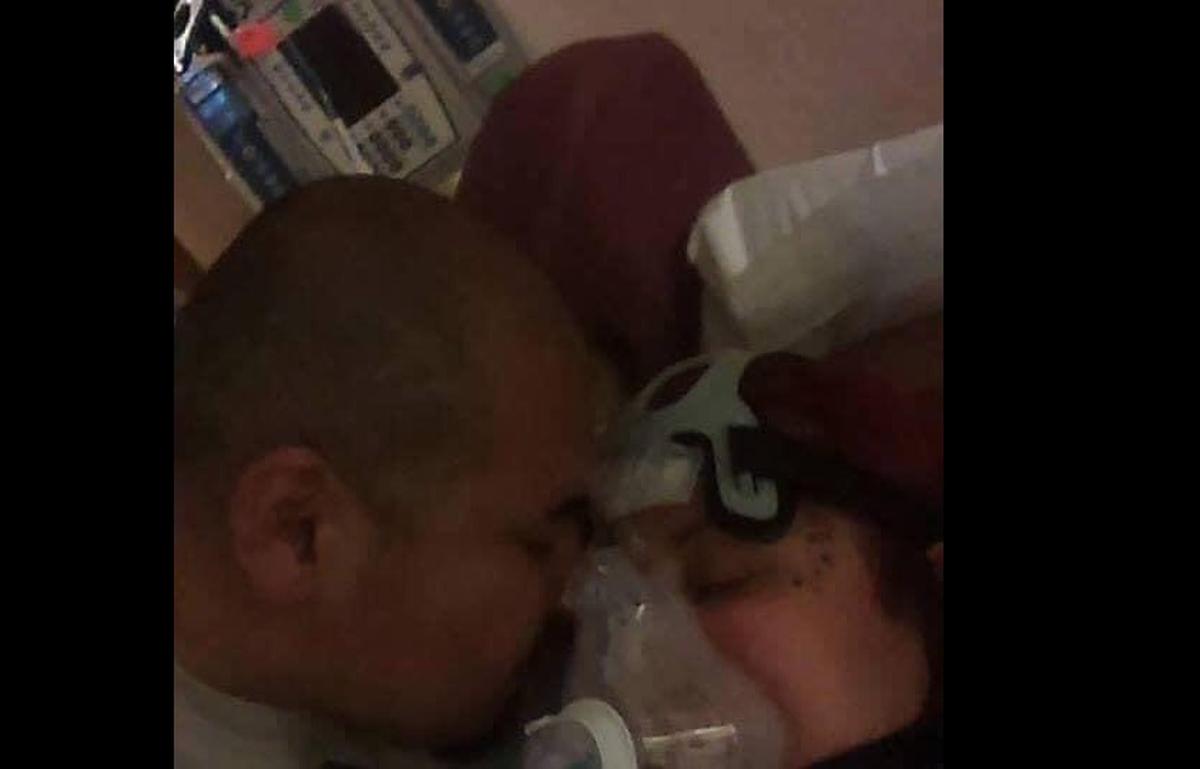
“You need to go to an emergency room ASAP,” Sandra can remember her saying, instructing her to drive to the ER closest to her home.
She was admitted to Medical City Fort Worth, where doctors rushed her to the COVID-19 wing and prepared to put her into a coma.
The last thing she remembers before blackness was seeing her husband sitting in their car as staff wheeled her away. She thought it was going to be the last time she would see him.
‘Something surreal’
Sandra startled awake six days later, in a state of disarray and shock, yanking an intubation tube out of her throat. She thought she was choking.
As she looked up from her bed, she saw someone who shouldn’t have been there: Her 15-year-old son Israel, who could hear her stir to consciousness even if he couldn’t see her.
He lost his sight for still-unknown reasons during a surgery three years ago, she said, and behaves more like a child than an adult due to his severe autism. He had called the hospital for days, asking about his mother, torment in his voice. He was hurting himself, pinching the skin on his arms until they turned into welts.
Hospital staff “bent the rules” and had told Manuel he could bring Israel by for a quick visit, Sandra said.
She remembers him kissing her cheeks. He grabbed her hand.
“My son was crying,” Sandra said. “He just told me, ‘Mommy, please get up.’”
When he left the room, she said, she was left to recover without the aid of a ventilator, which were in high demand.
That was when she said she could’ve used the company.
Staff was still “baffled” about how to deal with patients with the new virus, worried about exposing more people, she said. Though nurses in protective gear would occasionally come into her room, Sandra said she mainly interacted with a doctor through a videoconferencing app on an iPad, which sat on a cart with a long string attached to it. An employee would push it next to her, cautiously, then pull it out.
“This was something that was surreal,” she said. “I had no human contact no more. And that’s something that messes with your mind.”
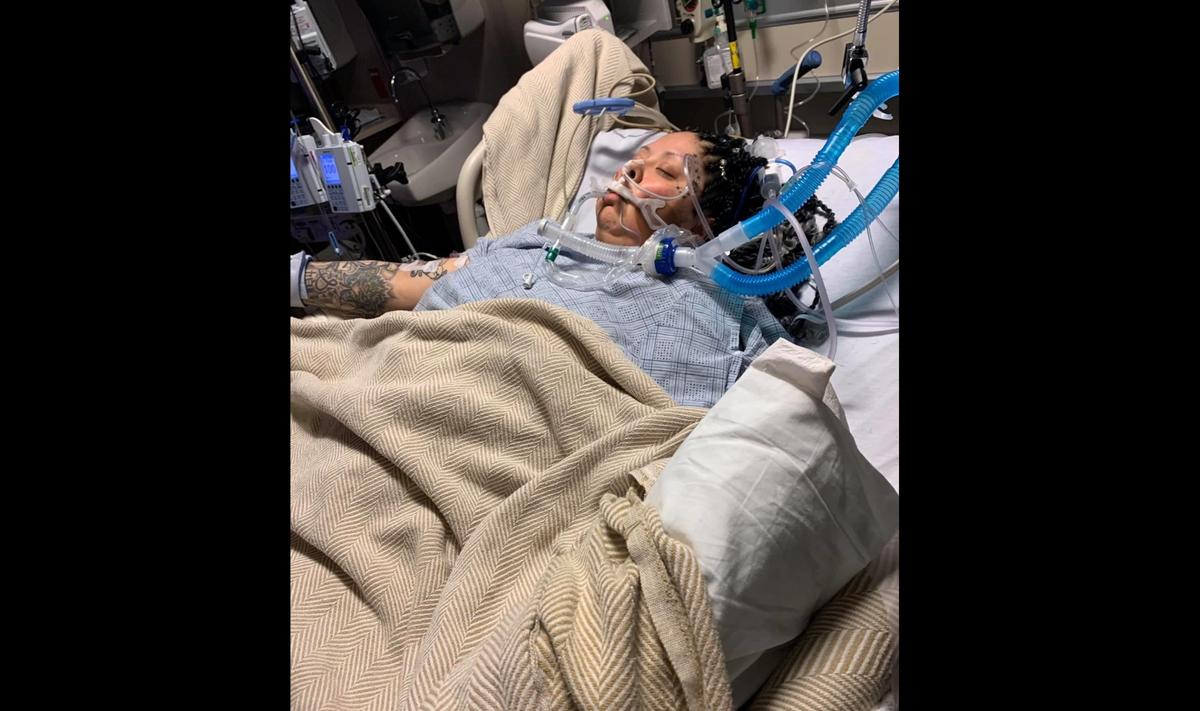
A Medical City Healthcare spokesperson said in an email hospitals have “protocols in place to care for patients with infectious diseases and the safety of our patients, colleagues and visitors is a top priority.” Also, all COVID-19 patients “in need of a ventilator have been provided one if appropriate for their care plan,” he said.
Manuel was receiving updates through Sandra’s texts and FaceTime calls. He remembers waking up to the phone ringing on April 6, when Sandra thought she wasn’t going to make it. He sat up in his bed, set down his phone and cried.
He then told her the kids didn’t deserve to lose her. He lost his own mother to cancer when he was 15.
“I had already gotten a few calls like that ... You just never know if it’s really the last time you’re going to hear her voice,” Manuel said. “Thank God she’s still here with us and fighting through all this. We’re here with her.”
After she returned home, her children tried to distract her from the nausea and fatigue, some of it caused by lapses in her medications. They would burst into her room to have dance-offs or sing along to pop songs like Rihanna’s “Love on the Brain.” Emeley Garcia, her oldest and only adopted child, stayed by her side most days, not concerned about catching the virus.
The 17-year-old “didn’t want her to feel bad,” said Garcia, whose first language is Spanish. “So I was trying not to be that far away from her.”
No one else in the home developed symptoms, so they weren’t tested. But within weeks Sandra was back in the hospital, and then back home, and then back in the hospital again, the process repeating many times over.
She doesn’t know if and when she will have to be admitted again.
Whenever she feels breathless, even for a moment, she fears she will have to go back.
“I’m not sleeping very well,” Sandra said. “Because whenever I start having issues with my breathing, I panic.”
‘A never-ending cycle’
Two days a week, Sandra meets with her therapist over Zoom, discussing ways to deal with her PTSD.
She has been trying to spend less time cooped up inside of her room where her mind can wander, to get outside even if it’s just to read a book in the backyard. Her anxiety tends to rise when she has a lapse in her breathing, causing memories to flood her mind, and begin to feel real. The thought comes to her, she said, that “I’m going to wake up and I’m going to have a tube down my throat.”
Sometimes, she is able to calm herself, slowing her labored breathing and racing thoughts. Other times, the pain and the worry are the result of something real.

On Memorial Day, Manuel rushed Sandra to JPS in Fort Worth in the middle of the night, a trip that has started to feel like a weekly tradition. She couldn’t catch her breath, which led to coughing, and then vomiting.
“It was really bad,” Sandra said. “My husband took me to the hospital, and he had to drop me off right there because they didn’t let him go in again.”
She hadn’t been tested over the previous seven weeks due to her negative result, but on Memorial Day doctors who were concerned by her progress wanted to be sure. It took only 30 minutes for results this time — negative, once again.
An X-ray scan of her chest, however, revealed she came down with a new case of pneumonia, her lungs as inflamed as they were in early April.
It was the first solid proof of COVID-19’s long-term impact on her. And the impact it could continue to have.
“It feels like the first time when I got it — the very first time,” she said hours after she was released from the hospital. “It’s just a never-ending cycle for me.”
She had surgery on Tuesday to open up her gallbladder, which was already contracted before the coronavirus and has built up with toxins over the past two months. That’s partially what led her to spending days throwing up, unable to keep food down. Because of overcrowding at the hospital, she was released as soon as the surgery was over.
As she recovers with the help of her family, she feels anxiety about what she sees on the news, about businesses opening their doors again and protesters packed tightly in the streets. “I’m terrified that it’s going to hit my household again,” she said, noting she’s unsure how her body would respond this time.
But when asked what message she has for other coronavirus patients with chronic conditions, Sandra sounds more hopeful than resigned.
Because, after everything she has been through and still has ahead of her, she’s still here, she said. Long after she thought she was supposed to die.
“Everybody automatically thinks, ‘Oh, I have an underlying condition, I’m going to die,’” Sandra said. “The odds were against me, and I got a second chance at life.”
This story was originally published June 15, 2020 at 6:00 AM.