
Fort Worth foreign trade experts share insights on tariffs at chamber forum
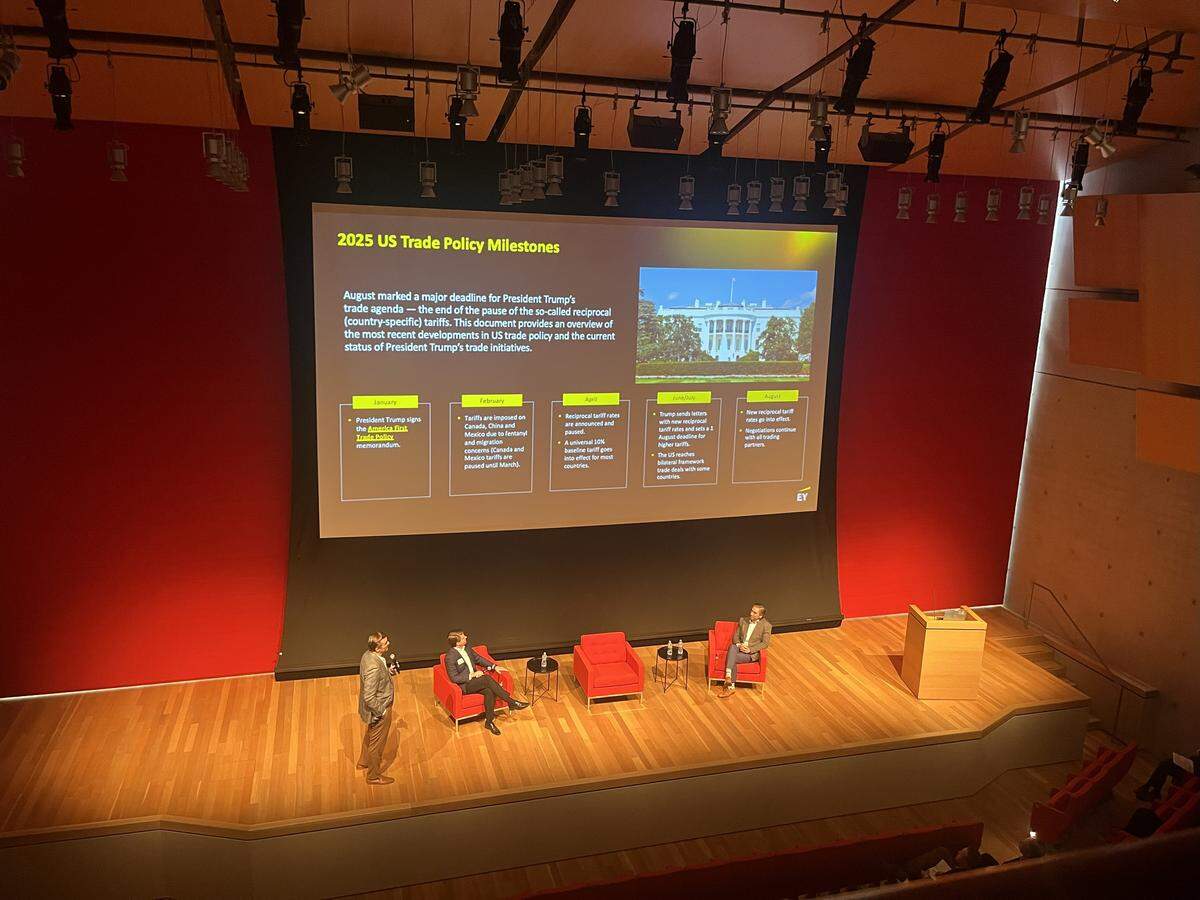
Global trade experts and business owners gathered on Veterans Day for a Fort Worth Chamber forum on tariffs and trade policy impacts.
In January, President Donald Trump signed the America First Trade Policy in efforts to stimulate local manufacturing and protect American jobs. Since February, there have been tariffs placed on China, Mexico and Canada– imports from Brazil and India with tariffs up to 50 percent. And this is the reality our economy will live in for the next two to three years.
Shane Williams, a panelist and managing director of global trade for Ernst & Young, recognizes that tariffs can be a good and a bad thing. The good thing is that they encourage domestic businesses. The bad thing is that U.S. businesses who have production out of the country, cannot just pop up facilities and factories quick enough to domesticate their product.
Also joining Williams were two directors involved in foreign trade operations for Hillwood, Joshua Griffith and JR Holcomb.
The panelists discussed how tariffs are shaping business today and how this can affect the consumer. With holiday shopping ahead, here’s what they had to say.
Who will tariffs affect the most?
Tariff rates drive up expenses for businesses, which means those extra costs often trickle down to a businesses’ supplier, or the consumers.
Williams says e-commerce sites will be the most affected because of the recent De Minimis repeal.
The De Mininis exemption is a bill for low-value imports that helps them avoid tariffs. Since 2016, a low value import was considered any package under $800. On Aug. 29, the rate was lowered to imports under $200.
According to Forbes, this repeal mainly affects small businesses. Until March, businesses can choose to pay an additional set rate between $80 and $200 on their imports or they can settle with the set tariff rates from the countries that are already in place.
Consumers who shop on Etsy, eBay or other e-commerce sites may start to feel the brunt of this.
However, these sites are advising business owners to use mail carriers with a Delivered Duty Paid (DDP) option. DDP allows businesses to pay pre-pay tariffs, duties, taxes and other import fees at the time they purchase their shipping labels. This way, small businesses can know exactly how much shipping will cost and factor that into the price they sell.
How businesses can shift to deal with tariffs
For those who can’t use DDP, the best thing businesses can do is learn about their other import options.
One way Williams and Griffith propose tariff relief is utilizing foreign trade zones or FTZs.
Foreign trade zones are where companies can send their imports for special customs treatment. These zones are considered to be outside of U.S. territory which inverts tariff costs, reduces processing fees and gives businesses potential property tax savings. FTZs are approved by the U.S. Department of Commerce.
“[A company’s] items come into the zone, and they don’t pay a tariff,” said Williams. “If they re-export outside the US, you’ll never pay a tariff. You’ll completely eliminate your duty. If they do enter the U.S., you don’t pay the tariff until the time that they leave. So you get cash flow, time value, money savings on anything that is eventually imported into the U.S.”
Holcomb also noted that FTZs are not just for large companies; they can be used for smaller businesses, too.
Will there be changes to the United States Mexico Canada Agreement?
The panel ended with a short warning about potential tweaks to United States-Mexico-Canada Agreement (USMCA), which Williams anticipates. He foresees changes to the automotive industry since the U.S. already has domestic manufacturing facilities.
“I think Trump did a great job in the renegotiation from NAFTA (North American Free Trade Agreement) to USMCA for the first time. I think he’s proud of that, as he should be,” said Williams. “And so I think that he’d have a hard time completely redoing it and taking it away now. As any trade negotiation, any free trade agreement, goes, if you’re going to have it be good, it needs to be renegotiated.”
The USMCA regulates free trade between the North American countries. Tariffs can still be applied to goods that are not specified under the agreement.