‘It’s only going to get busier’: DFW airport releases new details about new Terminal F
Dallas-Fort Worth International is already the second busiest airport in the world, and it will only get busier.
The airport expects to see 80 million travelers by the end of the year, an all-time record for the facility. By the end of the decade, the airport projects it will serve 100 million passengers per year.
“Demand for air travel is booming,” DFW airport CEO Sean Donohue said Monday during the 2023 state of the airport luncheon.
DFW plans to invest $9 billion between now and 2029 to “modernize and enhance” the facility and improve roads, bridges and terminals.
“This is a major investment in our front end in our infrastructure and our future,” Donohue said. “You will literally see this airport transform all around you. A lot of this has been made possible due to the amount of federal support we have received for our infrastructure projects.”
The investment includes recently announced plans for a $4.8 billion expansion of the airport, including the addition of a sixth terminal. With the construction of Terminal F, as well as a significant overhaul of Terminal C and upgrades to Terminal A, the airport will gain a total of 24 additional gates over the three terminals.
The airport released updated renderings of the future terminals F and C during Monday’s event.
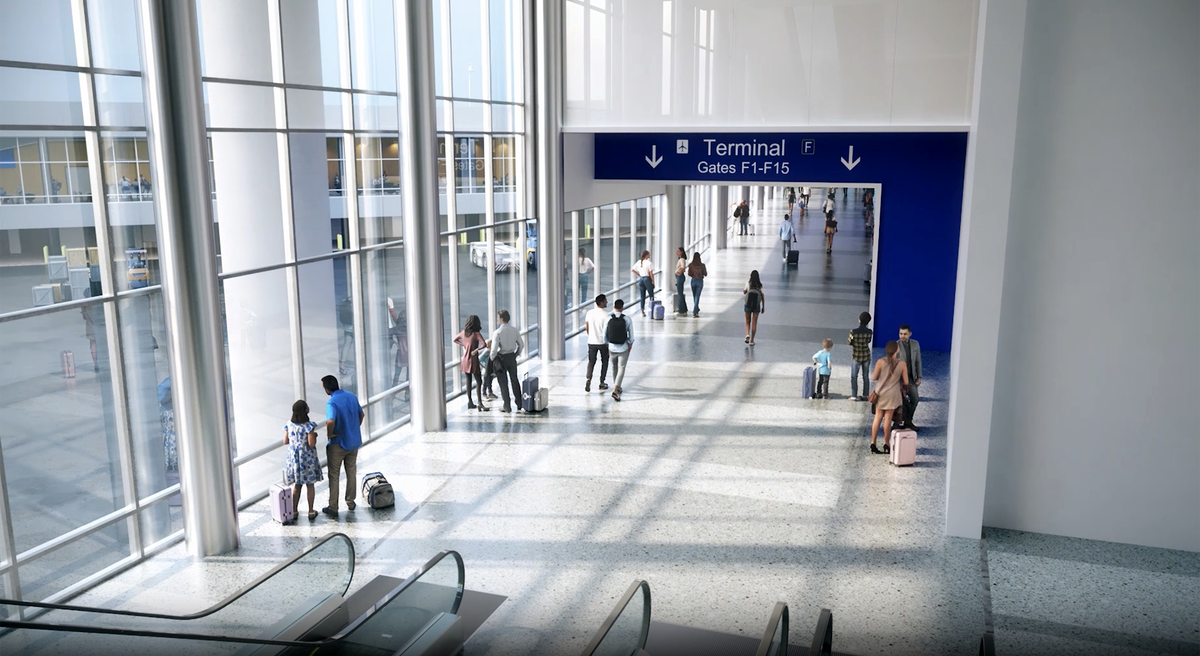
Expansion of Terminal C will include the construction of a new concourse level and the reduction of more than 470 columns that have blocked sight lines and taken up space.
Terminal F will house state-of-the-art facilities and amenities, including expanded concessions with new dining and retail options.
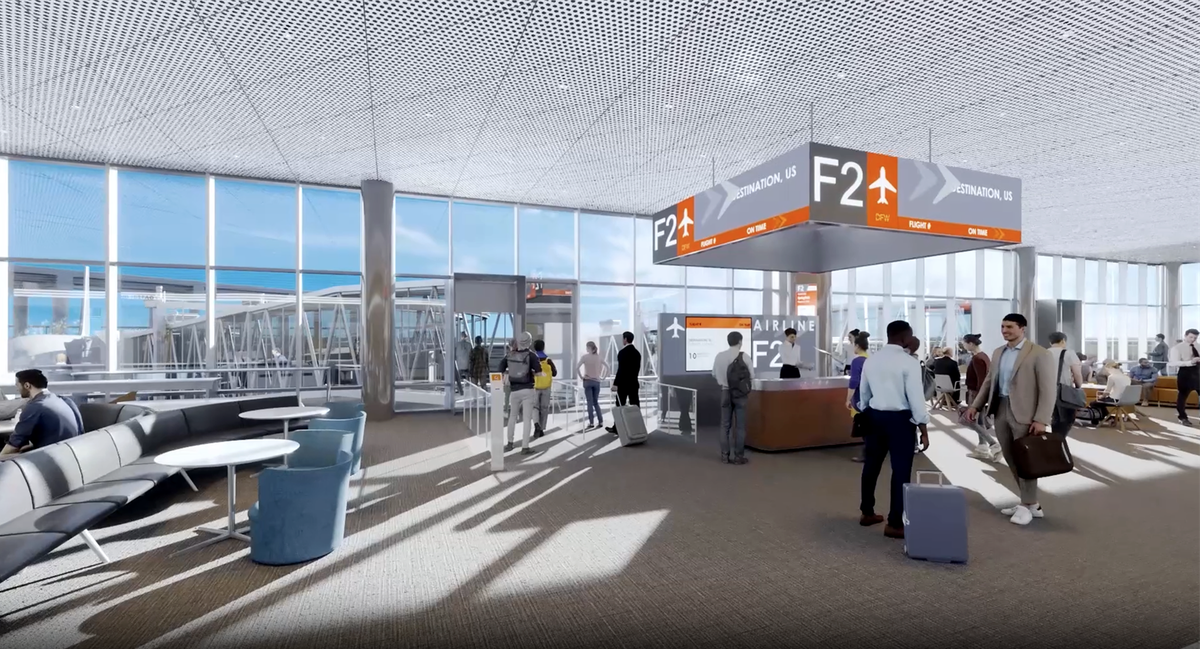
“This project not only reflects our dedication to meeting the evolving needs of our passengers, but also signifies our commitment to remain at the forefront of the aviation industry,” Donohue said.
Through the 2020s, the airport plans to reimagine passenger spaces, create an electric central utility plant, revitalize and enhance its roads and infrastructure and personalize the airport journey with biometrics.
DFW also plans to be carbon neutral by 2030, which is two decades ahead of the industry’s goal, Donohue said. In the 2030s, the airport will integrate more autonomous vehicles and AI features.
The airport plans to fully automate the passenger experience from home to gate by 2040. It also intends to use digital identity technology and integrate urban air mobility, which involves automated air transportation services typically flown without a pilot.
Visitor spending at DFW has increased by nearly 25% since 2015, according to an economic impact study conducted by the Perryman Group. The number of jobs at the airport has also grown by 25%, according to the study.
Consultants estimate passenger spending and operations since 2015 have generated more than $7 billion in federal taxes, $3 billion in state taxes and $2 billion in taxes to government entities in North Texas.
With more than 250 nonstop destinations out of DFW this year, Donohue said, the airport is experiencing “unprecedented growth.” Several airlines including American announced new routes in recent months.
Over the summer, the airport saw its busiest day in its history, when more than 281,000 passengers came to DFW on June 30. The airport served more than 22.5 million passengers in June, July and August alone. The airport has also exceeded pre-pandemic passenger traffic.
“The past few years have been challenging for airports and travelers alike,” Donohue said. “But here at DFW airport, we have not only overcome these challenges, we have emerged stronger than ever.”