How much did increased trucking inspections at Mexican border end up costing Texans?
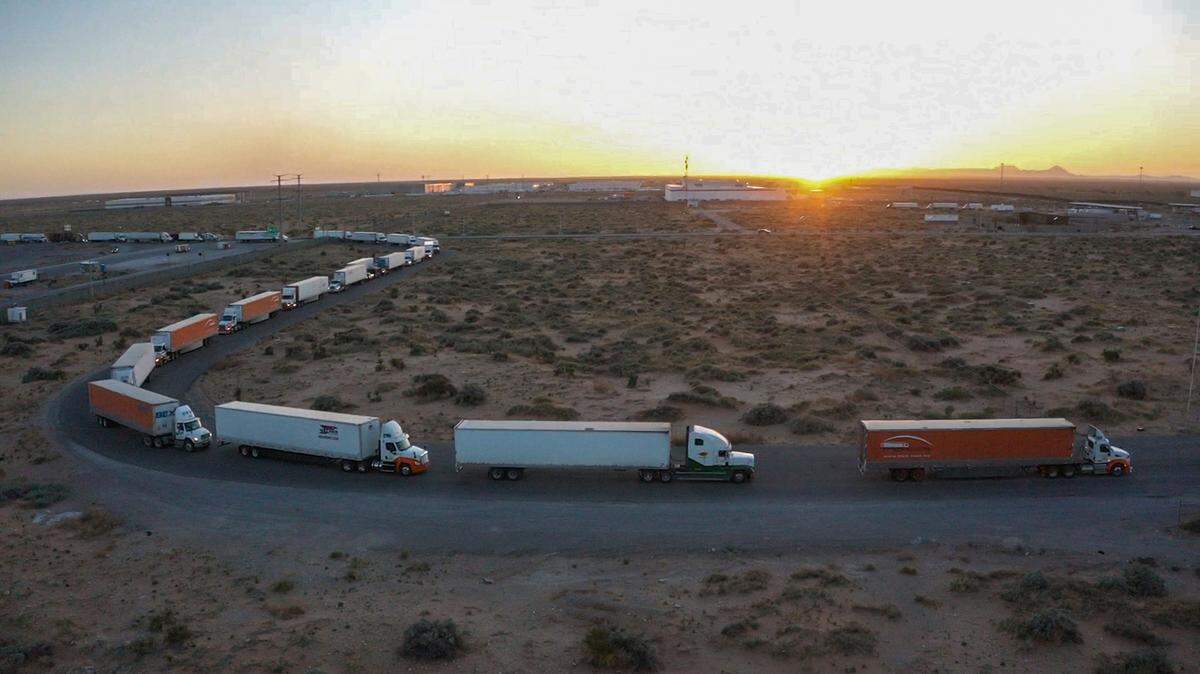
A week ago, Gov. Greg Abbott lifted his immigration order that backed up commercial trucks at the U.S.-Mexico border. Now, we’re starting to see just how much the increased trucking inspections cost Texas.
“We estimated the overall losses in Texas gross product to be about $4.23 billion,” Ray Perryman, an economist with The Perryman Group, said.
That’s about $470.3 million a day, according to a report Perryman released Wednesday. The slowdown resulted in not only spoilage of perishable items, but also production delays. Manufacturing, wholesale and retail trade, and transportation were the hardest-hit industries.
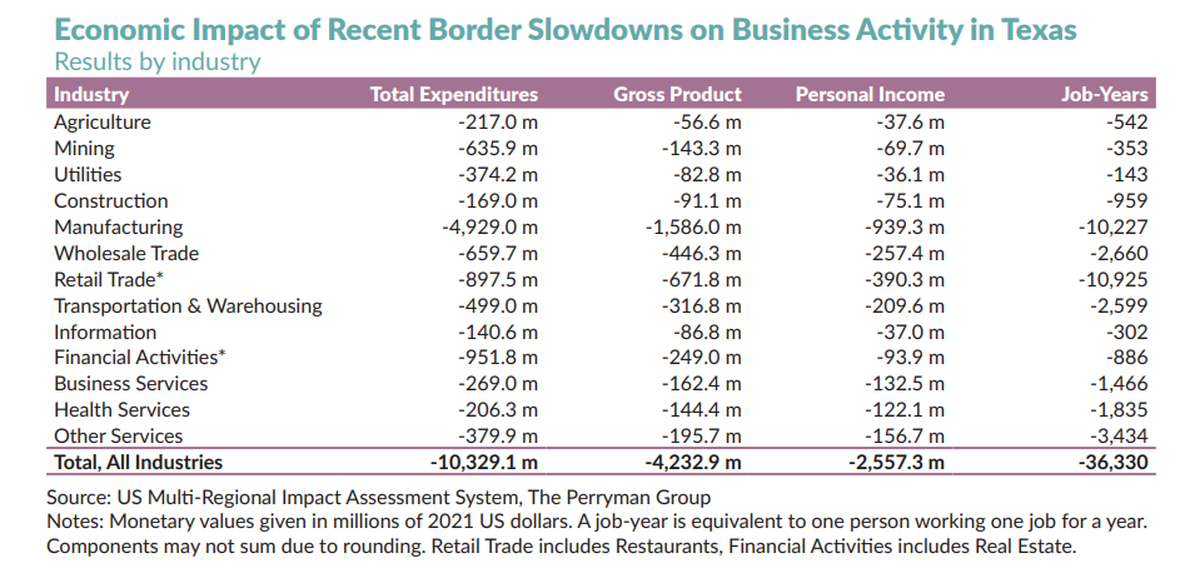
“The primary losses occurred because produce and finished goods could not get into the wholesale and retail trade stream, inputs to manufacturing processes could not be delivered, and transportation firms were not able to operate in a normal fashion. In essence, more inefficiency was introduced into an already over taxed supply chain.”
The delays made supply-chain issues worse, creating additional inflationary pressure. While manufacturing along the border was likely affected the most, Perryman said, an impact can be seen on products across Texas. Retail effects on consumers were likely distributed throughout the state, he said.
Notably, a substantial amount of perishable produce from Mexico could not be delivered. That extends to wholesale and retail activity and, to a lesser extent, food processing manufacturers.
Overall, however, the loss is a relatively small part of the big picture. The Texas economy generates about $1.8 trillion in output each year, so $4.23 billion is a relatively small percentage.
Deliveries can ramp back up quickly, Perryman said, but some effects will linger. Given the strained capacity at the border in normal times, it will be difficult and, in many instances, impossible to catch up.
The border lacks sufficient infrastructure and personnel to move goods efficiently, he said, making it impossible to make up many of the shipments that were delayed or not delivered.