
Fort Worth Chamber leader talks vision, road to recovery from pandemic
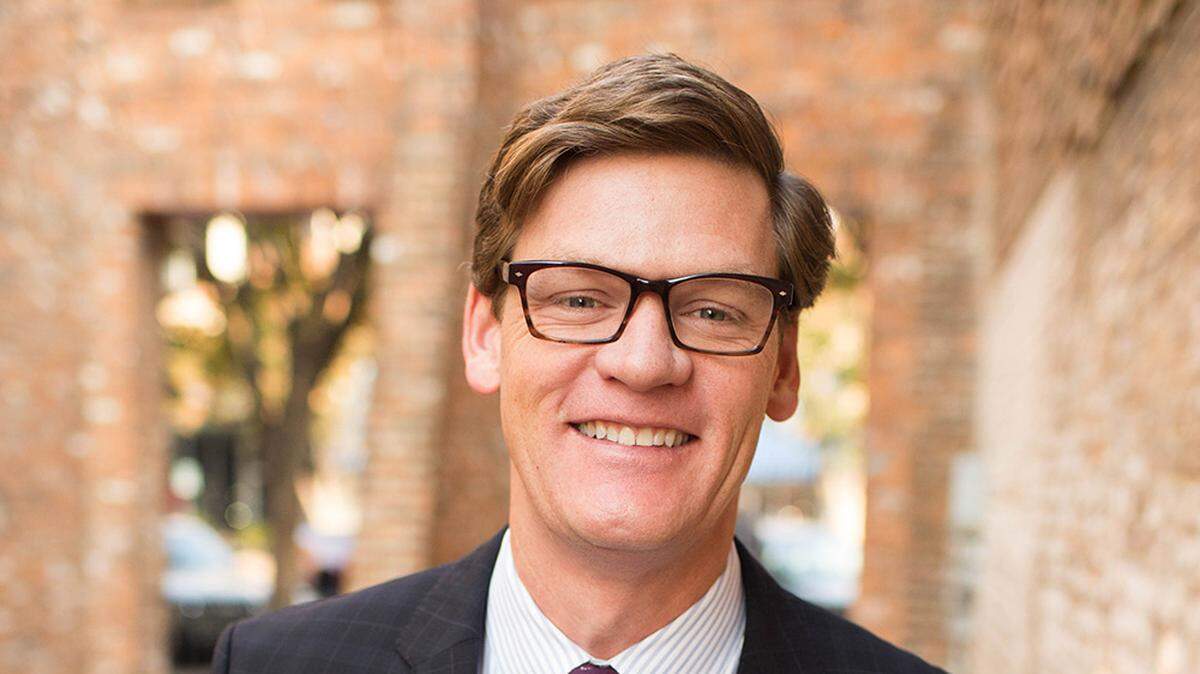
Brandom Gengelbach, a seasoned economic development professional, is presiding over the Fort Worth Chamber of Commerce during the most significant global economic crisis in at least a century.
He was named the organization’s chief executive officer on Thursday. In July he was named president following the retirement of his predecessor, Bill Thornton.
Business leaders in Fort Worth say Gengelbach has a lot on his plate because of the massive damage that the pandemic has already inflicted on economies everywhere.
U.S. employers eliminated 22 million jobs in March and April, and according to a recent federal jobs report, hiring slowed in July, the Associated Press reports. In Texas, the state’s two-year budget is facing a shortfall of almost $4.6 billion.
Industries are hurting but Gengelbach says he’s confident that a recovery is more than possible for Fort Worth’s economy by growing it in “a much more aggressive way.”
Making it to Fort Worth
Gengelbach has been at the Chamber since November 2016 when he first came on board as the executive vice president of economic development. He says that accepting that job was an easy decision for him.
“I took that job because this is a growing area in a market that has very bright future,” he said. “There’s also very little politics here which means you can get more things done.”
Gengelbach earned a bachelor’s degree in journalism from Samford University in Birmingham, Alabama, and then a Master of Business Administration from the University of Southampton near London.
He brings to the table experience working at chambers of commerce in cities like Indianapolis and Nashville, Tennessee. He also did a stint as the president of the public-private Maury County Chamber and Economic Alliance where he oversaw membership double in size, thousands of jobs pour into the area and a reduction in unemployment.
But how did he end up in Fort Worth of all cities?
Gengelbach says that a friend of his who used to work at Deloitte saw that the Chamber was conducting an executive search.
“He called me and said, ‘Fort Worth is perfect for you and you are perfect for Fort Worth,’” he said. “He then gave Bill a call and the rest is history.”
After being a part of the Chamber’s leadership for only a few years, Gengelbach was then promoted to president in 2019. Now, he’s officially the Chamber’s president and CEO, and his biggest challenge so far has been sparring with the pandemic.
Recovering from the pandemic
Both Thornton and Gengelbach agree that the coronavirus pandemic is the worst economic disaster that’s ever dawned upon the city of Fort Worth.
“It’s the most significant challenge I’ve ever faced,” Thornton told the Fort Worth Star-Telegram in a interview two months ago.
The Chamber, in collaboration with other groups, launched the “Protect the Fort” initiative a few months ago, which has supported small businesses through cash grants up to $5,000 and has provided them with personal protective equipment. The Chamber has also organized informative online discussion forums that touch on topics in the era of COVID-19 like compliance issues and funding. Mentorship, counseling and human resources guidance have also been available for businesses.
Aside from what the organization has already done to ease the burden, Marianne Auld, the vice chair of the Chamber’s board, says that it’s imperative for Gengelbach to collaborate with other leaders in the area to “drive growth and prosperity back into our city and all of its citizens.”
“The vision for the board is to always work to create economic strategies and solutions in partnership with other leaders in our community — both civic leaders and business leaders. This will help drive growth and prosperity back into our city and all of its citizens,” Auld said. “Brandom’s role is certainly to lead that effort.”
She says that part of the challenge that economic development leaders in Fort Worth face is helping existing businesses survive the pandemic while still luring in other new businesses and economic opportunities to the community at the same time.
When asked what the Chamber can do for its members amid the economic downturn, Auld said: “That if you had to boil it down to a few things, it would be to focus on flexibility and making sure we are being as responsive as possible to whatever the need is for a particular business.
“Whether it is with grant money or PPE, there are a lot of different ways so there’s not going to be a one-size-fits-all solution for every business’s unique challenges.”
One industry that’s been heavily battered by COVID-19 is the food and beverage industry.
Carlo Capua owns Z’s Café and Catering, a family-owned business in Fort Worth, and he’s been an active member of the Chamber. He said there are so many questions still up in the air for business owners in the industry.
“How do we make customers feel comfortable? When I bring my employees back, how do we train them to make sure they are keeping everybody safe?” he said. “We’re having to rethink our whole operations model which has totally been thrown upside down for food delivery. That’s been a major challenge.”
Capua says that the Chamber’s webinars have been “hugely helpful” in helping address those kinds of questions.
He says that the Chamber under Brandom’s leadership in the past few months has been good at preventing small businesses “from falling through the cracks.”
Gengelbach’s vision
Gengelbach said that growing the economy “aggressively” means to “actually seek out and target opportunities, as opposed to waiting for them to come to you” which he calls his long term vision. His short term vision is all about helping small businesses recover from the virus’ impact.
He says that “before we can do some of these greater things,” the one metric he’ll be focusing on fixing first is the city’s unemployment rate.
Gengelbach acknowledges that certain industries, like the retail and restaurant industries, are simply going to be in some kind of “peril” until the economy fully reopens but he says that whenever there’s an economic downturn, “it leads the way to greater creativity, greater innovation, and the ability to bounce back.”
Aside from how he’ll continue to grapple with the pandemic, Gengelbach said his strategy to achieve economic prosperity is focusing on developing industries in which Fort Worth has a competitive advantage: transportation/mobility, biotechnology, aviation/aerospace and the medical industries.
He also plans to develop Fort Worth’s talent pool to carry on those industries. He said he would like to organize councils or task forces to focus specifically on the talent pool.
The other pillar of Gengelbach’s master plan of promoting economic development is making Fort Worth “business friendly.”
He thinks that the Chamber’s combined initiatives with the city, the Dallas Regional Chamber and the North Texas Commission have been effective in making Fort Worth more business friendly, but he thinks that there’s still room for improvement when it comes to the state’s involvement.
“There’s a lot of room for improvement on the incentives front and on the project management front that can be more efficient and effective, but I’m very sensitive about the timing and the appropriateness of having those conversations, especially with COVID going on.”
This story was originally published August 20, 2020 at 5:30 AM.