
A few things to consider if you see your lawngrass struggling to grow
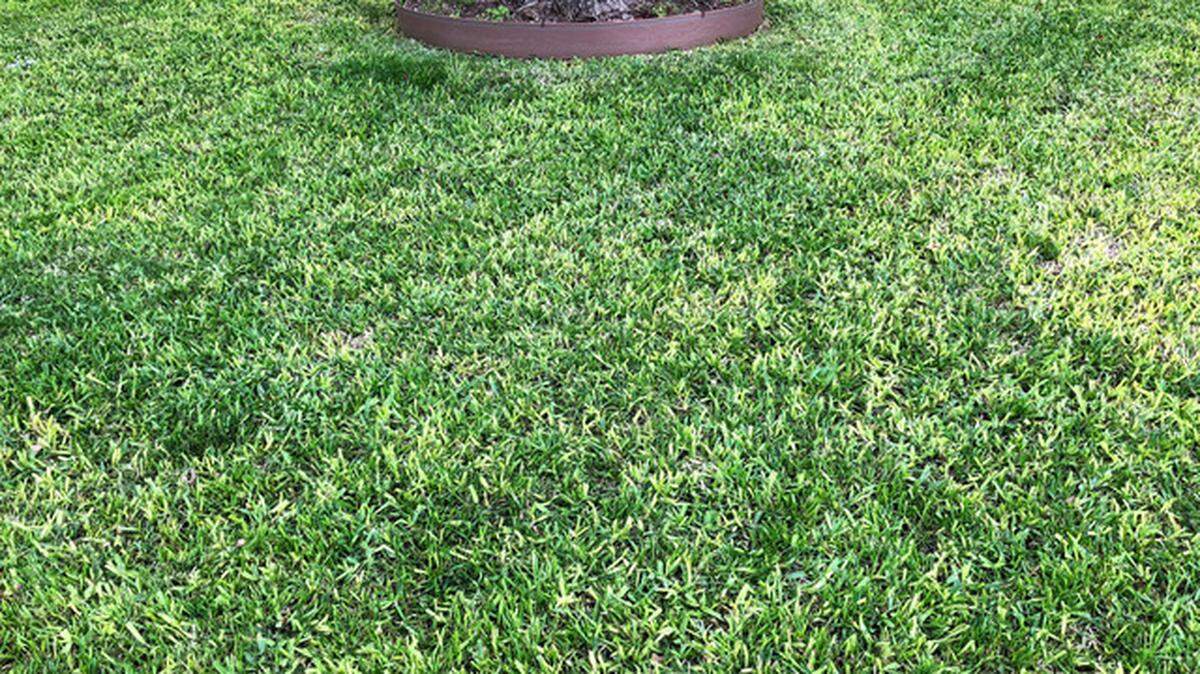
It’s happening again.
The growing season is unfolding, but parts of our lawns are looking unloved and neglected. What’s a gardener to do? How can you get the turfgrass geared up to grow? How can you tell why it’s struggling?
Let’s look at some of the possibilities.
Cold damage. This one comes to mind first. St. Augustine is a sub-tropical grass, so indeed, it is vulnerable to extremely low temperatures like we had in mid-February. However, much of the state was covered with several inches of snow, and snow is an excellent insulator. Odd as it may seem, you’ll see less freeze damage to St. Augustine that was blanketed by snow than where it was exposed to the same record low temperatures but without benefit of the snowpack.
As a result, many folks are actually seeing better St. Augustine green-up than they expected. That green-up will be accelerated as soil temperatures climb, too, so good news is near at hand.
Take all root rot (TARR). However, just as we say that warmer weather will bring out the green in our lawngrass, we mention that TARR may rear its ugly head and infest sections of our St. Augustine (and zoysia) over the next two months. This is a fungal root disease that really began to show up in Texas turf 20 or 25 years ago. It’s been common the past two or three springs.
If you have areas of your St. Augustine that are taking on a yellowed look, and if the runners release from the soil with just gentle pulling, look closely at the roots on those runners. If they’re dark and stubby, that would suggest that TARR is present, especially if you dig and find no evidence of grub worms in the soil.
The old recommendation of applying a 1-inch layer of sphagnum peat may still be on some of the older printed materials and unmaintained websites, but the fungicide Azoxystrobin has been given label clearance for application to control TARR. It has shown superior results, not only on this disease, but also on gray leaf spot and brown patch that show up in summer and fall respectively. Pathologists tell us that it actually kills the fungus, where the old peat treatment merely suppressed its activity. The peat was far more expensive and a lot harder to apply as well.
Excessive shade. I’m asked what type of grass will grow beneath trees more than any other question about turfgrass. But turfgrass just doesn’t get along well with shade trees. Even St. Augustine, our most shade-tolerant turf, needs 5 or 6 hours of hot, direct sunlight daily in summer to hold its own – even more if you expect it to grow and cover vigorously. Zoysias need an hour more, and the various bermudas need two hours more.
If you can look beneath your shade tree, and if the bare area becomes more pronounced the closer you get to its trunk, that’s an issue with shade. You can try removing a lower branch or two. That might help get more light to the grass early or late in the day, but otherwise there’s no fertilizer that will make up for the lack of light. There is no point in pouring more money into new sod if last year’s new sod died out within just a few weeks of being planted.
Need more nitrogen? So, how do you pick the best fertilizer? Is there one brand that’s better than others? What does your lawn really need?
Soil tests from Texas A&M over the past several decades have consistently come back showing that our heavy clay soils of the North Central Texas area are consistently too high in phosphorus, middle number of the three-number analysis. We know that plants need that phosphorus to produce strong roots, but there is already too much phosphorus present in our soils. It’s affecting solubility of other important minor elements.
Texas A&M recommends that we add fertilizers containing only nitrogen (first number of the analysis), with upwards of half of that N in encapsulated or coated slow-release form. Then, as mentioned, little or no phosphorus. Potassium, the third of the three numbers in the analysis, helps in summer and winter hardiness, and your fertilizer will probably have small amounts of it present. That’s not of much concern one way or the other.
Brand, as you now can probably tell, isn’t my biggest factor in choice of a fertilizer. I want that high-quality, all-nitrogen or very high-nitrogen fertilizer. I compare the analysis (actual percentages of nutrients) and prices to determine the type that I want to buy.
Read and follow the rates of application carefully. Measure your lawn area to determine the number of square feet that you’ll be feeding, and then do the math to see how many bags you will need. Apply half of the fertilizer going east-west and then the other half going north-south. That will ensure even application.
Planting new grass. You are coming into the perfect time for planting a new lawn. Bermuda, St. Augustine and zoysia can all be sodded now. Wait a couple of weeks to sow bermuda from seed. By then the soil will have warmed sufficiently. I’ll cover starting new turf in more detail here later.
You can hear Neil Sperry on KLIF 570AM on Saturday afternoons 1-3 pm and on WBAP 820AM Sunday mornings 8-10 am. Join him at www.neilsperry.com and follow him on Facebook.