
Most gardeners are still wondering how to repair winter storm damage
I got up early, excited about writing my column.
Determined this would be the week I’d move past the freeze damage and get back to whatever we’d cover in a normal spring’s topics – that would be fun.
So, I looked back to see what people asked me about last weekend on my radio program. I’ve kept a log of every call for 44 years. It has often proven helpful. It’s the diary of my broadcasting life, but this time my diary was more like a trip back into the darkness. I hadn’t realized that 80 percent of my callers were still asking about repairing the after-effects of the cold.
With that in mind, I’m going to propose questions they should have been asking, but I’ll also address those that they did actually ask.
Questions gardeners normally ask now
- What grass grows best in the shade?
St. Augustine and fescue require 5 or 6 hours of direct sunlight daily in summer to hold their own. St. Augustine is actually the better choice because it’s better suited to summer weather. But both grasses are water hogs. Also, many people mis-judge the extent of their shade and keep trying turfgrass when they really need a shade-proof groundcover like regular (not dwarf) mondograss instead.
- What tomatoes are best here?
Think “small” or “mid-sized.” Large-fruiting types like Big Boy, Beefsteak and the large heirloom types will do well to set more than three or four fruits before hot weather shuts them down. Concentrate on varieties like Super Sweet 100, Red Cherry, Yellow Pear, Porter, Roma, Super Fantastic, Early Girl and Celebrity, in increasing order of fruit size. They produce fruit for weeks longer into warm weather.
- When should I fertilize my lawn, and what is the best type of fertilizer?
Bermuda, St. Augustine and zoysia can be fed in early April. Repeat with bermuda every two months into the first week of October. Repeat with St. Augustine and zoysia in early June and early September. Choose a high-quality, high-nitrogen or all-nitrogen lawn fertilizer with upwards of half of its nitrogen in slow-release form. Your Certified Nursery Professional or gardening expert can show you how to make that selection.
- When can I plant new sod or seed?
New sod, anytime now. Seeding needs to wait until the soil has warmed considerably. Mid-May into early June would be the ideal time for bermuda seed. Avoid the mixtures of varieties. They do not work out.
- How should I prepare the soil for my new flowerbeds and groundcovers?
Apply a glyphosate-only herbicide to kill all existing perennial grasses and other weeds. (You may need to wait until the weeds have strong active growth to absorb the herbicide.) Wait two weeks, then rototill. Incorporate 2-3 inches of organic matter into the top 6-7 inches of soil by tilling again. You’ll be ready for planting.
Questions gardeners are asking this year
• Is there any hope for Indian hawthorns, pittosporums, waxleaf ligustrums, rosemary and Carolina jessamine vines?
It appears that all of these plants have been lost. Comments about them would be appropriate, however. Indian hawthorns have a fatal fungal leaf spot (Entomosporium) that caused us to stop recommending them 15 or 20 years ago. Do not replant with them. Dwarf hollies are better replacements. Pittosporums are not reliably winter-hardy in North Central Texas and should not be used here. Waxleaf ligustrums and rosemary plants are reasonably hardy. If you replant with either of those, you do so with risk of future loss. Carolina jessamine is usually dependable. I’m not afraid to recommend it again.
- How far back should I prune my loropetalums, abelias, Texas sage and Asian jasmine since I can see new growth starting to come out?
Trim the shrubs only as needed to restore good form and natural shape. Many of the plants that I’ve seen look like they need to be trimmed back by 40 to 50 percent. Do note, however, that some shrubs may actually have been killed. Asian jasmine should be trimmed at 2 inches so the new growth can show up quickly. It will come back from its roots.
- What are some of the best shrubs and groundcovers that aren’t likely to run into problems with cold like we’ve faced this year?
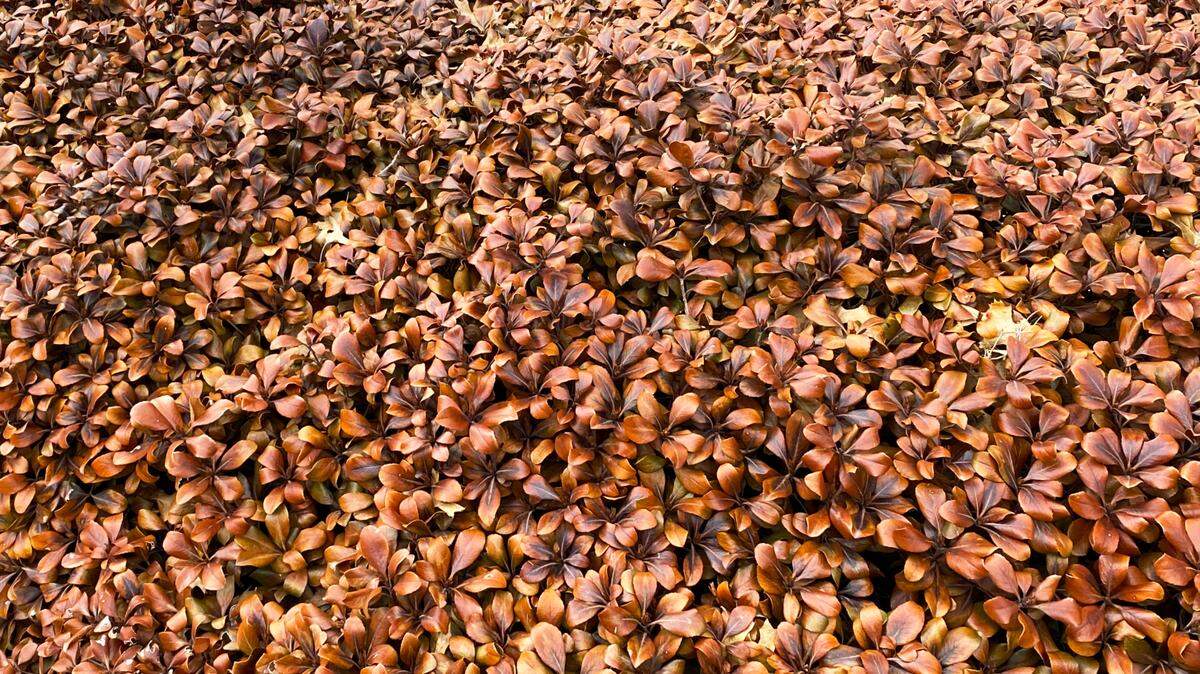
I’m especially fond of purple wintercreeper euonymus as a groundcover in sun and mondograss as a groundcover for shade. I have 30 or more types of hollies in my landscape, and my Green Beauty boxwoods look great. I use many kinds of nandinas and Sea Green juniper in my landscape as well, and of course, crape myrtles. But, your local independent retail garden center will have lots of other fine choices.
- Am I better off trying to retrain a plant that has green growth, or should I buy a new plant and start over?
If it’s mangled and distorted down to where snow protected the bottom-most foliage, you should probably start fresh. But if it just died back a few inches, try giving it a trim to see what comes out. Apply a high-nitrogen lawn food and keep it properly watered.
• Will this winter have cut into the insect populations?
I’m not an entomologist, but from all that I’ve read, heard and experienced over the years, that’s more of a hope and a dream than it is a reality. Go into the season expecting the worst and hope that you’ll get a surprise!
You can hear Neil Sperry on KLIF 570AM on Saturday afternoons 1-3 pm and on WBAP 820AM Sunday mornings 8-10 am. Join him at www.neilsperry.com and follow him on Facebook.