
Stay away from these ‘myths’ if you want to avoid mistakes in your garden
Sometime back I brought you a horticultural topic of simply “Myths and Mystiques.”
I remember listening to a gardening talk show and hearing some incredible comments being made about unbelievable products. All I could do was hope that the public couldn’t possibly be that gullible.
Then I decided to bring light to the world with that first column!
So now I’m back. These are more down-to-earth topics, but they’re still mistakes that people frequently make and maybe I can help gardeners avoid failures.
Let’s give it a try.
Iron deficiency. When you see a plant that has yellowed new growth with dark green veins, that is almost always the result of iron deficiency. Iron is a component of the chlorophyll molecule, and for whatever reason that plant is not getting enough iron into its new leaves. There are three mistakes that gardeners make in trying to deal with that issue.
First, they attempt to acidify the soil using vinegar. Vinegar, however, is an extremely weak acid. It is incapable of countering the very alkaline conditions of Fort Worth/Dallas black clay gumbo soils. Sulfur-based soil acidifiers would be required. They form much stronger sulfuric acid when used in our soils.
Whether those gardeners know it or not, iron becomes insoluble under alkaline conditions. Many people try to add iron filings or old, rusty nails around their trees and shrubs to correct iron deficiency. However, that form of iron is completely insoluble, so that attempt is doomed to failure. The successful alternative is to use chelated iron in combination with the sulfur soil acidifier.
But the biggest mistake I see gardeners making is in trying to correct iron deficiency in very large plants such as shade trees. When species like pin oaks, Loblolly or slash pines and other East Texas types show iron deficiencies in our black clays, it is absolutely impractical to try to add iron to correct the problem. You may be able to solve it while the trees are still comparatively young, but the next year you will need more iron, and the following year even more. It’s a no-win situation, and wise gardeners cut their losses early by replacing the trees with better species.
Sand to loosen clay soils. As a young horticulturist, this was one of my recommendations. It was always in tandem with the addition of organic matter such as sphagnum peat moss, compost, well-rotted manure and shredded pine bark mulch, so it wasn’t the worst advice I ever gave. However, about 20 years ago, Texas A&M got behind a new product called expanded shale. It did a superior job of loosening the clay and keeping it separated so that it would not make a “hardpan” of impenetrable soil. My recommendation is still to use 1 inch of each of those forms of organic matter and 1 inch of the expanded shale, all of it rototilled 10 or 12 inches into the existing soil as you prepare flower and vegetable gardens for planting.
Sawdust, wood shavings and fresh stable manure into the garden. Gardeners often have ready sources of these materials and they’re anxious to use them in their flower or vegetable plots. What they don’t realize until it’s too late, however, is that the bacteria that break down organic matter also tie up available nitrogen. The plants are lethargic and pale green. Their plantings are poorly productive. You need to compost fresh organic matter until it is no longer recognizable as to its source. Only then is it ready for use in the garden.
Save seeds from garden. There’s always interest in saving seeds when the garden has run its course at the end of the season. However, many of our best flower and vegetable varieties are hybrids. What that means to us is that they will not come true from seed. It took special parentage and skilled plant breeders to produce the seeds. When you plant the seeds that you have saved from that next generation you will not get exactly the same varieties. Instead, you will get plants that are more likely to have insect and disease problems and to be less productive. In many cases you’re not really saving much money when you try to save seeds.
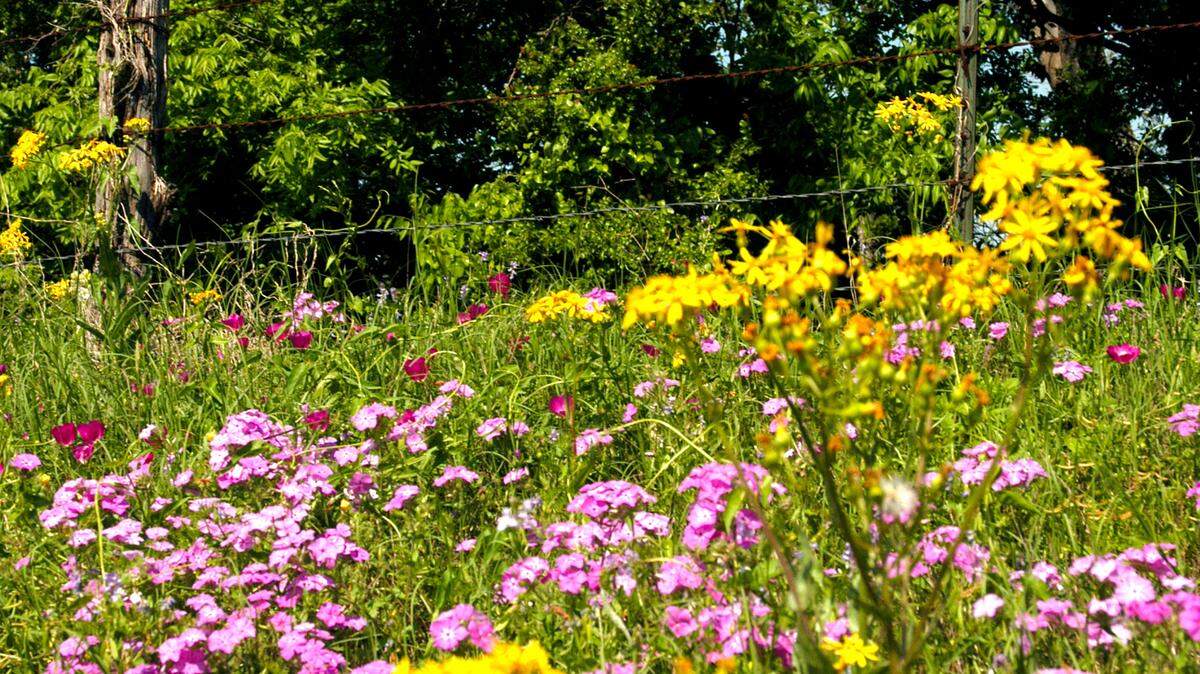
Plant wildflowers in spring. It happens every February and March. People begin to see wildflowers popping into bloom and they want to start planting their seeds. They’re given packets of seeds in centerpieces and as door prizes. Without any knowledge of the best time to plant those seeds, they start scattering them out on the ground at that time. What we have to realize is that to be ready to bloom in March and April, wildflower plants have to germinate in September. They spend the fall and winter establishing deep roots so that they can send up their flower spikes up with the first warm days of springtime.
Water twice weekly all winter. This happens with the automatic sprinkler systems – the old styles of systems where the controllers merely allow you to set the days of the week when you want the system to run. If you forget to adjust things as the seasons change, they’ll still run those two days per week. Newer systems that have “smart” controllers correct this mistake. They take into account temperature, time of year and dormant seasons, available soil moisture, weather forecasts and other factors that might make watering a less-frequent affair. I have smart controllers on our systems at home, and there are entire months in the winter when the systems don’t run at all (and they sit idle by their own “decisions,” not by my intervention).
You can hear Neil Sperry on KLIF 570AM on Saturday afternoons 1-3 pm and on WBAP 820AM Sunday mornings 8-10 am. Join him at www.neilsperry.com and follow him on Facebook.