
These plants from South of the border have become a wonderful part of Texas heritage
In this day when native plants are the big rage in landscaping, I hasten to recommend use of the word “adapted” as a much more functional operative.
After all, some of our best landscaping plants trace their roots back to our neighboring Mexico. Literal “roots.” Each of the plants I’ll discuss with you here is actually native South of the border, and each has become a wonderful part of our Texas horticultural heritage.
I’ll share a few of my own personal comments about each one of them. Hopefully you’ll find a place for several of them in your gardens.
Mexican plum (Prunus mexicana)
This is one of my favorite small trees in our own landscape. I have it adjacent to our driveway and just 30 feet from our front door so that we can enjoy it several times during the growing season.
Mexican plum may be named for Mexico, but it’s also native in much of Texas (including DFW). It’s the first tree to break buds in nature, usually in late February or the first few days of March, and it stays in flower for up to two weeks, depending on the weather. You’ll love its sweet fragrance each spring, and it gives local bees a great source of nectar. At a time when we’re looking for pollinator plants, this is one of the first and it’s one of the best.
Through the summer, Mexican plum’s leaves are leathery and dark green, and in good years, you’ll get a fairly nice show of fall color. As the tree grows enough to start reproducing, you’ll even get a late-season crop of 1-inch fruit that can be used for jams and jellies.
In the winter, the plant’s bark becomes all the more obvious. It peels off in thick curls, lending a richly coarse texture to its part of the landscape.
If you need a dependable small accent tree that grows to 25 feet tall and wide, this one ought to be on your list.
Mexican bush sage (Salvia leucantha)
Of all the beautiful salvias, this is the last one of the year to bloom. It presents itself for the migrating Monarchs. Other butterflies, even bees of all kinds stop by to adore it. Its stately purple flower spikes are a beautiful contrast to the rich yellows and oranges that predominate in fall.
Mexican bush sage grows to 3 to 4 feet tall, but you can keep it more manageable by pinching out all of its growing tips in May, forcing it to develop side branches. There is also a shorter selection called ‘Santa Barbara’ that has actually become fairly common in the nursery trade. You may have the chance to buy a selection called ‘Midnight’ with solid purple flowers, but my own personal preference is for the lovely contrast of purple and white.
This plant is considered to be a perennial in Texas, but it does need to be trimmed back to 3 or 4 inches after the first killing freeze, then covered with 3 or 4 inches of shredded tree leaves or other loose mulch over the winter. It will come back in North Texas following all but extreme winters. If you decide to dig and divide plants that you already have, late winter is probably the best time to do so.
Mexican mint marigold (Tagetes lucida)
Isn’t nearly as well known. In fact, you’d hardly recognize this as being a true marigold, but it is. First, it only blooms in the fall. Second, the plants are upright, and the leaves only vaguely resemble those of the more common hot-weather annuals. Plus, you won’t see spider mites on this unheralded perennial – that’s a huge difference from its annual cousins.
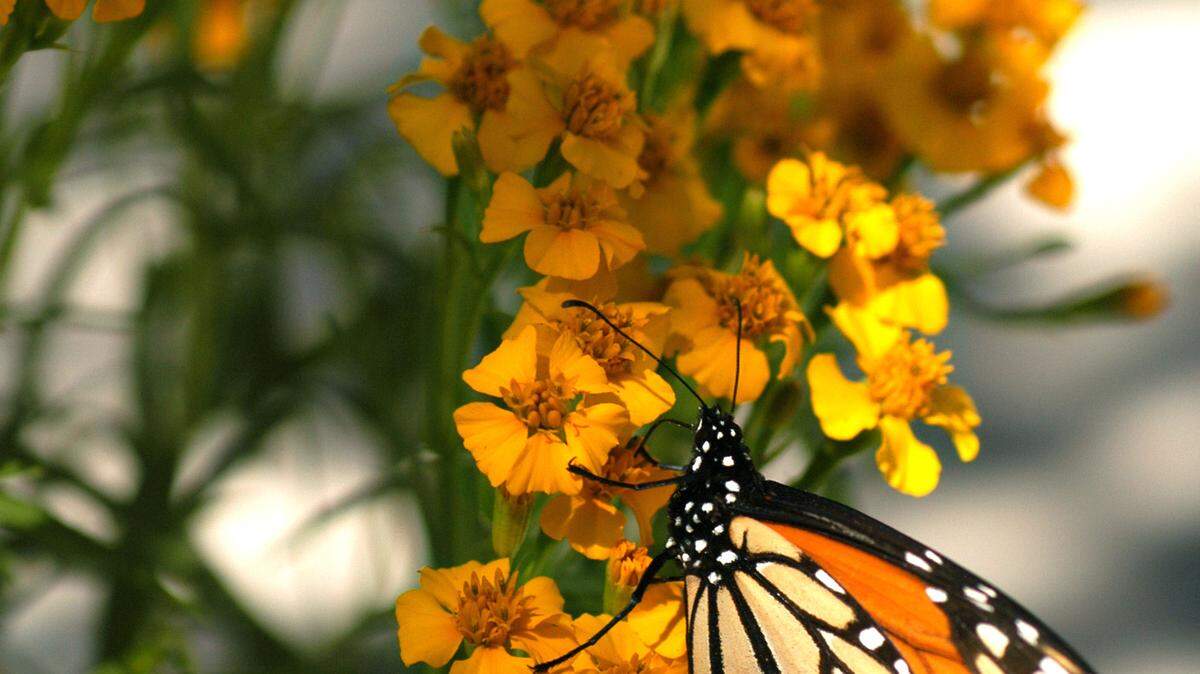
Mexican mint marigolds’ flowers are also favorites of migrating Monarchs. And the foliage is richly and wonderfully fragrant, with the aroma of tarragon with a touch of anise. It grows to 20 inches when blooming, and like Mexican bush sage, it’s a bit on the tender side in severe Texas winters, so mulches are always in order. Trim it back to 3 or 4 inches after the first hard freeze, then lay in the mulch.
Mexican petunia (Ruellia brittoniana)
If you grew up in Texas, especially in a small, older town, you’ll remember having seen this plant in heirloom gardens. And it’s probably still growing there. Those old gardens were seldom irrigated, so this plant didn’t have much of a chance of invading.
Modern landscapes, by comparison, are too kind to it and it spreads freely, even invasively. If you’re going to try it in them, you’ll want to have it contained by concrete or some other deep edging on all sides. Given that consideration, as well as shade from mid-morning on through the rest of the day, it makes a lovely perennial.
If you can’t meet those restrictions, dwarf selections like Katie’s dwarf and Bonita (pink-flowering) will get you around all of those problems quite well.
Mexican feathergrass (Stipa tenuissima)
This is a lovely and extremely graceful ornamental grass that grows to be 12 to 15 inches tall in the landscape. It’s being used by the thousands of square feet in North Central Texas landscapes each year.
While I believe that it, like many of the other ornamental grasses, definitely has a place in our landscapes, it’s my own opinion that it’s being over-planted. I see many places where it thins out and even dies away after two or three years.
For that reason, I would use it in limited quantities and give it a “test drive” in your landscape. I think you’ll like the results, but I would limit your risks.
You can hear Neil Sperry on KLIF 570AM on Saturday afternoons 1-3 pm and on WBAP 820AM Sunday mornings 8-10 am. Join him at www.neilsperry.com and follow him on Facebook.