
Things are bound to wear out in your lawn
When we bake and decorate lovely cakes, we don’t expect them to last forever.
And when we paint our walls, we know that handprints are sure to leave them in need of repair and touchups eventually.
It’s odd then, how often folks think that plants are “forever” – that they can dig a hole, set a plant in the ground and walk away and never think about it again. Friends, it just doesn’t work that way in gardening.
Some plants do thrive pretty much on their own. They’re suited to our soils and our climate, and they can go on about life pretty much without human intervention.
I’m not talking about those plants today, though.
I’d like to work through a list of plants that wear out. These are plants that may need to be replaced now that we’re returning to fall’s great landscaping weather. (You do know that fall is the best time for planting new trees and shrubs, don’t you?)
These plants that I’ll list will be the types that have grown tired of some element of their co-existing in our landscapes. I’ll identify them and explain how and why they’ve gotten to this point. Then we’ll look at the best way out of the problems.
Time for a change
If you find yourself in any of these situations, it’s probably time for a landscaping makeover. Scroll through them and see if any sounds at least vaguely familiar.
Shrubs have become bare at their bottoms. All the new growth is at the tops.
My guess here is that you have been trimming these shrubs to maintain them at a certain height, width or shape for a number of years. New growth is produced near the fresh cuts, and over a period of time, that new growth shifts farther and farther up the stems. The bottoms of the plants become more and more woody, with fewer new buds to produce new shoots.
You have two options. You can trim the plants way back late this winter (late January/early February) and hope for vigorous regrowth in spring, or you can take them out now and replace them with some shorter type of shrub that won’t require the frequent pruning. The second choice is the far better option.
Azaleas, loropetalums (fringeflowers), gardenias, or hydrangeas have gradually become yellowed, and even iron doesn’t do much to help them.
These are all plants that need copious amounts of iron to maintain deep green leaves. They get that iron out of the soil, but iron becomes insoluble (therefore “unavailable” to them) in alkaline soils. If we do things correctly, we set these plants into highly amended planting beds that contain almost exclusively 15 or 18 inches of organic matter such as sphagnum peat moss and finely ground pine bark mulch.
Unfortunately, over 5 to 10 years, that organic matter decays and loses its acidic properties and the plants begin to show iron chlorosis. The beds may even sink lower, creating poorly draining soils. And, since our local irrigation waters are all highly alkaline, the problems get worse in a hurry.
If we go into our plantings of these high-maintenance species knowing all this, we’ll be content to redo the beds after 8 or 10 years and give things a fresh start. If not, we’re likely to be frustrated for years.
Grass is thinning, even dying where it used to thrive. Even new sod fails.
We’ve addressed this many times before here – enough so that I’m not going to tie up a lot of space with it now. This is almost always due to insufficient sunlight. I’ve been in this business for decades, and folks will argue this point with me until I just wish them well and go on to other things. I figure they’ll eventually learn just as I did.
Trees grow larger and shade becomes more dense. The differences happen slowly and they are painfully subtle. We try new sod, but within a few months, even St. Augustine, our most shade-tolerant grass, thins out. That’s because it’s not only not getting enough light, but it also has been dug with great loss of roots.
The solution, assuming we’re unwilling to take out trees as a means of gaining more sunlight, is going to be shifting to a shade-tolerant groundcover. It’s not giving up – it’s just refocusing our plans.
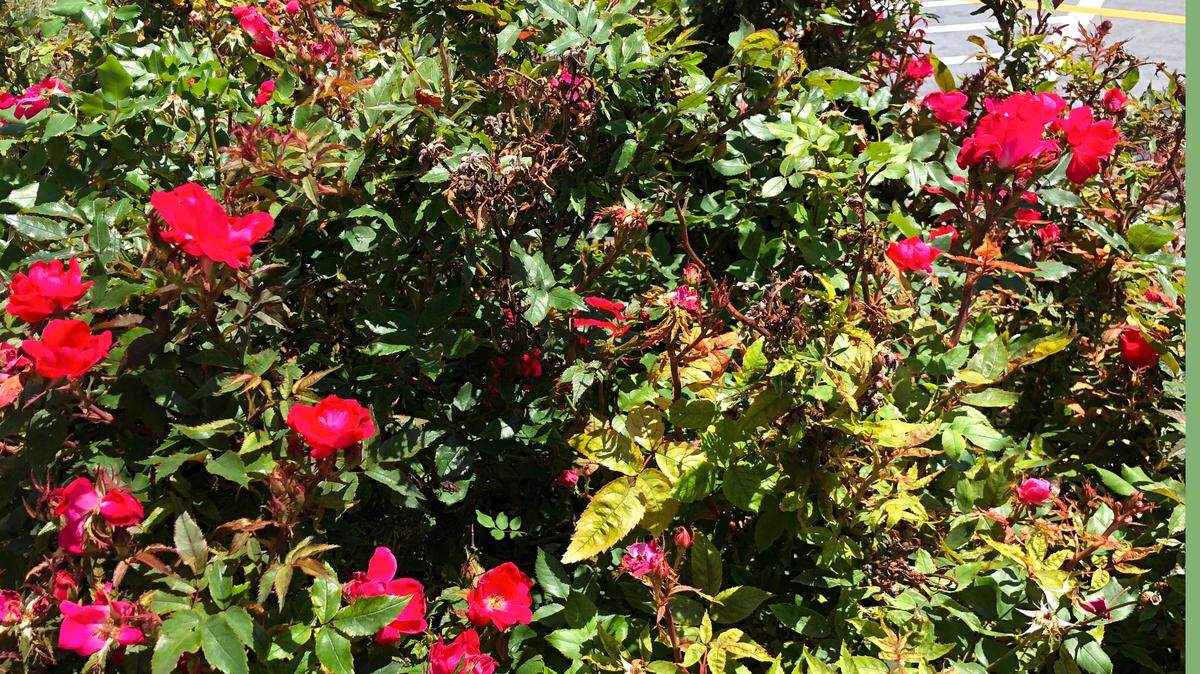
Roses are stunted and appear to be dying.
For 10 years now roses in the Metroplex have been assaulted by rose rosette virus. It’s a fatal disease that’s spread by an invisible mite that’s carried by the wind. There is no preventive spray for either the mites nor the virus, nor is there a cure for the virus.
The identifiable clues of RRV are buds that don’t open properly, ultra-strong, “bull” canes that are three or four times the size of normal canes, canes that have perhaps 10 times the normal number of thorns, and dying branches and eventually dead plants.
The only way of dealing with RRV is still to remove the afflicted plants, roots and all, put them in plastic trash bags and send them to the land fill. Pruning out the dead branches only perpetuates the problem and allows it to spread.
I’m asked how long we must wait before replanting new roses, and no one has given a definitive answer. As long as there are active mites in the neighborhood, the disease will probably return. All varieties seem to be susceptible. Your best alternatives are to switch over to annuals or Petite dwarf crape myrtles until a work-around for RRV has been identified.
You can hear Neil Sperry on KLIF 570AM on Saturday afternoons 1-3 pm and on WBAP 820AM Sunday mornings 8-10 am. Join him at www.neilsperry.com and follow him on Facebook.