
It’s time for a Labor Day lawn care wrap-up
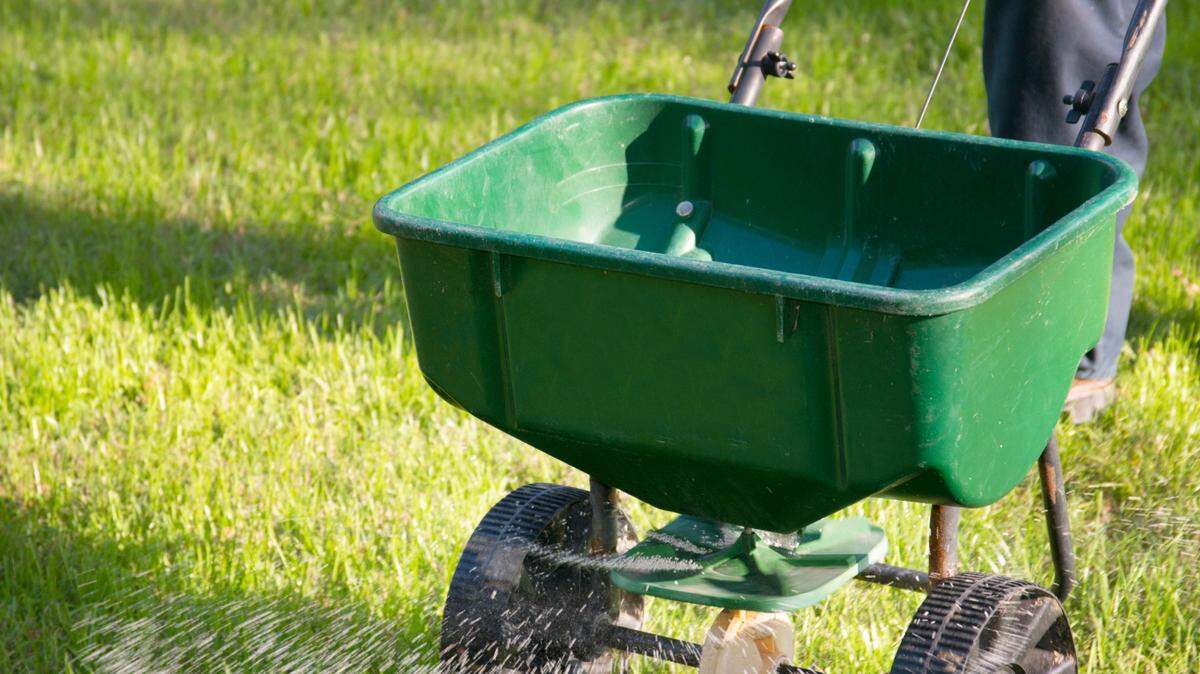
Not to beat the drum too often, but you do remember last week’s critical message, don’t you?
It’s time to apply your pre-emergent weedkiller granules if you expect to have a lawn that’s weed-free next spring.
We have a two-week window running from August 25 through September 7 in which we can apply Dimension, Halts or Balan to prevent germination of annual bluegrass (Poa annua), rescuegrass, ryegrass and other cool-season winter grasses that germinate in September and become gosh-awful unsightly with the first warm days of late January and February.
Yes, September 7 means that you need to get it done right away. It’s not like a ticking time bomb that’s set that precisely, but please just don’t put it off any longer than you must.
Nighttime temperatures are going to start falling into the 60s very soon, and that’s when those unwanted plants’ seeds will start to sprout. Coupled with recent rains, this could be a banner year for the weeds.
We also have a well-known population of non-grassy (broadleafed) weeds that come along at the same time. Chief among them are dandelions, clover, henbit and chickweed, but you’ll also see the painful lawn burweed (not to be confused with grassburs or bur clover). All of these broadleafed weeds can be prevented by an application of Gallery pre-emergent weedkiller granules.
The critical factor on these pre-emergent herbicides is that they must be put down before the weed seeds germinate and start to grow. Once they are growing, pre-emergent products won’t work on them. And, because we have no post-emergent weedkiller spray to control the grassy weeds, Dimension, Halts and Balan represent your only chance of dealing with them.
If you don’t use one of them (not all of them!), you are going to have the weeds. With the broadleafed weeds, you do get a second chance. Broadleafed weedkiller sprays (containing 2,4-D) applied in late fall will eliminate existing plants that have started to grow.
Here are a couple of final notes on pre-emergents, then we’ll put the topic away for the rest of the year. First, they are safe on any type of lawn grass, although they should not be applied to a lawn unless it has been through at least one winter. They are safe beneath trees and shrubs, but always read and follow label directions just to be sure.
Finally, these products may be difficult to find.
Local independent retail garden centers, hardware stores and feed stores are usually your best options – places where you can go in and talk to a full-time local nursery professional who can answer your questions with experience and authority. But sales have been brisk and supplies may be running short. Call ahead and shop as soon as you can.
The subject then turns to fall feeding. I’m not a big advocate of weed-and-feed products. There’s too much risk of doing harm to trees that share the same soil as your lawn grass.
It’s better to do the things in steps: Mow your lawn. Apply an all-nitrogen food with upwards of half of that nitrogen in slow-release form. Water to soak the fertilizer into the soil. Let the grass dry. Apply the Dimension, Halts or Balan granules. If you’re going to apply Gallery, make another pass across the lawn with it. Water the lawn enough to wash the granules uniformly across the soil surface.
Some broadleafed weeds are growing quite actively right now. Although vigorous, one is still hardly noticeable, but it will soon come into full flower. That’s roadside aster. The plants’ small leaves are hardly visible, and its wiry stems adapt to almost any mowing height. But when the dime-sized, lavender-white, daisy-like flowers start popping up everywhere, that’s when you know you have a real outbreak. In spite of the small leaf size, a 2,4-D broadleafed herbicide spray will eliminate them before they go to seed.
I’m also getting more and more questions about Virginia buttonweed. It has become quite a problem through North Texas lawns. Its green leaves blend in with our turfgrass so that we may not even notice it, but then small white flowers start showing up. In this case they have four petals and look like little stars in the lawn. You really want to eliminate this one before it starts to spread. Dig it out if you can. If that doesn’t work, apply 2,4-D spray regularly until it goes away. You really don’t want to mess with this one.
Chinch bugs are still active in St. Augustine turf. If you have parts of your lawn that look like they’re burning up even though you’re watering them carefully, and if they’re in the sunniest parts of your yard, that would probably be the work of chinch bugs. Their season is just about over, but you could still justify spraying with a labeled insecticide to stop any further damage. The harm they do to St. Augustine turf can be quite significant, even requiring that you replant large areas. They will reappear in the same spaces each summer. Learn to anticipate them in July and August and be ready to rescue the lawn at first signs of their activity.
You can hear Neil Sperry on KLIF 570AM on Saturday afternoons 1-3 pm and on WBAP 820AM Sunday mornings 8-10 am. Join him at www.neilsperry.com and follow him on Facebook.