
Take a look at some of the most common questions regarding lawn care
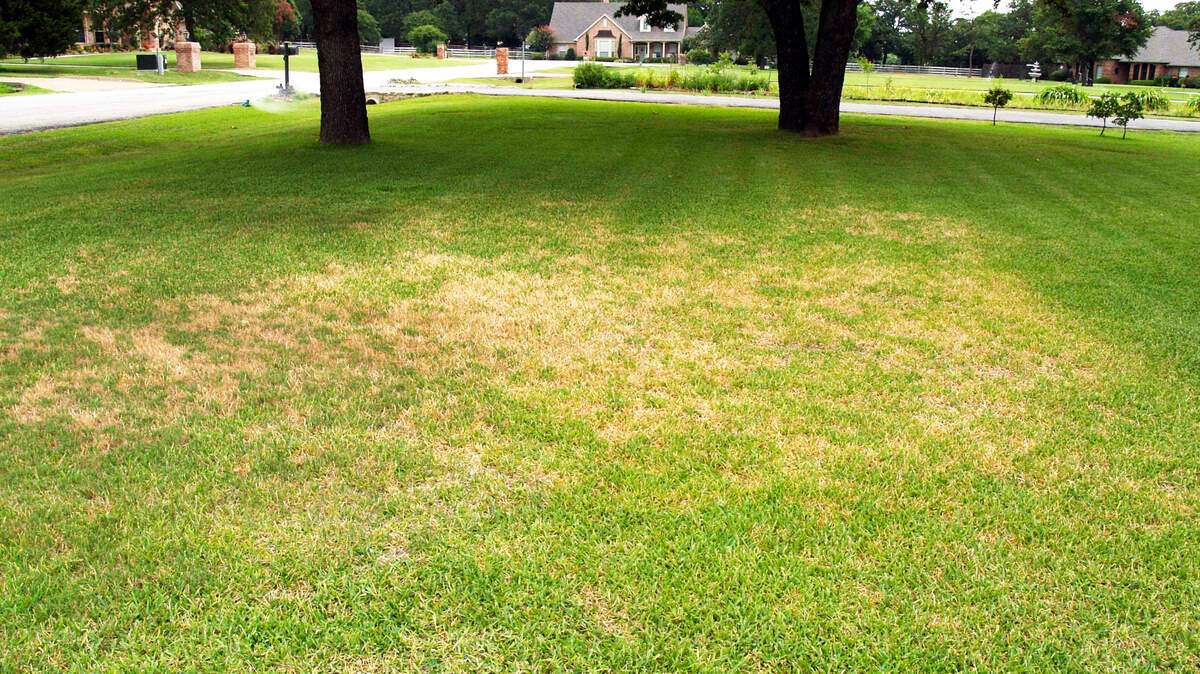
It’s Turfgrass Dodgeball out there right now.
It seems like every person I talk to has some kind of lawn question. I’m going to jot down the ones that I’m hearing most often.
- Can take-all root rot still be active in my lawn?
It’s unlikely. If you’re still seeing the yellowed patches, be sure it’s not gray leaf spot. Look for diamond-shaped, gray/brown lesions on the midribs of the blades. TARR is a cool-season disease that normally runs out by summer. Gray leaf spot kicks in when it gets hot. The good news is that Azoxystrobin fungicide controls them both.
- How can I tell if I have chinch bugs?
They attack St. Augustine. The affected areas will appear dry, but watering will not correct it. They will always be in hot, sunny areas, often along curbs. If you part the grass with your fingers and look closely you’ll be able to see the BB-sized black insects moving actively within the affected areas. There are several insecticides labeled for their control.
- Why is my St. Augustine dying near my live oak tree?
Almost without fail there’s a lack of sufficient sunlight. Live oaks cast very dense shade over wide areas. Usually you’ll notice that the grass gets thinner the closer you get to the trunk. That actually applies to other types of trees as well. There is no more shade-tolerant grass. Thinning the tree rarely helps for more than one season. It’s best to consider a shade-tolerant groundcover as a replacement.
- Should I raise my mower right now? Does it help the lawn if I mow the grass slightly higher?
Mow at the height that is recommended for the type of grass that you’re growing. Mowing it higher will encourage it to become thin as blades will be more upright. Weeds will get a start, and the sun will hit the exposed soil. All of that leads to wasted water. Low, dense turf is the best alternative.
- How often should I be watering my lawn?
There is no good answer, because it depends on soil type, temperature, type of grass and other factors. However, when it’s approaching 100F and you’re maintaining turf in black clay soils common to the Fort Worth/Dallas area, it’s likely that you’ll need to water deeply two times per week. Your goal is to water to 6 to 8 inches deep, then to wait for the surface of the soil to begin to dry before you soak the soil again. That could be on a 3-day interval followed by a 4-day interval. The best solution if you have an automatic sprinkling system, however, would be to have a “smart” controller installed.
- How can I get rid of nutgrass?
Confirm that you have nutsedge (also called “nutgrass,” although true grasses have round stems and sedges have triangular stems). The original Image product does a good job when used according to label directions, as will Sedgehammer.
- I have patches of what looks like cigarette ashes on my lawn. The grass looks healthy otherwise. What is that and should I be worried?
It’s a fungus known as “slime mold.” What you are seeing is the mold’s fruiting spores. They are using the grass blades merely for support. They are doing no harm, and no corrective actions are needed.
- Should I fertilize my lawn now?
If it has been 8-10 weeks, yes, especially with bermudagrass. Gray leaf spot fungus attacks St. Augustine in the summer, and it is accelerated by feedings with nitrogen. If your St. Augustine has gray leaf spot, or if you have a history with that disease in your lawn you should avoid fertilizing the grass until the first week of September. Zoysia lawns can be fed on 8- to 10-week intervals.
- Do I need to catch my grass clippings as I mow?
There are benefits to catching clippings. You help slow the rate with which we fill our valuable landfill space. More importantly, you get to recycle the nutrients the grass clippings contain. After all, you paid good money for the bags of fertilizer you applied to your lawn. Third, the organic matter can be put to good use. However, those clippings could lead to build-up of thatch on the surface of the soil, much to the detriment of your lawngrass. That’s especially true if you use fast-release nitrogen, if you’re growing bermudagrass and if you allow the grass to go a week or longer between mowings. If you use a dedicated mulching mower, and if you use a high-quality lawn food with upwards of half of its nitrogen in slow-release form, and if you mow every 4 or 5 days, you can leave the clippings on the lawn. However, if you ever do decide to bag them, just remember not to send them to the landfill. Use them in the compost pile.
- How can I get rid of dallisgrass?
We have no herbicide that will kill it without killing your “good” turfgrass. You’ll need to spot-treat with a glyphosate-only weedkiller or dig it out by hand. If you choose the former, cut the bottom out of a 1-gallon milk carton. Take the lid off and stick your spray wand in through the opening. Press the bottle down over the clump of dallisgrass and spray. That will prevent the herbicide from drifting.
- Can St. Augustine, bermuda and zoysia grow together, or will one grass predominate?
St. Augustine will trump them all. It will overtake both of the others. Bermuda would probably invade zoysia. Zoysia is just too slow growing. You really need to commit to one type of turfgrass.
- Can I plant new grass right now?
Yes, but don’t delay much longer. You want to have warm-season grasses planted by the end of August so it can develop strong and deep roots by the time of first frost. That’s especially critical with St. Augustine, our most winter-tender type. Be prepared to water new grass a couple of times daily for a week or two when you plant it at these temperatures.
You can hear Neil Sperry on KLIF 570AM on Saturday afternoons 1-3 pm and on WBAP 820AM Sunday mornings 8-10 am. Join him at www.neilsperry.com and follow him on Facebook.