
Pomegranates are handsome, healthy and a great addition to your garden
When I was a kid I used to travel long highways with my dad crossing hundreds of dry miles of West Texas ranchland.
He was a research scientist with Texas A&M, and he was working with sheep and goat raisers to find herbicides that would eliminate plants that were killing their livestock.
Their ranch houses were almost always miles off the highways. Sonora. Junction. Sterling City. Uvalde. Kerrville. Marfa/Valentine and the highlight of them all, Mentone (seat of Loving County), the least populated county in Texas.
Those Sperry boys got around.
And one of the things that we found in almost every one of those ranch house side yards was a pomegranate or two. I marveled at how tough those old plants were, growing out there with the sagebrush and rattlesnakes and blooming their heads off every summer when we went out to check on Dad’s plots.
He looked at his bitterweed, coyotillo, Texas mountain laurel, African rue and other poisonous plants. I was excited to see the pomegranates.
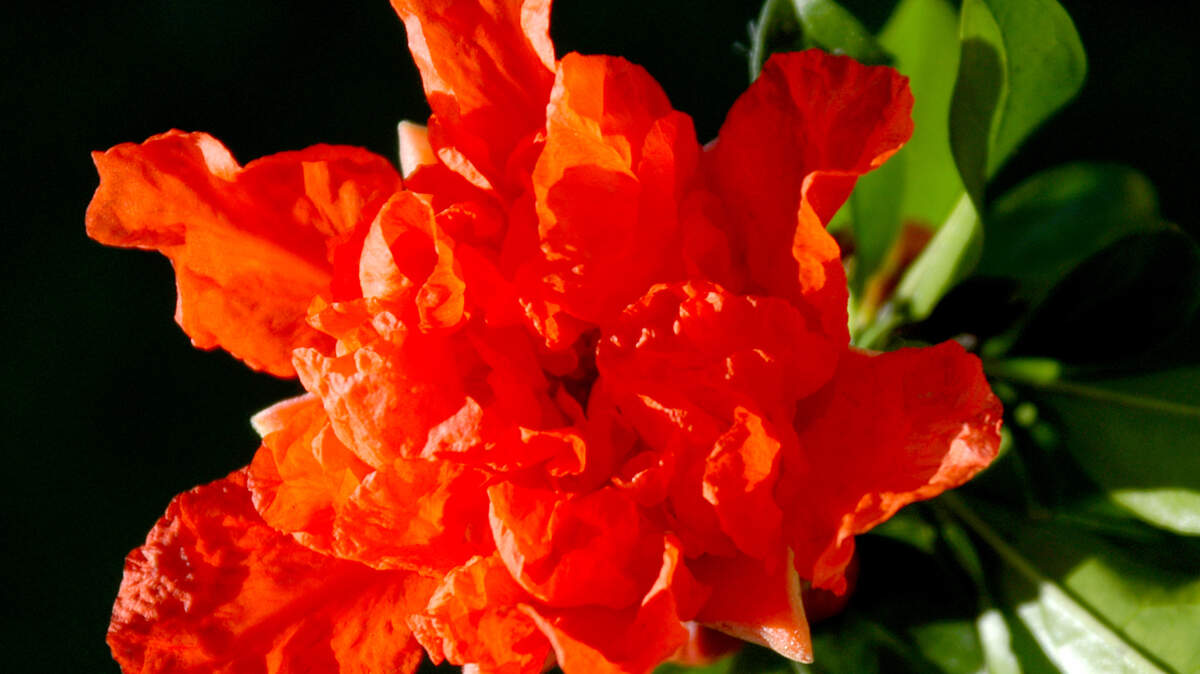
At the same time the grounds maintenance people at Texas A&M were using ornamental pomegranates all over the campus. They were actually showier when they were blooming because they had two or three times as many petals, but they didn’t set fruit. On the other hand, that meant that they would keep blooming longer since they could devote all their energy into producing flowers.
Enough of the generalities. Let’s talk about what you really need to know about this historic old shrub.
Pomegranate (Punica granatum)
- Generally grown as a large shrub to 8 to 12 or 14 feet tall and 8 feet wide.
- Usually grown multi-trunk, but occasionally trained single-trunk as a small tree.
- Winter-hardy to Zone 8 or into Zone 7. May sustain damage in colder areas of the Fort Worth/Dallas Metroplex, notably rural areas north of the cities.
- Dark green leaves 1 inch wide and 3 to 4 inches long.
- Fall color is bright yellow. Plants are deciduous.
- Flowers are orange-red 2-3 inches across with many petals.
- Fruit is orange-red in color and generally tennis-ball-sized. Its skin is thick and leathery, and the insides of the fruit will be packed with seeds encased in juicy cells. All parts of the interior are edible, both fresh and preserved, although the texture may require getting used to.
- The variety ‘Wonderful’ has historically been the pomegranate of choice, but newer types have done very well and are of superior quality. They are detailed in Texas A&M AgriLife Extension publication E-613, available online and entitled simply “Pomegranates.”
- According to that publication, pomegranates are not quarantined for plant insects or diseases, so they can be bought from sources all over the United States and shipped into Texas.
- The University of California at Davis campus does extensive work with pomegranates. They are the National Clonal Germplasm Repository for pomegranates. Their website contains a wealth of information and photos.
How you can best use pomegranates
If you’d like to include one or two pomegranates in your own garden, this is a great time to find them in local nurseries.
- Find a place with ample space (at least 8 or 10 feet from other shrubs and buildings).
- They require full or almost full sun.
- They’re fine with our alkaline soil, but since they like arid conditions, be sure your planting site drains perfectly.
- Decide whether you’re going to try to produce fruit and accept the less showy flowers, or whether you want the ornamental type of pomegranate. (Remember that some of the varieties are quite hard to find in local nurseries. You may have to buy them online.)
Varieties
- ‘Wonderful’ has been the standard for decades and it still is. Its fruit are large, orange-red and quite juicy. Local nurseries normally stock it, but get there before it sells out.
- ‘Angel Red’ is a variety that’s highly touted by one of the huge West Coast growers as being “the best pomegranate ever.” My friend Jimmy Turner, who worked at the Dallas Arboretum back then, before he moved on to become top horticulturist at the Royal Botanic Gardens in Sydney, Australia, was the one who first suggested it to me. It should be available as well.
- ‘Nana’ (sometimes labeled as ‘Chico’) is a dwarf type to 36 inches tall and 30 inches wide. It bears dozens of small pomegranate blooms and ping pong-ball-sized fruit. It makes a handsome little flowering shrub in a perennial garden.
- ‘Orange Blossom Special’ is a special selection, also a dwarf, with even more merit. It’s been given extra push by the growers and marketers.
- ‘Pleniflora’ is a double-flowering ornamental type to 10 feet tall. Its large carnation-like flowers are brilliant orange-red. It does not set fruit. I get calls from people wondering why their pomegranate never bears fruit in spite of its showy blooms, and this is usually the type that they’re growing.
- ‘Albescens’ is a creamy-white-flowering type that also rarely produces fruit. It begs the question: “Why would someone want to plant a pomegranate and not get the brilliant orange-red flowers?
You can hear Neil Sperry on KLIF 570AM on Saturday afternoons 1-3 pm and on WBAP 820AM Sunday mornings 8-10 am. Join him at www.neilsperry.com and follow him on Facebook.