Here’s an easy-care tropical you can keep going almost forever
Metaphorically speaking, I backed into Aloe vera around 1970. A garden broadcaster in another market was touting it as if it were the end-all for all medical maladies. Because some of his other horticultural recommendations were undeniably suspect, I pushed it aside in my mind for a few months. But more and more people started talking about it — people whose opinions I trusted. I was still in my “formative” years, and my ideas on this succulent plant began to solidify.
Because I’ve always had a love of cacti and succulents in general, I was certainly willing to invite it into my collection, and to my pleasant surprise, it was a handsome addition. My plant thrived and soon filled its pot. And, as luck would have it, a small household accident while ironing my shirt caused me to give its “burn remedy” prowess a try. The gel in just one Aloe vera leaf put a quick end to the pain. I was an instant believer. I had a new friend. I’ve never been without it since.
I soon learned that billions of humans had found the plant before I had. (I’m used to that kind of humiliation — I’m a grandpa and we learn things slowly.) Aloe vera, I discovered, had been used as far back as ancient Egyptians 2,000 years ago. The Royal Botanic Gardens in Kew tell us that Cleopatra used it as part of her beauty regime. But its medicinal uses date back much farther.
The website of Hilltop Gardens in the Rio Grande Valley tells us they first planted Aloe vera as a field crop on 100 acres in 1939 — likely the first commercial Aloe farm in the United States. Lee and Sherman Ewald founded the business, and by 1962 Lee, with the help of her two daughters, had developed cosmetics using Aloe vera and was successfully marketing them. The company sold in 1976, and by 1981 the new owner, R.C. Benson, formerly of Houston, was growing more than 200,000 Aloe vera plants on the property. It has sold again, and the business continues to expand, although February 2021 was hard on their plants, just as it was to our landscapes.
What does all that mean to you and me as average North Texas gardeners who enjoy something a little unusual? It means this is a plant that might be fun to have in your sunroom in winter and out on your patio over the summer. Oh, it can’t handle our winters, so there’s no way it’s going to be a plant for your landscape, but it’s an easy-care tropical that’s a little like sourdough — you can keep it going almost forever.
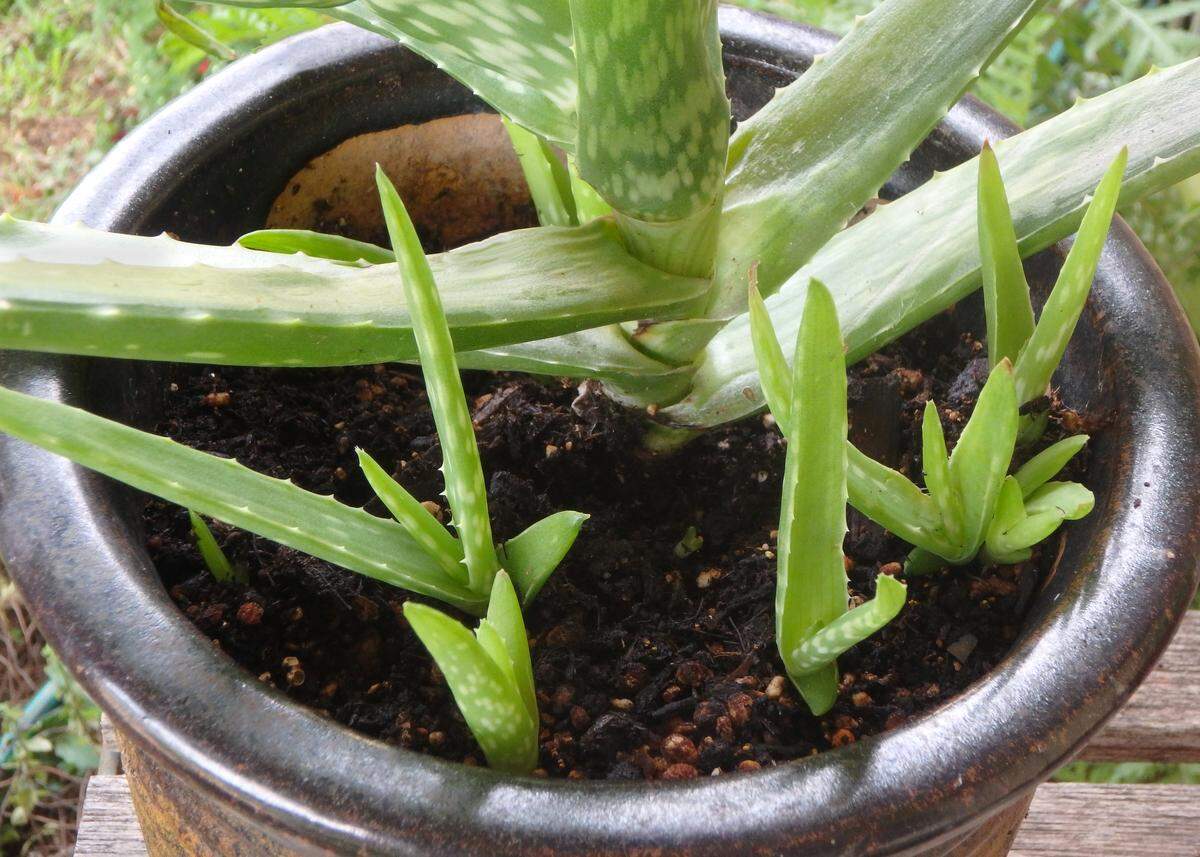
Aloe vera plants can be grown in one of two ways. You can allow them to throw out their little “pups,” that is the side shoots that come up from the bases of the mother plants, or you can pluck those out with a knife and let the mother plant develop single file.
If you do the former, allowing all the pups to develop, you’ll get a thicket of small plants in a robust clump. There’s nothing wrong with that. It’s a neat way to have a tuft of fleshy leaves. Or, if you prefer to dig out the pups, you can pot them up individually and have your own little nursery of Aloes. The side benefit of that is that the mother plant will get larger and stronger. It will develop a short trunk, and eventually, probably after 12 to 18 months, it will send up a prominent flowering spike that will bear yellow blooms. It’s quite an event when that happens.
The important particulars of Aloe Vera
Common name: Aloe Vera, burn plant (Note: specific epithet can be in upper case when used in common name. Should be lower case when it’s part of the plant’s scientific name.)
Scientific name: Aloe vera, (formerly) Aloe barbadensis
Native home: Arabian Peninsula, specifically Yemen and Oman. It has been spread (naturalized) to Egypt and Africa and around the Mediterranean, also to India.
Temperature range: Prefers 60-90F. Tolerant of higher temperatures but will not tolerate freezes.
Lighting preferences: Full sun, but light shade in afternoon in summer is good here in Texas.
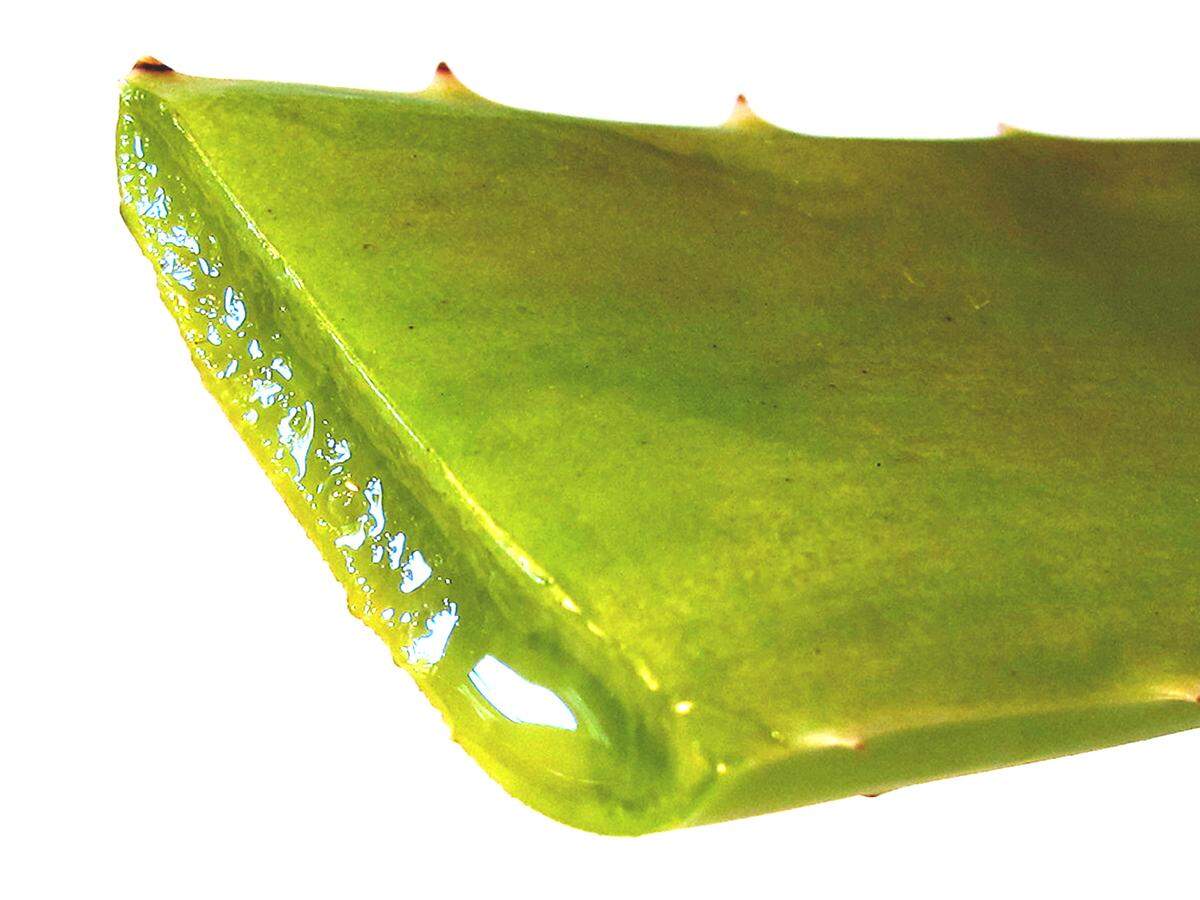
Leaves: Long, strap-shaped with harmless “teeth” along margins. Fleshy and filled with sap that provides the soothing gel used as instant relief from burns and sunburns. Sap should not be eaten directly without direction of medical professionals.
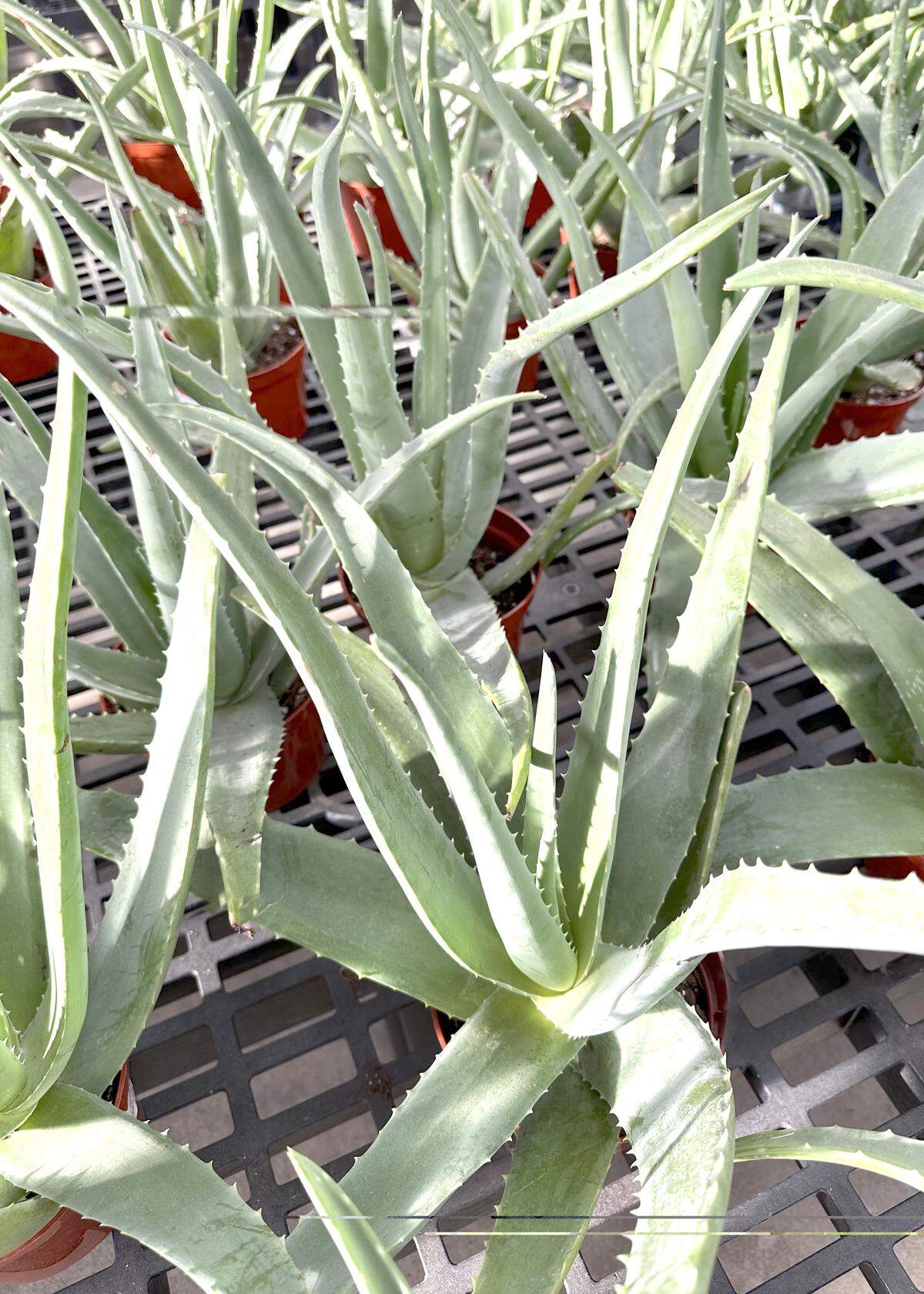
Mature size: If grown as single plants: to 2 to 3 feet tall and wide. If grown as clumps, to 18 inches tall and 24 inches wide.
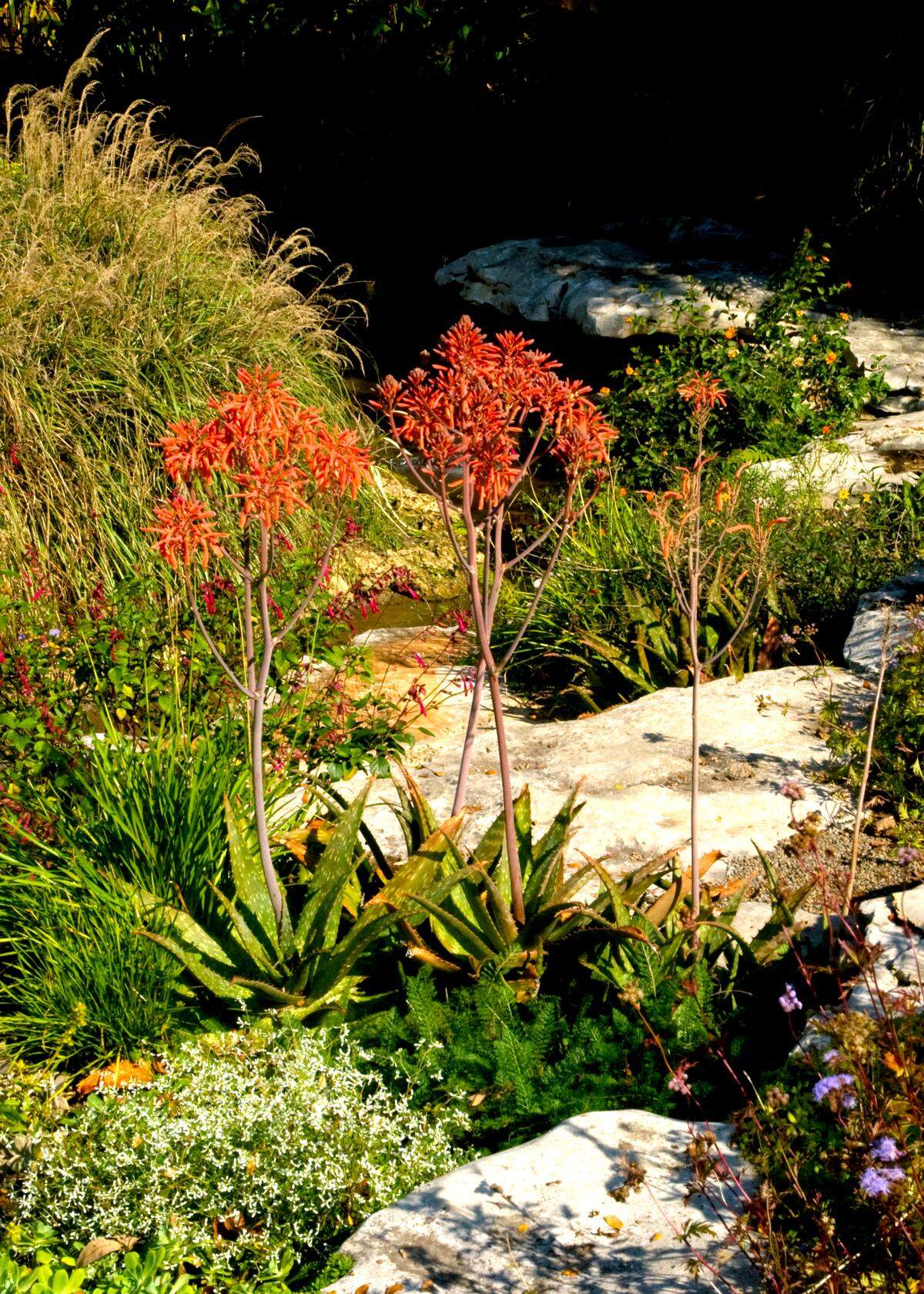
Flowers: On single plants more often than from clumps. Showy racemes to 24-30 inches with yellow blooms typically in summer.
Propagated: By division of the offsets, or “pups.”
Pest problems: Mealy bugs may be occasional problems. Wipe them off with a cotton swab dipped in rubbing alcohol. As common as they are on other succulent plants, I’ve never experienced them on my Aloe vera plants.
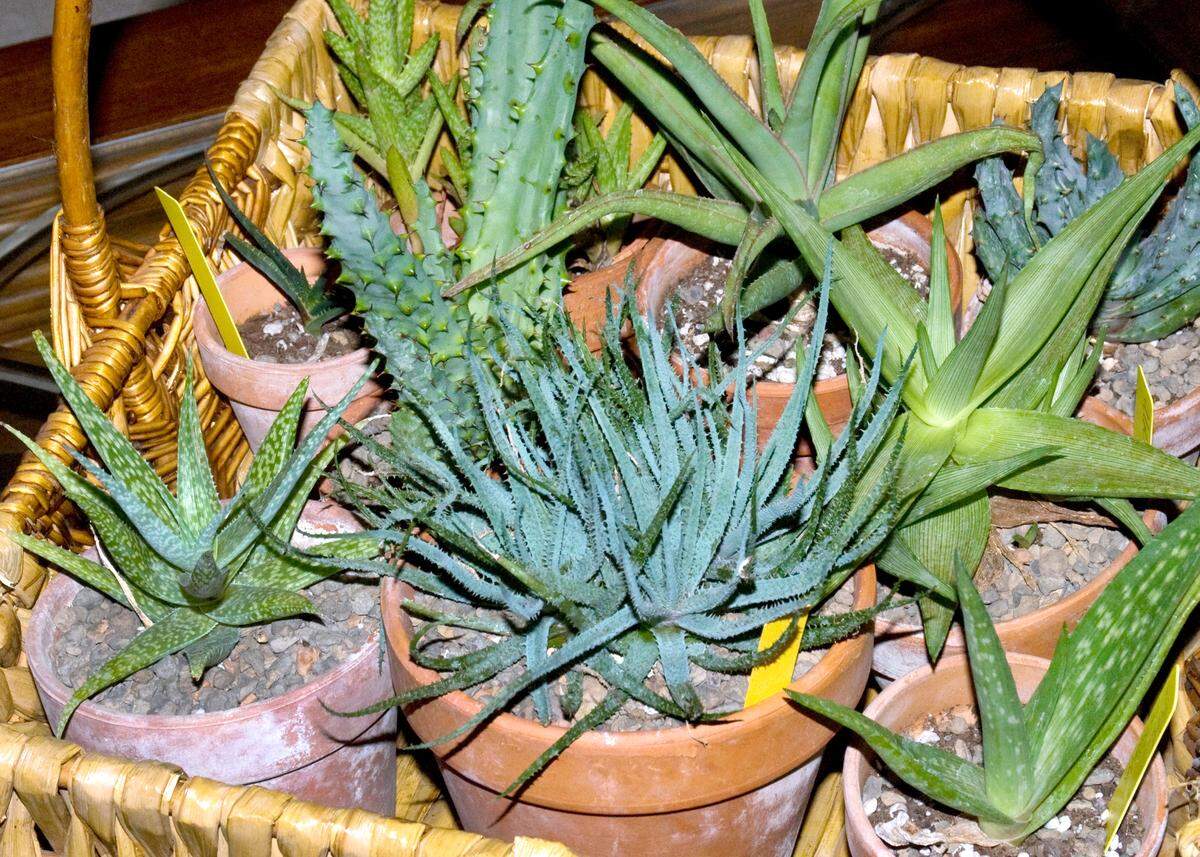
Other Aloes: There are several hundred other species of Aloes ranging in size from tiny ones only a few inches tall at maturity to giant tree aloes. They make an interesting group to collect, but warning: the tall ones get many feet tall. It’s no fun to have to pitch them out just as they’re reaching mature size. Note, too, that many species have very showy flowers.