
Smart gardeners think small. These plants thrive in tight spaces in North Texas
It’s sad to see a plant with potential of growing to 10 or 15 feet tall planted where low windows or nearby walks will force frequent pruning, but that’s what too often happens. You shear and shear until the old plants wear out from all the constant penalties for growing like they’re supposed to. Then you anguish at the thought of having to replace them and start the whole process over again.
Smart gardeners learn to think small. They do their homework, and they plant varieties that don’t grow any larger than the space they have available for them. To save you some of that research, here’s a good starting list for North Central Texas. These are all plants that can be used when the design calls for something on the short order.
Dwarf yaupon holly. I usually think of this one first. It has the smallest leaves, so it brings the finest visual texture to its surroundings. It grows to 24 to 30 inches tall and 30 to 36 inches wide with very infrequent pruning, but many gardeners maintain it slightly smaller with only annual shearing in late winter. It has no spines, and it’s well suited to sun or shade.
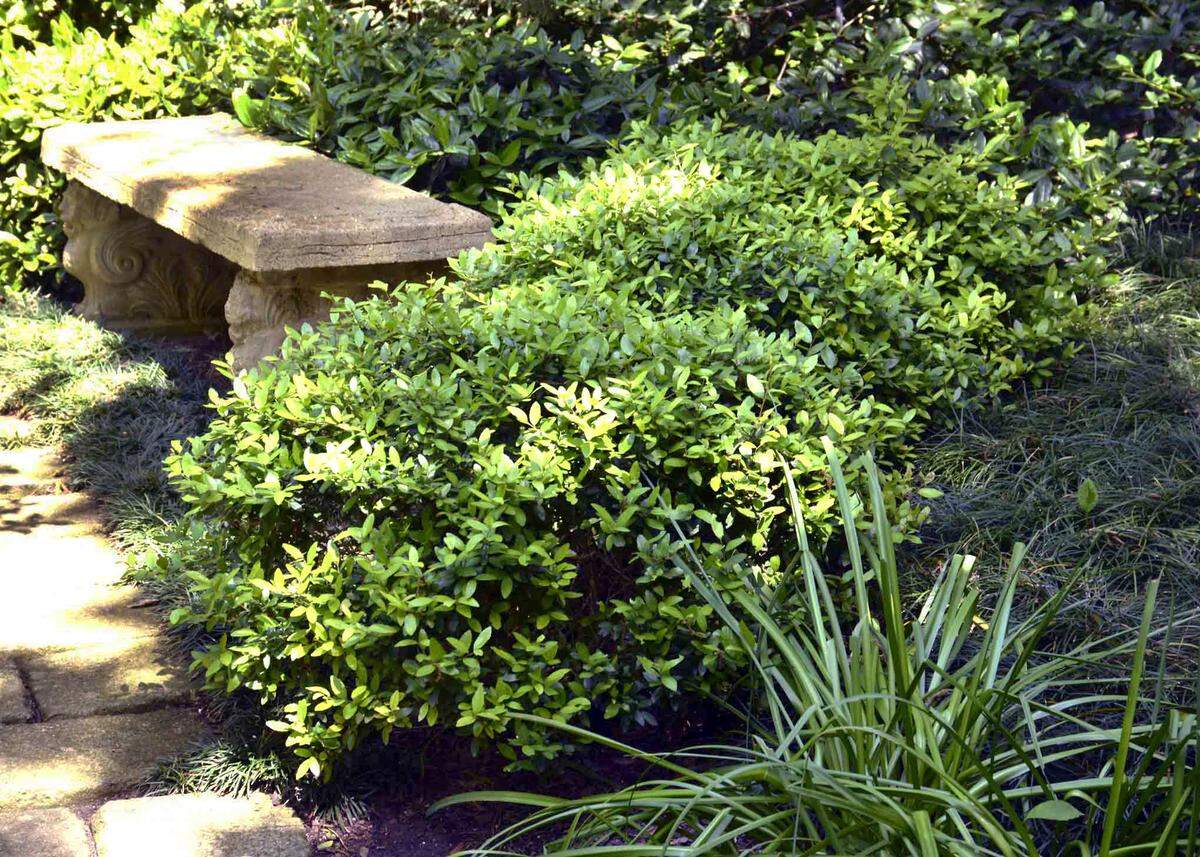
Carissa holly. By comparison, Carissa holly’s leaves are larger, to 2 to 3 inches long. The plants grow to the size of dwarf yaupon or slightly larger, but they’re far bolder visually. I’ve seen them growing very well in full sun (but not against hot, reflective walls). I’ve found them to be best suited to shade and partial shade, with protection from the afternoon sun in the summer. This was apparently a mutation from dwarf Chinese holly, because you will see it reverting to its parent once in a long while. Those vigorous reversions must be kept pruned out or they will overtake the Carissas.
Dwarf Chinese holly. Several wholesalers have told me that this old-time variety is making a comeback. We have finally realized how truly dependable it is as those old plantings have aged gracefully in both sun and shade. My 45-year-old plantings along our front door are even bearing fruit each winter now. Dwarf Chinese holly is boldly dark green and even more boldly spiny. But don’t fear. People don’t walk through your shrubs. I’ve never had one complaint about the several dozen dwarf Chinese hollies I have growing in our landscape. They grow to 36 to 42 inches tall and wide if you never prune them.
Dwarf Burford holly. This is one of the most popular of all short plants. Its leaves have one single and virtually harmless spine. They are extremely dark green and evergreen, and they’re the perfect backdrop for the glorious red berries each winter. If it were never pruned, dwarf Burford holly would grow to be 5 to 7 feet tall, but most people trim it infrequently to keep it much shorter (3 to 4 feet).
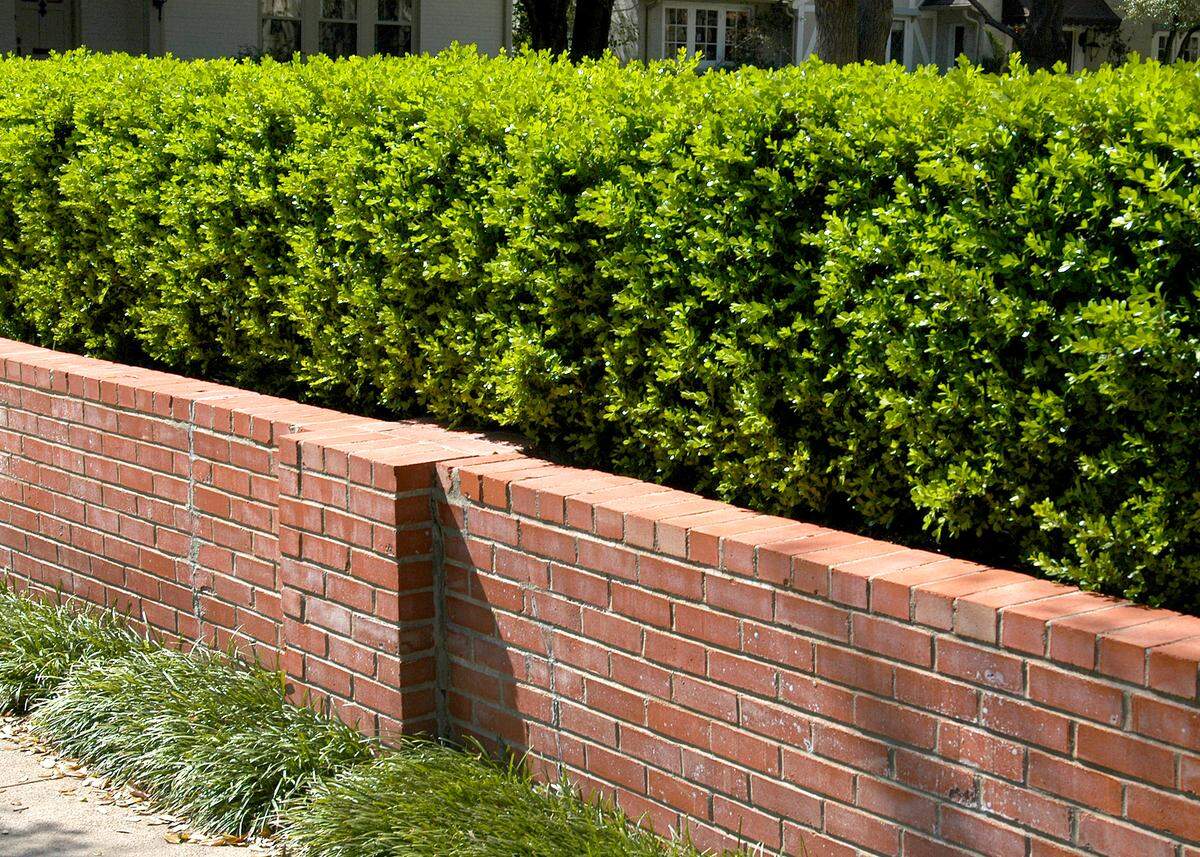
Japanese boxwood. When you think of carefully trimmed and sculpted shrubs, this is quite likely what comes to mind first. It’s been used to line formal drives, walks, and gardens for centuries, and it seems to adapt well to that management. However, choose one of the improved selections ‘Wintergreen’ or ‘Green Beauty’ that hold their evergreen foliage until spring’s new growth kicks in. The older types had the bad habit of turning an unsightly bronze color when temperatures fell into the teens. All of these varieties grow to 24 to 30 inches tall.
Dwarf and compact nandinas. I’m a big fan of nandinas. They all develop beautiful foliar color in winter. Some produce lovely fruit that persists all winter as well. Two notes on those berries: they can be harmful to wild birds who try to ingest them, and they can become modestly invasive if conditions are correct. Both of those problems can be solved if you’ll just clip the clusters off around Feb. 1. That’s before the birds will start eating them and start to distribute them. As far as the short types are concerned, I’m a fan of Harbour Dwarf, Harbor Belle, and Flirt. None of those bears fruit with any regularity. All of them grow to 18 to 27 inches tall.
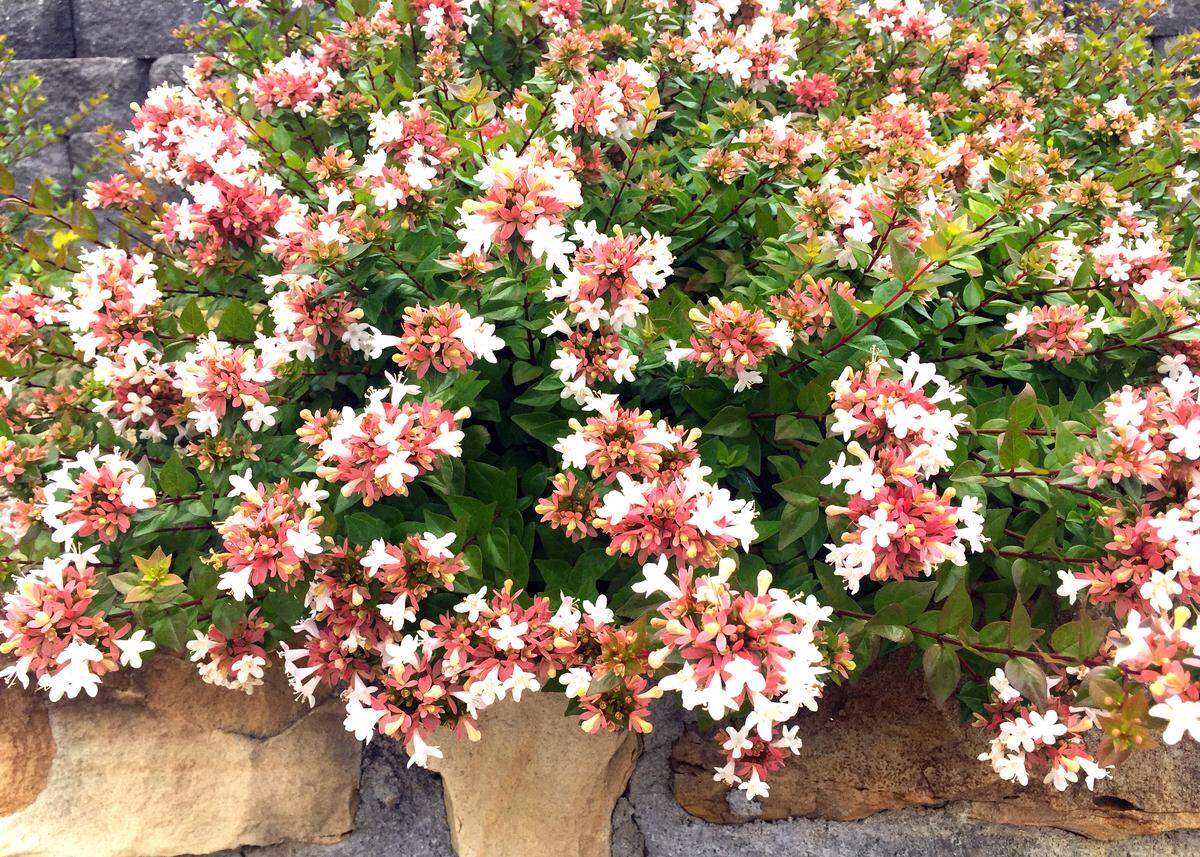
Dwarf abelias. There are several good ones. ‘Edward Goucher’ is a pink-flowering option. ‘Confetti’ grows to 18 to 24 inches and has green leaves with creamy white margins. ‘Kaleidoscope’ grows to 24 to 30 inches tall and 30 to 36 inches wide, and its new growth shows various shades of red, yellow, orange, and dark green. All of the variegated forms do better in highly organic garden soil and with morning sun, afternoon shade.
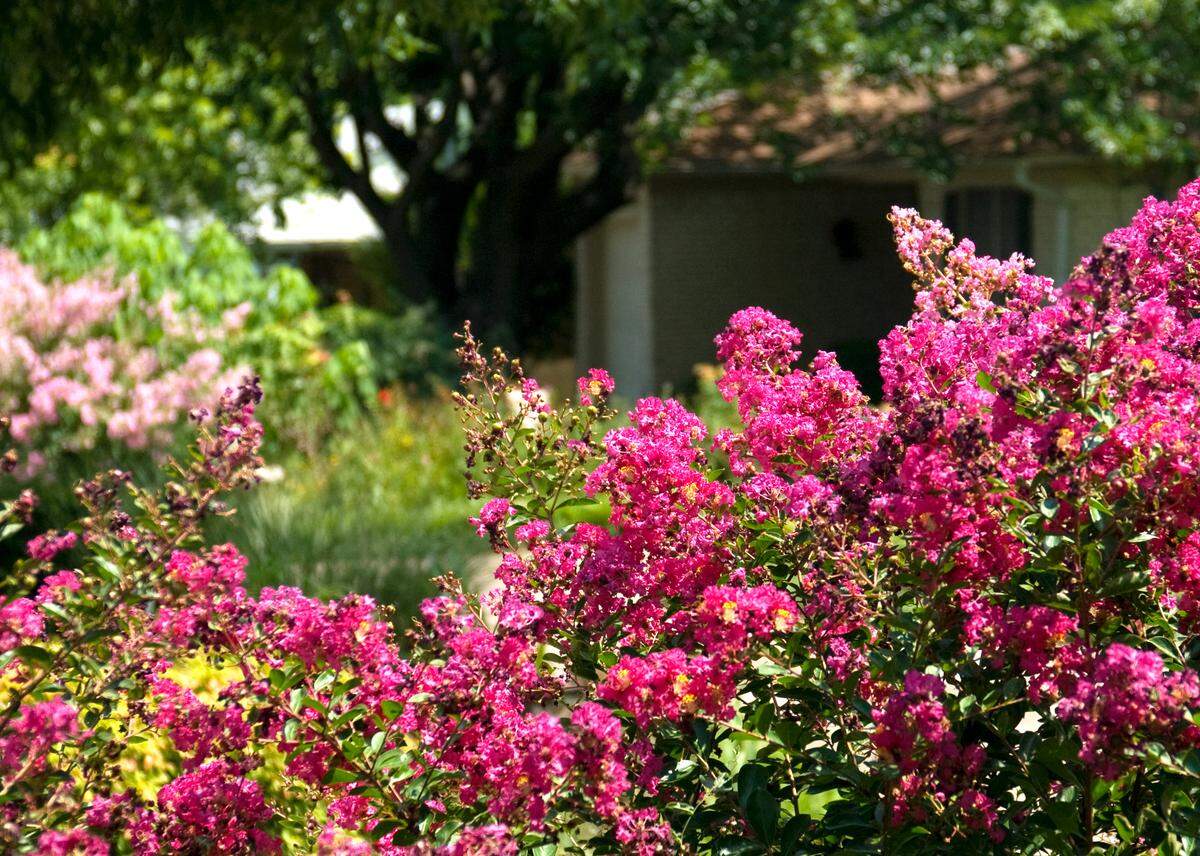
Dwarf crape myrtles. Several collections of colors have been introduced, but none of them has proven better than the original, the Petite Series that was introduced around 1960. They’re still in the market in shades of red, pink, purple, lavender, and white, and they grow to mature heights of 36 to 42 inches They must have full sun, and they are deciduous, so they show best if planted in front of evergreen shrubs.
‘Anthony Waterer’ dwarf spiraea. This is brother to the taller white-flowering bridal wreath group, but its blooms come later into the spring, and they’re in shades of deep magenta, rose, and pink. It’s deciduous, and it does best when planted on the east or north side of a house. Avoid chalky, rocky soils, also hot, reflective, western exposures. It grows to 24 to 36 inches tall.