
The aromas from these bloomers are among Texans’ favorite fragrances in flowers
Our Mexican plum just finished up its annual spring bloomfest. Oh, my goodness, I love that tree and the way it perfumes the air with its sweet smells every March. It’s the little white tree you see tucked into the North Central Texas woodlands and fencerows — the one you hardly notice the rest of the year, but that pops out like a beacon come spring. A beacon that beckons the bees from afar.
Several years ago, I polled a statewide audience asking for their favorite fragrances in flowers. Giving a little leeway to the fact that some of the readers were from South Texas, the results were fun and might be of interest as you plan your spring plantings. I’ll warn you of the ones that will struggle here in North Texas winters.
▪ Gardenias came in first. That’s no surprise. They’re renowned for their spectacular aroma. One plant will fill an entire landscape. Unfortunately, one cold night in our area can kill that one plant, so you’ll need to plant it in the most protected spot you can find. Morning sun and afternoon shade and a way to cover it with frost cloth in extreme cold. Gardenias require acidic planting soils just like azaleas.
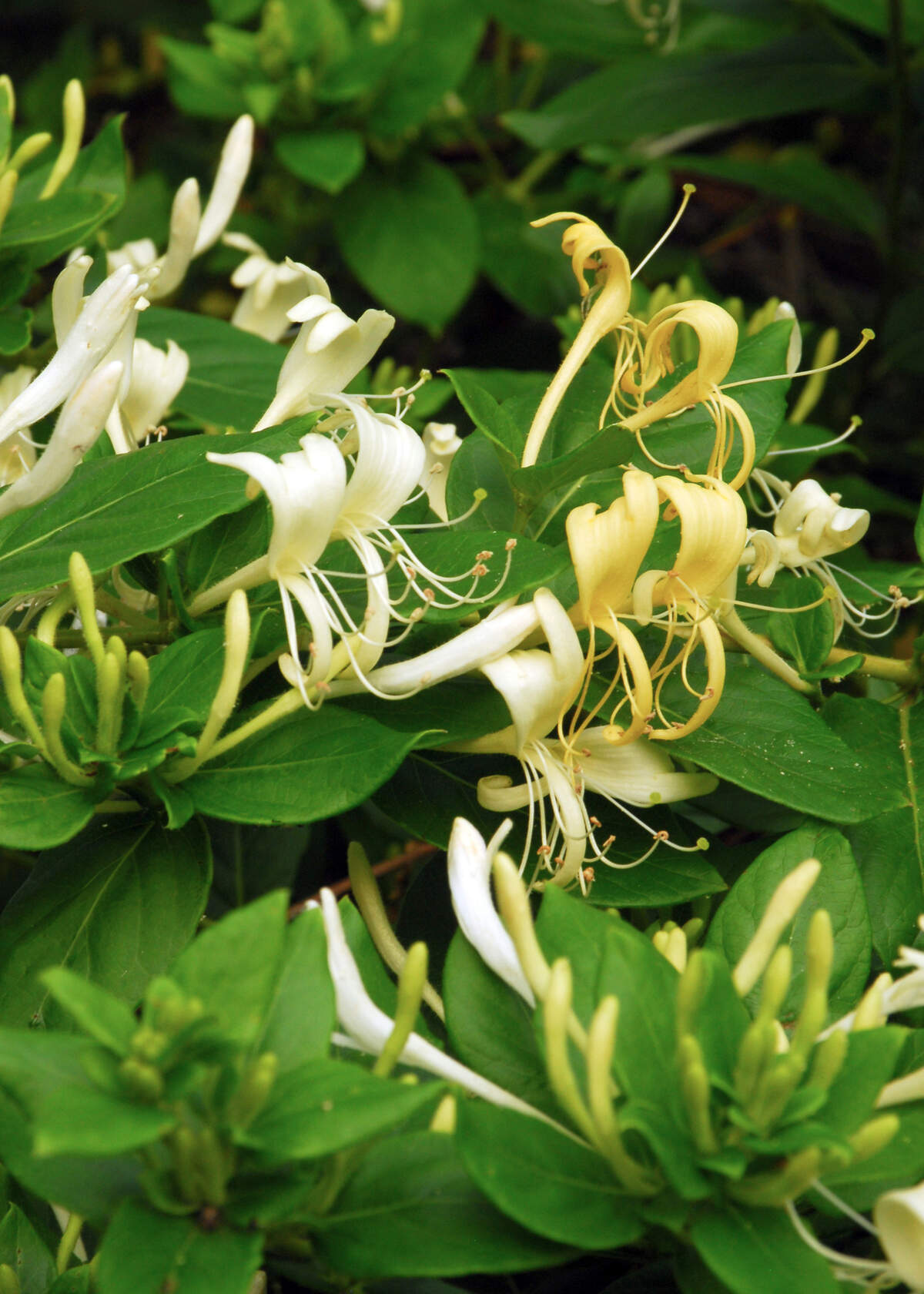
▪ Wild honeysuckle (Hall’s honeysuckle) came in a close second. This is the naturalized vine you see clambering over shrubs and small trees in the woods of the eastern half of Texas. It is starting to grow vigorously, and the flowers will follow soon behind. It has green leaves and white flowers that turn to yellow their second days and then fall to the ground on their third days. The plant smothers itself with fragrant blooms for two to three weeks. The flowers are followed by small dark purple fruit that are very attractive to birds. Therein lies the problem. This plant is ultimately invasive and should not be encouraged.
▪ Roses came next, although no particular varieties were singled out. Our problem here in the Metroplex has been a fatal virus called rose rosette. It became common locally about 15 years ago and it does limit our use of these wonderful plants. Plant them, but do so in moderation.
▪ Wisteria was predictably next. This has been a favorite for generations. It’s not used as much now as before because the plants get so large, but where there is ample room, this is a fabulous vine. Its support needs to be sturdy, and it should be kept away from trees so that it will not overtake them.
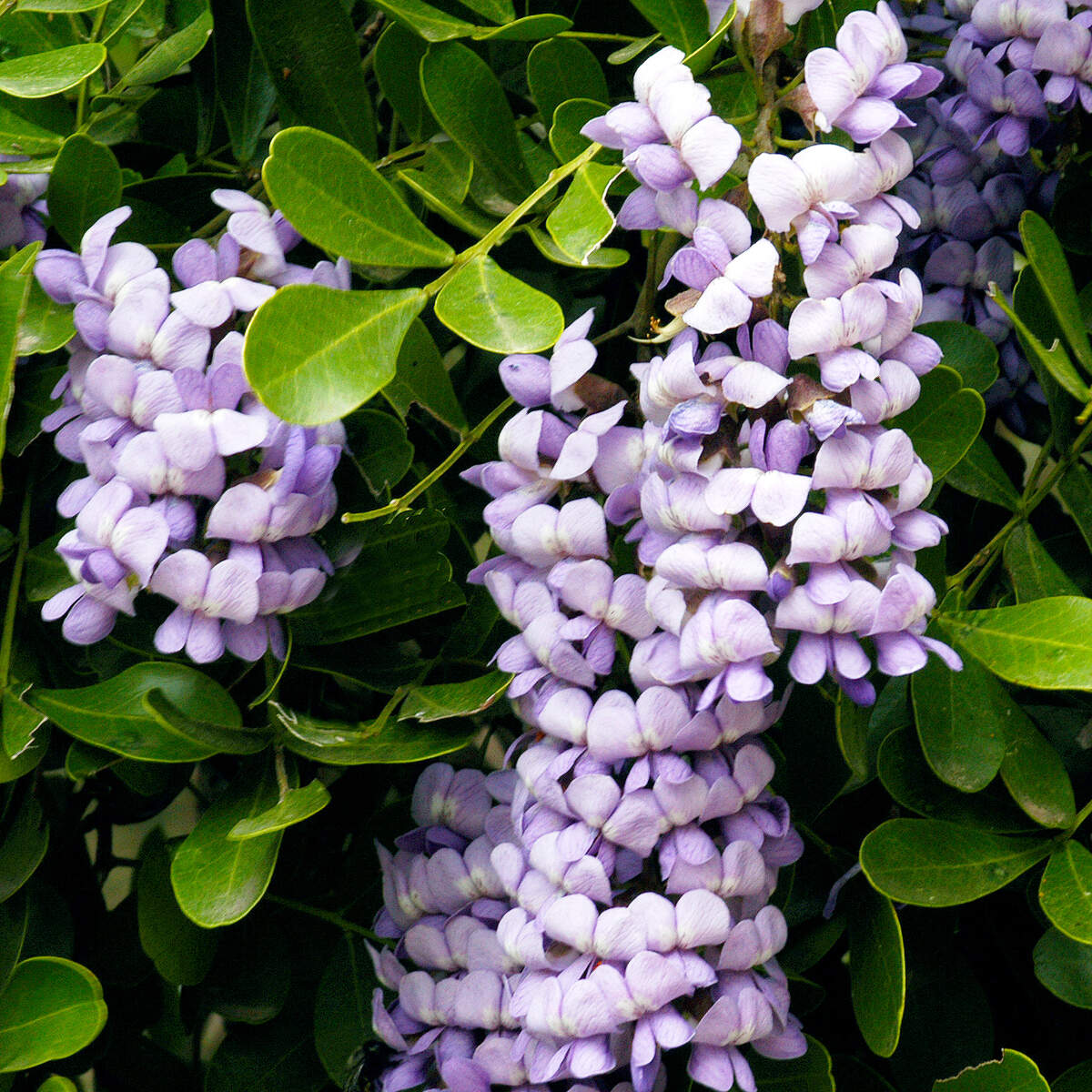
▪ Texas mountain laurel came in sixth. That’s reflective of the plant’s popularity in South Texas. You don’t see it as much in our area because of our cold, but when we string several warm winters in succession, people begin to try it again. Its panicles of purple flowers smell like grape soda. Natural hillsides of it in Southwest Texas, where it grows natively, put locals there on olfactory overload in the spring. It’s a tall, evergreen shrub that’s well suited to alkaline soils and full sun.
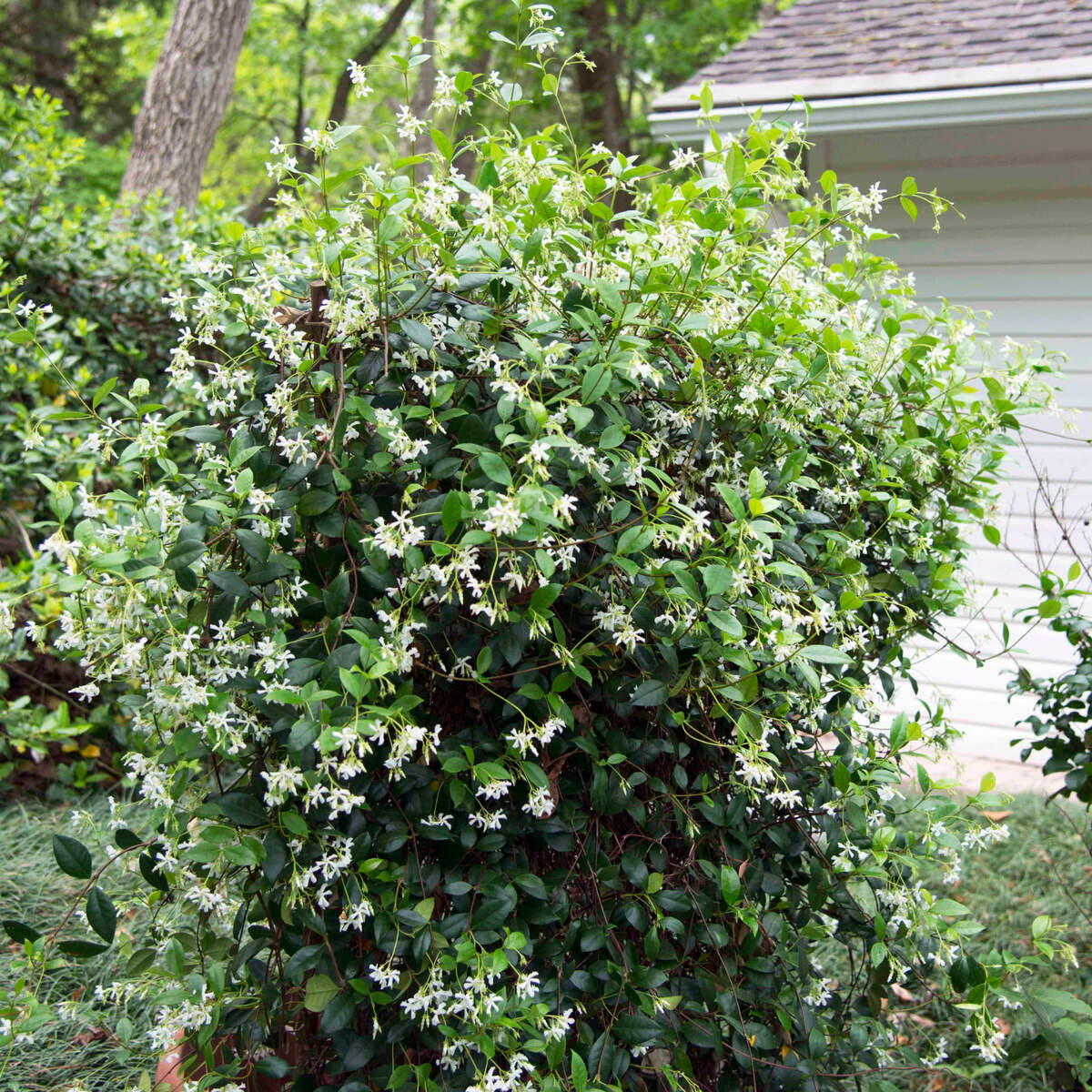
▪ Confederate star jasmine came next. This may be my favorite of them all. It’s not reliably winter hardy in North Central Texas so I grow mine in a large pot that I can wheel into the greenhouse each winter. I’ve been doing that for 25 years. (We do things for some plants that we would only do for pets and grandchildren!) This is the big sister to our popular groundcover Asian jasmine. It is used more commonly as a vine on walls and to cover small expanses of patios. Its white flowers look like small pinwheels. The plants remain in bloom for several weeks every spring.
▪ Citrus came next on the list. People mentioned several kinds, but most commonly Meyer lemons because they can be grown in patio pots and protected from winter cold spells. Satsumas have also seen a spike and popularity over the past 25 years. All these plants have delicious fragrances when they bloom in the winter and spring. Then you get the bonus of the fresh fruit.
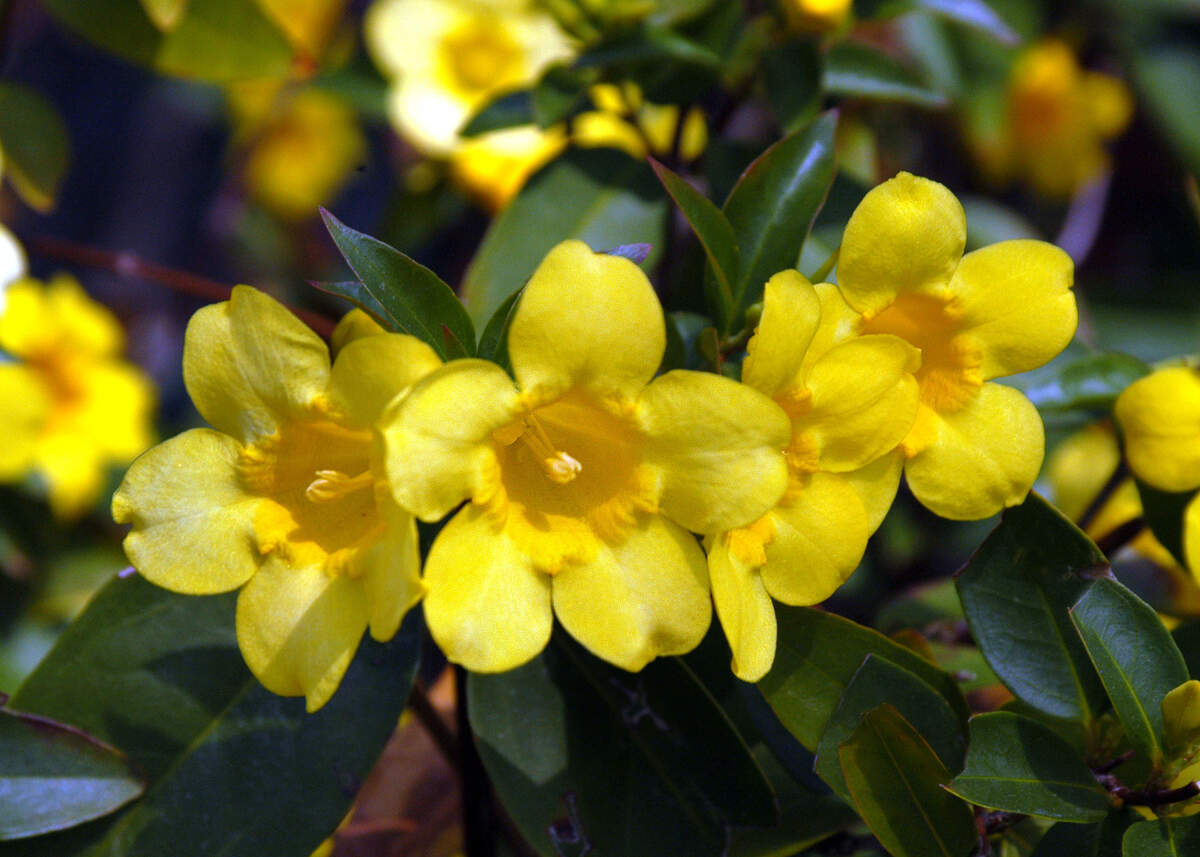
▪ Jasmine/jessamine was listed next, but most people didn’t specify. I’m guessing they were remembering a wide range of plants from Carolina jessamine to night-blooming jasmine. Whichever the plant, it was something that brought back good memories.
▪ Dutch hyacinths rounded out the Top 10. They might have come in higher, but in their case, you have to plant bulbs, and bulbs cost money. Add to that the fact that hyacinths only last for one season and then they have to be replanted the following year. The fact remains that if you want a stunning fragrance at your front door, nothing will beat pots filled with hyacinths while they’re in bloom.
I’m going to finish with a plant that almost made the Top 10 list. It’s a woody shrub, one that’s as tough as a boot. “Elaeagnus” is the name, and fragrance is its game. But my bet is that most people have never seen its flowers. It blooms in October when you would least expect it. The flowers are small and hidden behind the foliage. They are tan and, frankly, they’re ugly. But you can smell them across the yard. Those of us who love that aroma will snap our heads around to find it when we smell it. Learn the plant and be on alert for its fragrance this fall. You’ll smell what I mean.