
These fascinating plants defy abuse and manage to keep growing, blooming and thriving
“All cacti are succulents, but not all succulents are cacti.” Those were the words of professor A.F. deWerth of Texas A&M, drilled home to those of us in his class way back in the 1960s.
I paid a lot of attention to those words because I already had a big — make that a giant interest in growing these fascinating plants that seemed to defy the worst of abuse and still kept on growing, blooming and thriving. The more I grew them, the more I wanted to grow more.
Printed catalogs were the way the companies got their word out. I fell asleep reading them until the staples came loose. I checked the mailbox every day for the next season’s updates. And my first trip to Southern California 40 years ago took us to Carlsbad and Carpenteria — two of the cities from which I’d gotten my biggest shipments. So, my name is Neil, and succulents are my plants of choice.
Let’s start with the cacti
All but one species of the Cactus plant family are native to the Western Hemisphere. Rhipsalis baccifera, also called “mistletoe cactus,” is a spineless and leafless epiphyte that’s primarily native to tropical and sub-tropical Central and South America, but also to Africa and Madagascar. There is speculation that it made its way from the Americas to the Old World and quickly established itself sufficiently to be considered a native plant to that part of the world.
One genus, Pereskia, native to tropical settings of South America, has true glossy green leaves. Its wild-rose-like flowers in various colors make it a showy sprawling shrub or vine, although it’s not commonly sold in collections of cacti. Leaves of other genera and their species have modified over the millennia into spines or, in some cases, just disappeared altogether. Photosynthesis occurs in the modified spines, but especially in the green stems.
While we think of cacti as growing out of rocky outcroppings in deserts, Christmas cacti are native to cool rainforests along the southeastern coast of South America. They grow suspended from tree trunks alongside orchids. They gain their sustenance from what they can capture from rainfall and decaying organic nutrients caught in the crotches of branches.
Xeriphytic (dry-land) members of the cactus family are noted for their showy flowers. In nature they often follow rainstorms by only a couple of days, and that in turn will attract pollinators that might otherwise miss them due to their scarcity under the harsh, arid conditions.
What about ‘succulents’?
All this addresses the plants specifically in the fascinating Cactaceae, the cactus plant family. But what about all the other plants we lump together with them as we call them all “succulents?” Curiously, they come from scores of plant families from every continent except Antarctica. They share one common trait: their ability to endure long periods of dry conditions. Many have fleshy leaves or stems. Some have swollen bases or roots. Others have adapted in ways that allow them to absorb incident mists and light rainfall. They all have their stories. Here are a few.
The euphorbias
What a grand group we have here. The International Euphorbia Society tells us there are 7,500 species from this one genus alone, 870 of them that can be described as succulents. Many look almost exactly like cacti until you look closely at their flowers.
To give you an example, poinsettias are actually in this genus Euphorbia even though they don’t look like succulents at all. But look closely at their flowers. All poinsettias’ flowers will be bright yellow — those pea-sized little yellow “tacos” in the centers of the brightly colored floral bracts. All other euphorbias, including the popular crown of thorns, will display the same shape of flowers.
Other euphorbias include pencil plant, baseball “cactus,” and the all-time great name, “cows horn cactus,” Euphorbia grandicornis. Although most succulent euphorbias are from the Eastern Hemisphere, there is a page on the IES website that shows 36 species from five continents.
Some our other popular succulents, their plant families, and home countries include:
Aloe vera: North Africa. Family Asphodelaceae
Haworthias (many types): South Africa. Family Asphodelaceae
Echeverias (many types): Mexico, but also Southwest Texas to Argentina. Family Crassulaceae
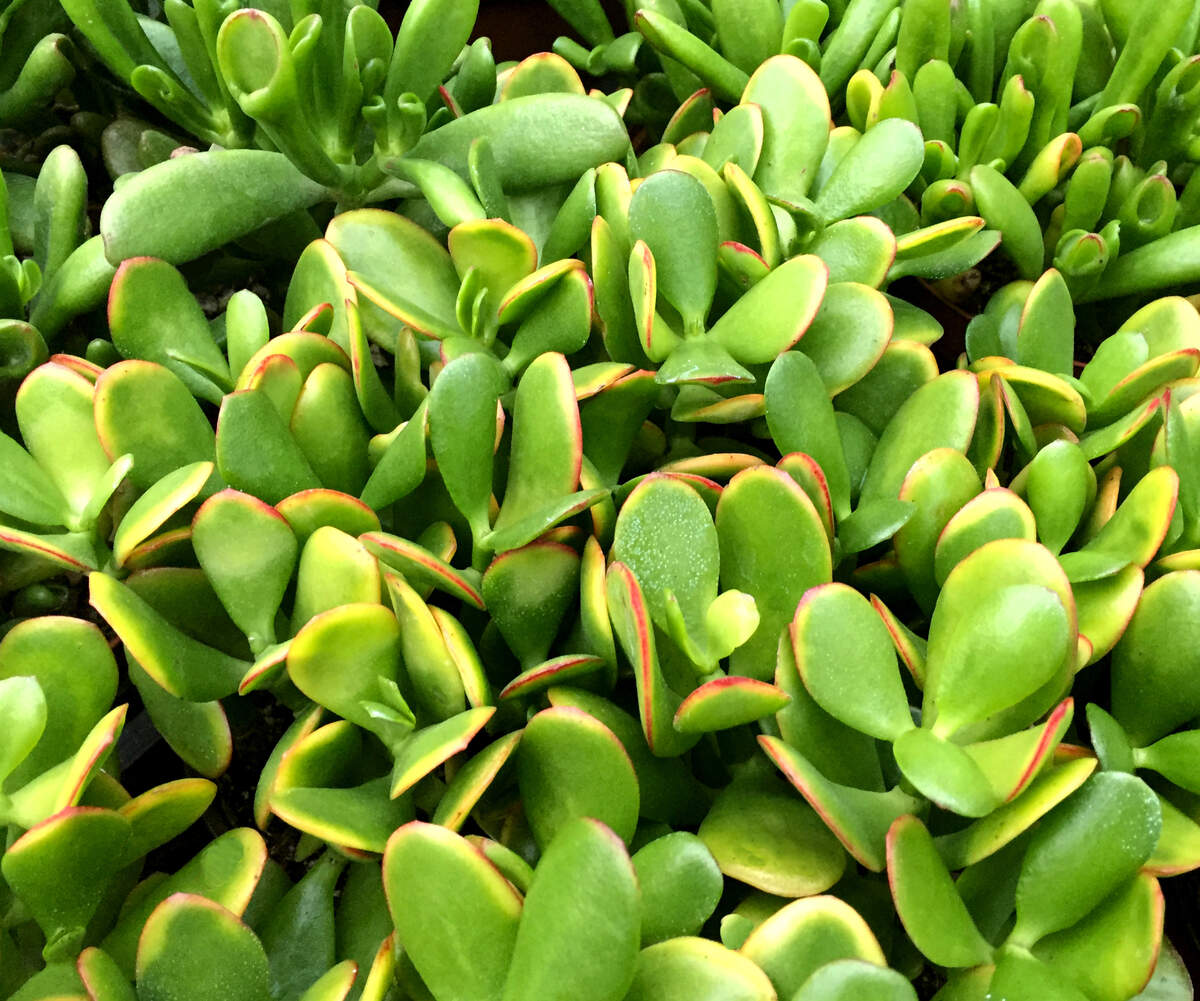
Jade plant: South Africa. Family Crassulaceae
Panda plant (Kalanchoe): Madagascar. Family Crassulaceae
Pony tail: Mexico. Family Asparagaceae
Sansevierias (many types): West and Central Africa. Family Asparagaceae
Stapeliads (several genera): South Africa. Family Apocynaceae
Split rocks (Lithops): Southwest Africa. Family Mesembryanthemaceae
I’ll close with that last group. It’s the most unusual assembly of succulents I’ve ever been around. There are many types of these small plants, always with a pair of very thick, fleshy leaves and almost no stem. Their leaves have translucent top “windows” allowing sunshine to reach the interiors in the process of photosynthesis.
Lithops grow in gravely soils almost flush with the ground, their leaves often mimicking the stones of their environment. Some species grow at sea level where they have adapted to capturing mist from the ocean, while others are much higher up mountainsides. They bloom one time annually, and new leaves form inside the old pair as the old leaves wither away.
I “met” the split rocks almost 50 years ago when I interviewed a mail-order grower of the little plants, the late Ed Storms of Fort Worth. He was a sculptor who had run across them in his artwork and quickly fell in love with them. In his small greenhouse across from the Fort Worth Botanic Garden he raised hundreds in tiny pots. It made for a great story that I’ll never forget.
This story was originally published March 14, 2025 at 5:50 AM.