
Now’s the time to think about a perennial garden. Here are tips for North Texas
If you’ve ever admired someone’s perennial garden and wished for one in your own landscape, it really could happen. All it takes is a little planning and attention to detail. But there are some overlooked fine points that need to be mentioned. Let’s take a look.
You can’t “plant and forget.” Perennials need care and attention just like any other plant in your garden. You may not have to replant everything two or three times a year like you do with a garden that’s strictly filled with annual color, but you shouldn’t expect to leave the garden in place into eternity.
Perennials (most types, that is) are at peak bloom for only two to four weeks per year. The rest of the year you’ll be looking at their leaves — or perhaps at nothing at all if they die back to the ground.
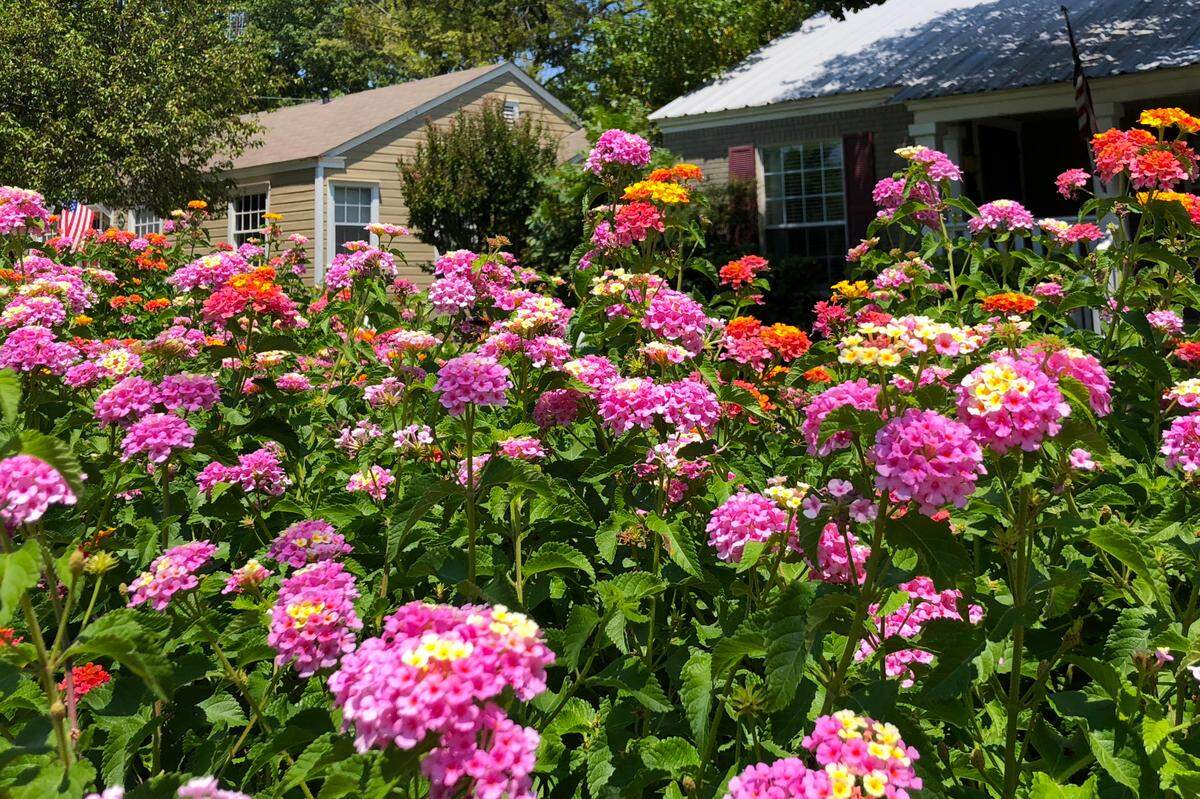
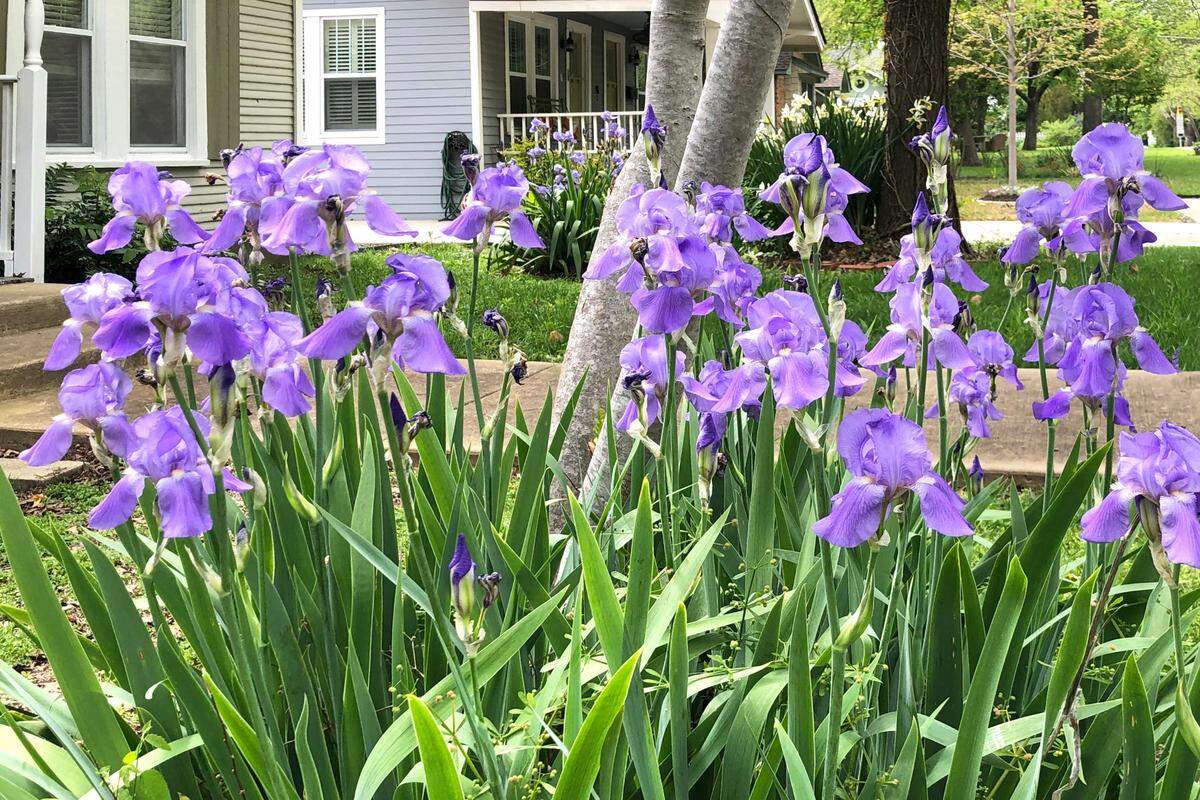
That means you’ll want to have a larger assortment of plant types in your perennial garden than you would if you grew annuals. You probably don’t want to have a large mass of any one perennial because that would leave a big void in your landscape once that type finished its bloom cycle. What would your garden be like if you only had iris?
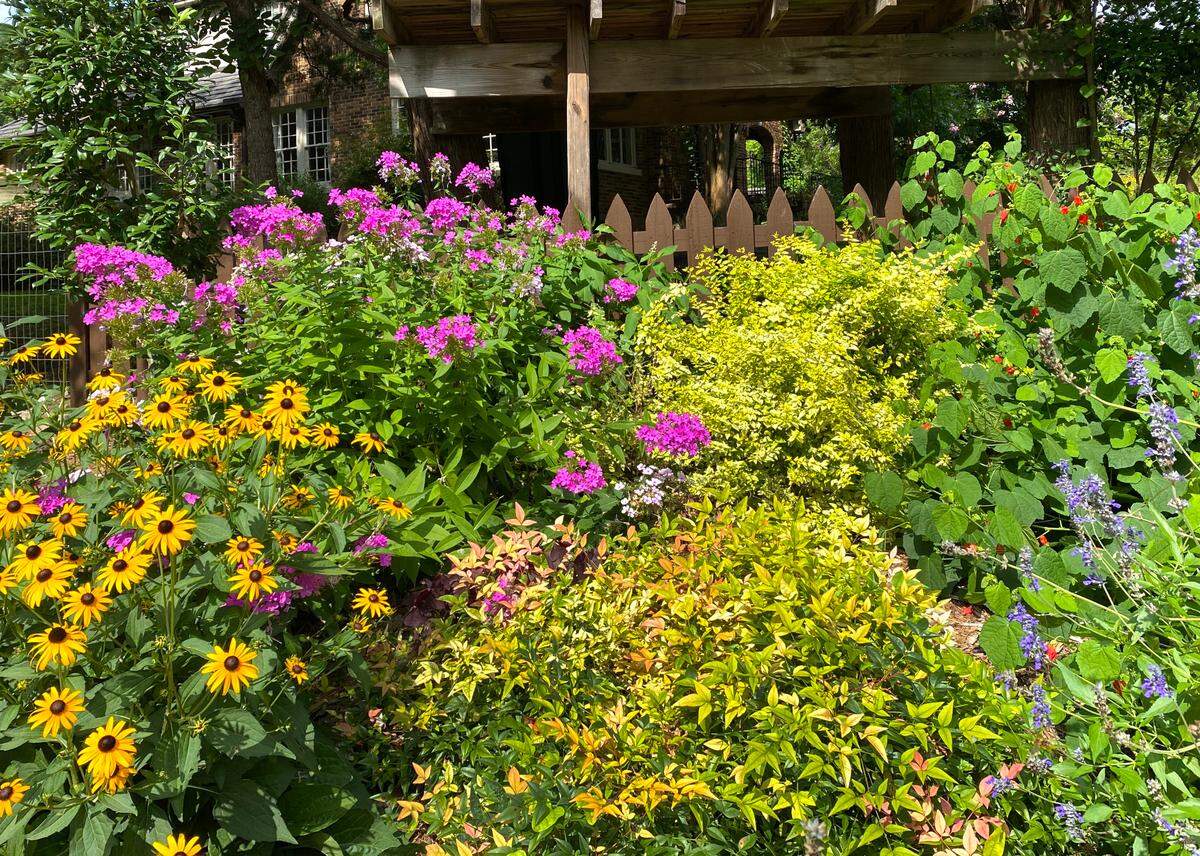
In turn, that means you’ll need to schedule things carefully so that you’ll have a sequence of blooms from the first warm days of late winter almost until frost. Daffodils until mums. You may have 30 or 35 types of perennials in the mix from start to finish.
As you become more proficient in planning that sequence, you’ll be able to develop a color scheme to your gardens. You’ll be able to feature cheerful pastels (think the colors of Easter eggs) in the spring, cooling shades (blues, purples, pinks, and soft yellows) in summer, and rich fall colors (orange, burgundy, deep reds, and bright golds) in autumn. Caution: It’s a lot easier for me to type that out on the computer than it will be for you to put it into effect in the garden. Things don’t always bloom exactly when they’re told to here in Texas!
Because almost all perennials will have died back to the ground with the first freeze of winter, you’ll want to have evergreen shrubs in your perennial garden to form the structure of the planting. Designers call them the “bones” of the landscape. Low and compact shrubs work best because you don’t want them overpowering your perennials during the growing season.
Not all perennial plants are grown for the colors of their flowers. Many are grown for their flamboyant foliage. Others bring other-worldly textures to our garden designs. Perennials with interesting leaves are especially useful in shaded gardens where it’s difficult to get flowering plants to reach full potential.
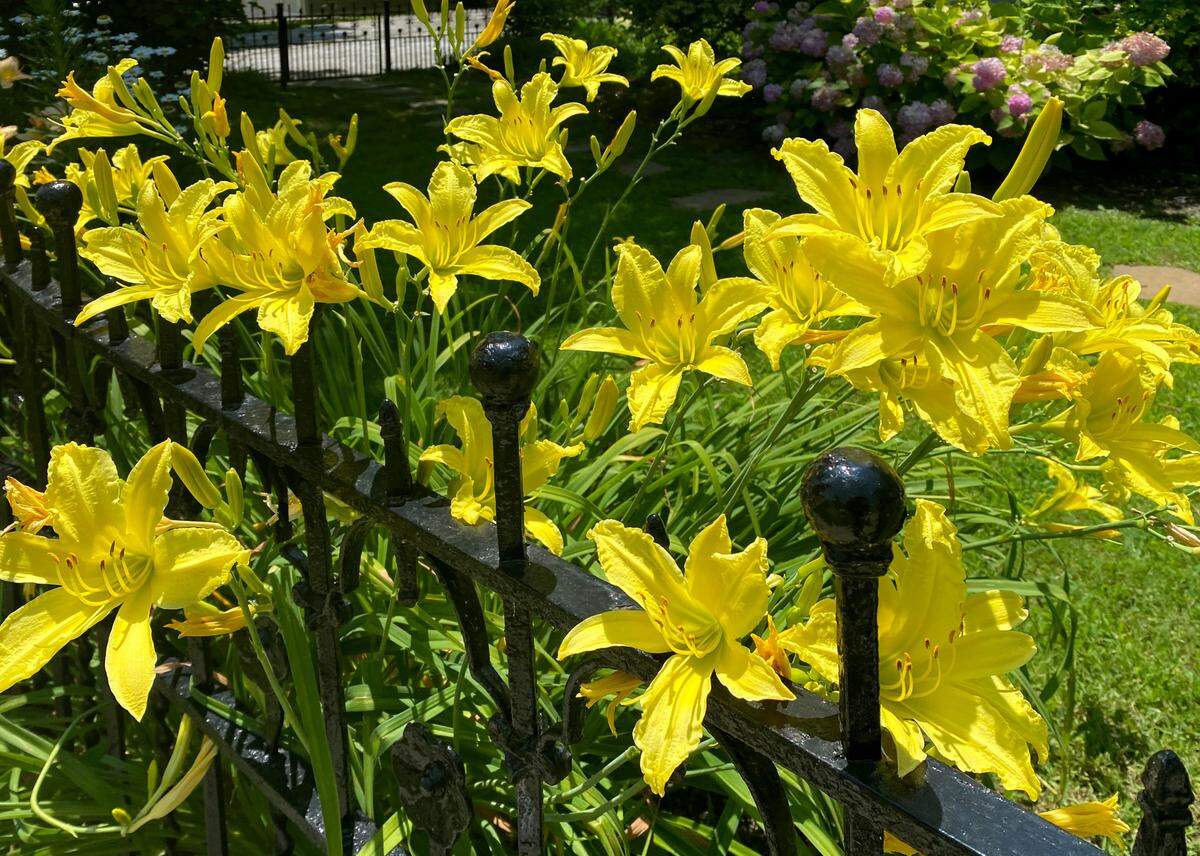
Just as you’re concerned with your perennials’ colors and bloom times, you must also pay attention to their heights as they flower. Tall plants generally need to go toward the backs of your gardens. Shorter types need to be featured farther forward, and trailing types are used for bed edgings. Daylilies are a good example. Their mature heights range from 12 to 48 inches. You can get some idea by looking at their foliage, but you can also set yourself up for big surprises. Know your plants before you start planting them.
You only get one chance to bring a rototiller into a perennial garden so do the job right. The old saying is that “if it blooms in the fall, you dig and divide it in early spring, and if it blooms in the spring, you dig and divide it in the fall.” So, only as you’re preparing the garden the first time around will you be able to rototill all the area and work in 5 or 6 inches of organic matter and 1 inch of expanded shale by tilling to a depth of 12 inches. All your work after that will be done by hand.
Nurseries have good supplies of perennials growing in quart and gallon containers in spring, and to a lesser degree, in summer and fall. Do your homework ahead of time. Know the exact types that you want and make a shopping list. Find out when your favorite nurseries will be receiving their supplies. Save space for types that will be coming in later in the season.
In the meantime, it’s always permissible to include some of the best flowering annuals along with your perennials. There are 12 or 18 types of annuals that will be colorful for six or more summer months, so it’s a great idea to include some of them for the continuity they bring to your perennial plantings. If you’re reluctant to plant them directly in with your perennials, plant them into decorative pots and set them within the perennial beds. That will let you move them aside if they start to look poorly or if you need the space for something that has just arrived at the nursery.
Late winter into very early spring is the ideal time to get your perennial garden going, and it all starts with the planning. How ‘bout taking that on this weekend!
This story was originally published February 21, 2025 at 5:50 AM.