
Are you seeing (and hearing) crows invade your North Texas neighborhood? Here’s why.
Our crows have been singing to us. Scores of them from the tops of our trees for the past several weeks. I’m hearing them as I type this, and their melodious songs are punctuated by the pelting pecans pounding off our roof.
It’s like a Texas spring hailstorm out there.
It’s all caused me to do some research on this large visitor to our gardens. I learned a lot, and I hope you find it as interesting as I did.
We built this house 47 years ago. It was in a pecan forest then, and it’s in a bigger pecan forest now. Huge trees tower above us from all directions. We’re out in the country, and to get our satellite signal we have to cut a window through the tree canopy so our dish can reach out to civilization.
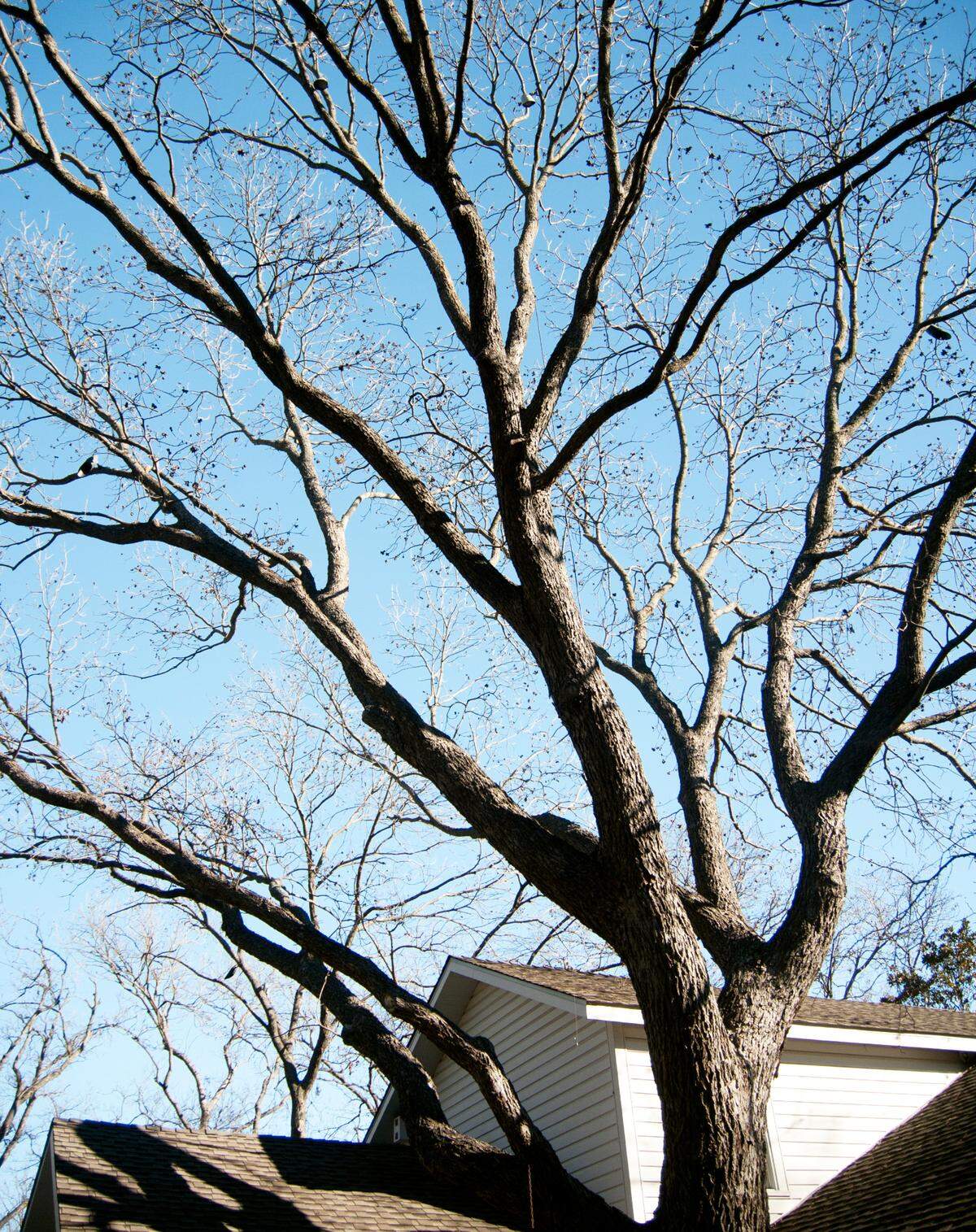
We love our big pecans, and so do the birds. And the squirrels. And the raccoons. And the possums. And even the ground-dwellers that feed on the spillage.
But something has happened in 2024 unlike ever before. We’ve got a big crop of new neighbors. Loud and raucous crows moved into our lives. Dozens and dozens of them. I stepped outside to see what was bothering them, and away they all flew.

I videotaped 45 seconds of the mayhem and shared it with our pastor, himself an avid birder. He suggested they were “uninviting” a predatory owl or hawk that might have stopped by for a visit. All that loud screaming, I can imagine no owl or hawk would put up with that for very long. I know crows will bully them away. Kinda like the stores catering to mature citizens will play Bach to crowd out the teenagers.
But since Christmas Eve, things have changed dramatically. The crows seem to have brought in their friends, and they’ve all moved to the big tree right over our house. The noise and the hailstorms have just gotten louder. They’ve stripped our 70-foot trees bare. Skeletonized husks are all that remain. All over the roof. All over the deck. All over the driveway. All over the landscape. I blow it all clean, and two hours later it’s messy again. I wear a thick ballcap to cushion the top of my head.
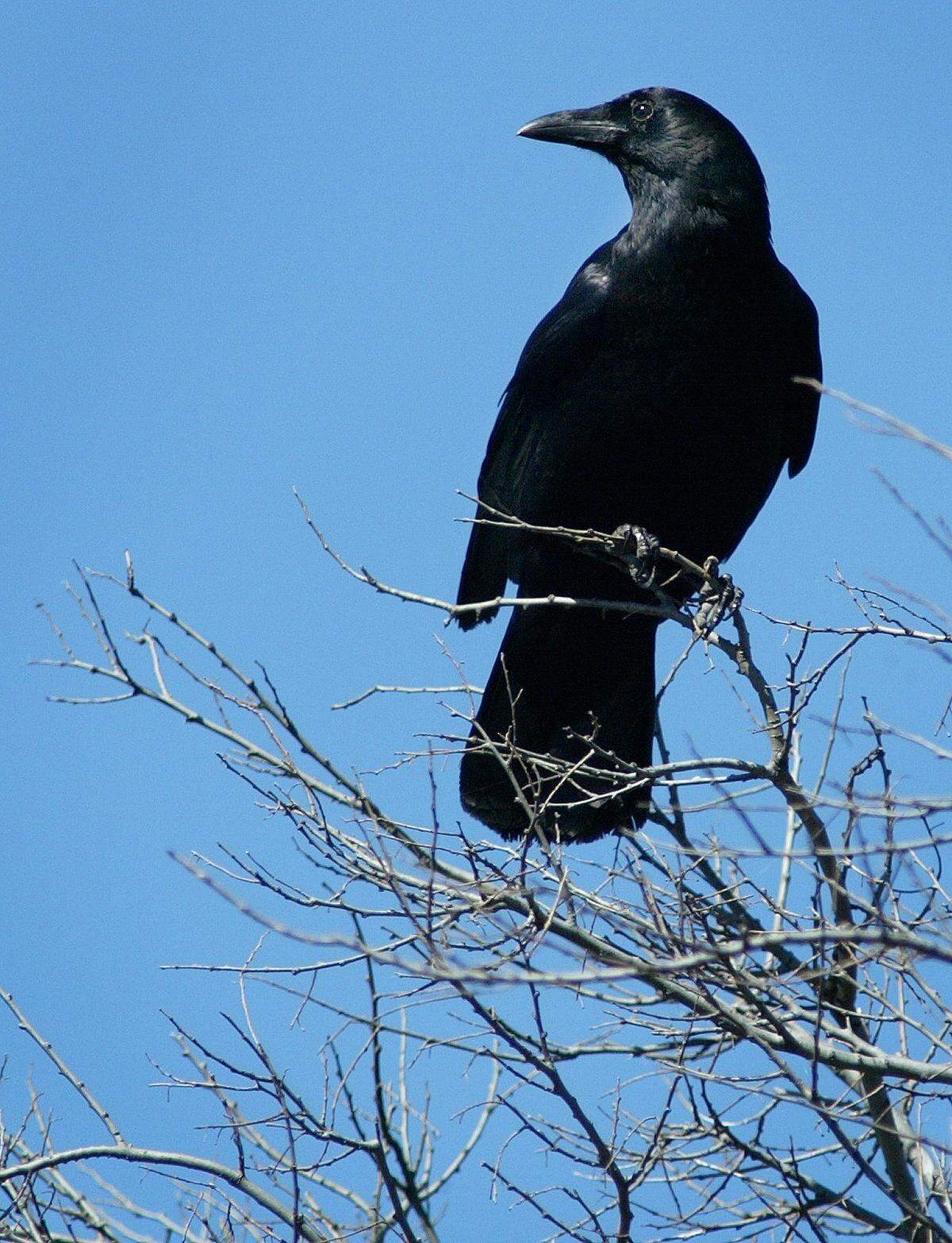
Facts you should know:
- Crows are native to every continent except Antarctica. There are some 60 species. Here in the United States, we have primarily two.
- Crows and ravens are both in the genus Corvus, and it can be difficult to tell them apart. In general, however, ravens will be the larger birds and crows the smaller ones at maturity.
- These birds (crows and ravens) are considered to be some of the smartest animals in the world. The Audubon Society says their intelligence rivals that of chimpanzees.
- Mental Floss says that a Caledonian crow’s brain weighs a greater percentage of the bird’s total body weight (2.7%) than a human brain (1.9%).
- It’s widely reported that crows create and use “tools.” They’ve been observed picking up sticks or splinters to pull insects out of hiding places in crevices. An American crow has been observed dipping water and pouring it over dry food to moisten it before eating.
- Research done by a scientist at the University of Washington more than 10 years ago proved that crows hold grudges. A scientist wearing a caveman mask captured seven crows in a net. Once he was sure the crows had seen his mask, he released them unharmed back onto the campus. Several days later, when he walked across the campus wearing the mask, the crows dive-bombed and harassed him. And they remembered, and passed the ill will on to future generations. Years later, when he put the mask on and walked the campus again, many more crows continued to attack him. But if he wore a Dick Cheney mask that had never been involved in the capture, they left him alone.
- Crows hold wakes and funerals for dead crows. When one comes upon a fallen crow, it calls out alerts to others in the vicinity. They gather in a circle and begin a loud call-out to warn other crows of potential danger as they dance around the corpse.
- You will generally see crows in large communities. You may not realize it when you see just a few stalking around in your landscape, but look at a bigger area like a farmer’s field or a garbage collection site and you’re likely to see dozens at a time. When they go to roost at night, it’s not unheard of for hundreds of them to gather for protection from predators.
- Crows have dialects just like people do. When a bird somehow moves from one flock to another, it will listen to the dialect of its new community and pick up their “accents.”
- Crows also pick up sounds and learn to mimic them. Reports are that they have upwards of 250 sounds in their vocabularies, and they use those sounds for warnings, to express affection, as instructions, and for many other means of communicating.
- Crows live as close family units of as many as five generations, with young birds helping their mothers with building nests and feeding chicks, also keeping the nests clean. They mate for life, with males helping raise the chicks by bringing food and guarding the nest.
- Finally, in spite of our references to a group of them as being a “murder of crows,” and in spite of our efforts to place scarecrows in their paths, crows aren’t all that big a threat to us or our plants. We can learn a lot just by watching them operate.
Here’s a beautifully written blog from a pecan farmer that says it well: Lennywellswords.com/2022/09/15/crows