
Take a look at your landscape to sort out what plants, trees you need to reconsider
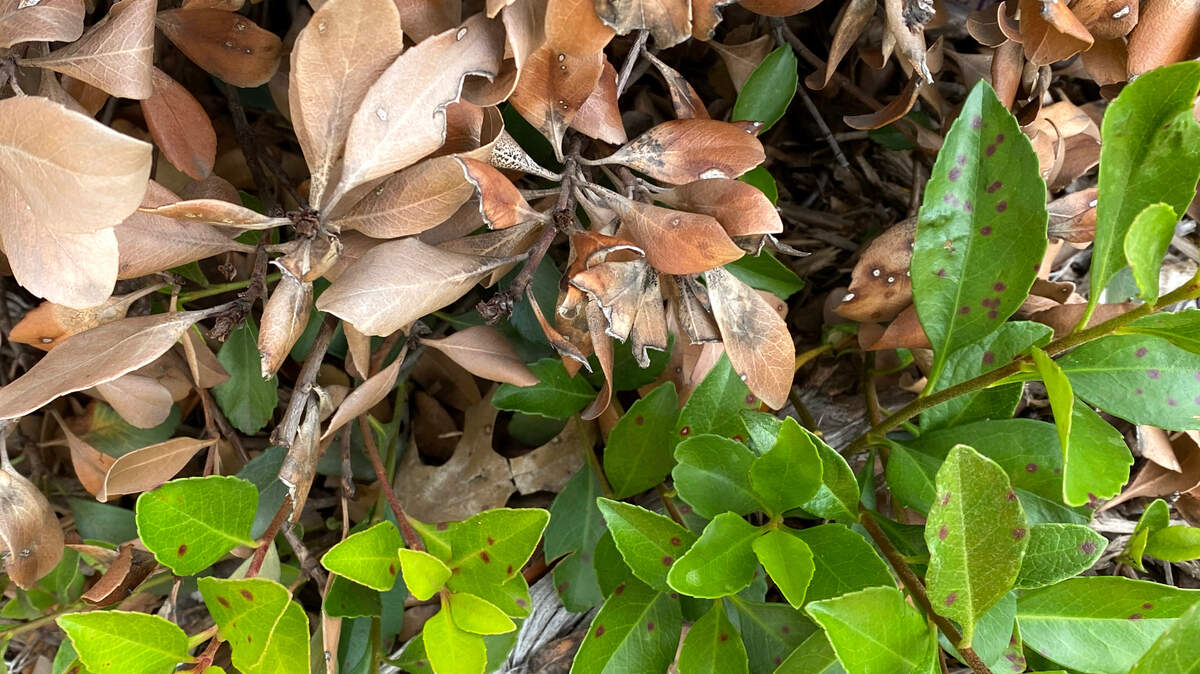
Five months have passed since North Dakota’s February weather was dumped on our lawns and landscapes.
We’re still sorting things out to determine where we are – what survived and what didn’t, what plants we should use as we do fall replanting and what we should not.
With that autumn landscaping season just 8 or 10 weeks away, let’s take a closer look. It might be easiest if I just broke it all out by species according to the questions I’m getting.
- Live oaks. At one point we wondered if half of our trees were going to survive. Foresters and arborists have told us to stay the course. At this point, probably 85 percent of our live oaks look fantastic. Perhaps 10 percent still look sparse, but the experts tell us they’ll fill back in. The other five percent are more worrisome. We’re advised to leave them alone for now. Unless they’ve shed big chunks of bark and are obviously not going to come back, give them still more time to send out new leaves, perhaps waiting even until spring.
- Shumard red oaks. Dieback on these appears different for those 5-10 percent that are showing any impact of the cold. Ends of branches seem to have died, with new shoots coming off the major branches and trunk. It would be best to have a certified arborist look at any weakened Shumard red oak to determine what, if anything, should be done at this time.
- Ash species, especially Arizona ash. These appear to be lost. Those few that aren’t entirely dead have only a few weak sprouts generating from the trunks. Ash trees have terrible problems with borers anyway. This will merely invite them into the weakened tissues.
- Eldarica pines. Since these were introduced to the Southwest 45 years ago they have suffered a series of setbacks. They can’t handle wet soils, so prolonged rainy spells have killed most of those older plantings. Now, this winter’s cold seems to have killed out many of the remaining trees. If your Eldarica pine (also known as Afghan or Mondell pine) is failing, it’s time to take it out.
- Italian cypress. This is the third or fourth winter I’ve seen these killed by North Texas cold since my wife and I moved here in 1970. Add in the uncertainty of Seiridium canker that is killing a high percentage of the remaining plants, and Italian cypress trees don’t have a bright future.
- Loquats, Chinese tallows. These should never have been planted here. It was only a matter of time. Many people are reporting that their trees have been putting out weak new shoots along their trunks, but that’s not going to end up being worth much. It’s time to replace them with hardier species.
- Asian persimmons. It’s been surprising to see these killed back to the ground. Sprouts are coming up from the soil line, but since these trees are grafted selections, those sprouts are probably the rootstocks and not the improved variety. Sadly, it’s probably time to start over.
- Vitex. Perhaps 10 to 20 percent of these lilac chaste-trees have suffered some measure of cold damage. How severe that will end up being remains to be seen. Prune out the dead wood and take good care of the plants. The extent of the dieback will probably become evident over the rest of the summer.
- Crape myrtles. Only a few varieties were hurt. If you have trunks with few or no shoots and blooms, cut them off flush with the ground and retrain the vigorous new sprouts from the roots. They will be the same variety.
- Elaeagnus. These were hurt really badly, with big portions of large shrubs lost to the cold. Most are going to need to be taken out and replaced.
- Fringeflower. Iron deficiency had weakened many of these already, but the cold killed out huge portions of what remained. Think twice about planting these into extremely alkaline soils. There may be better choices.
- Indian hawthorns. What little new growth (if any) that has come up from the bases of these plants will take many years to fill in. Replace them with dwarf hollies or dwarf nandinas, sun or shade.
- Japanese yews. Dieback with these didn’t show up right away. It has been gradual but certain. Many, if not most, will have to be replaced.
- Nandinas. I cut mine back severely soon after the cold. I could see that their tops were burned. They have come back beautifully from their roots and are just fine.
- Texas sage (ceniza). Probably 80 percent of the plants were killed or badly damaged. Those will need to be replaced. I just can’t recommend Texas sage for anything more than an occasional accent planting here in Metroplex landscapes.
- Figs. Your plant was probably killed to the ground. Trim off all the dead branches and encourage the new sprouts. They will be the same variety.
- Waxleaf ligustrums. These are coming back weakly. I’m not sure if they’ll have the strength to survive the summer. If they do, that’s great. If they don’t, you’ll have to decide whether to replant with more or to change over to something else like dwarf Burford holly.
- Japanese ligustrums (glossy privet). This invasive large shrub was wounded but not killed. It will be back to bloom and set more of the seeds that have let it spread far and wide via the wild birds. Do not let this plant grow in your landscape.
- Pittosporums. Unless they were covered, almost all were lost and will have to be replanted.
- Pomegranates. Unlike figs, which also died to the ground, pomegranates do not send up new sprouts as often as figs will. You’ll probably have to replant.
- Pampasgrass. I thought this would come back better, but only parts of clumps are resprouting, and in general, the plants look terrible. Most of the ones that I’m seeing need to be removed and replaced.
- Sago palms. Being Zone 9 plants, these should never have been planted into the ground in DFW in the first place. They are greenhouse and house plants in the winter. The fact that some are sprouting back out at all is amazing.
You can hear Neil Sperry on KLIF 570AM on Saturday afternoons 1-3 pm and on WBAP 820AM Sunday mornings 8-10 am. Join him at www.neilsperry.com and follow him on Facebook.