
A few ways to get the most out of your shade trees
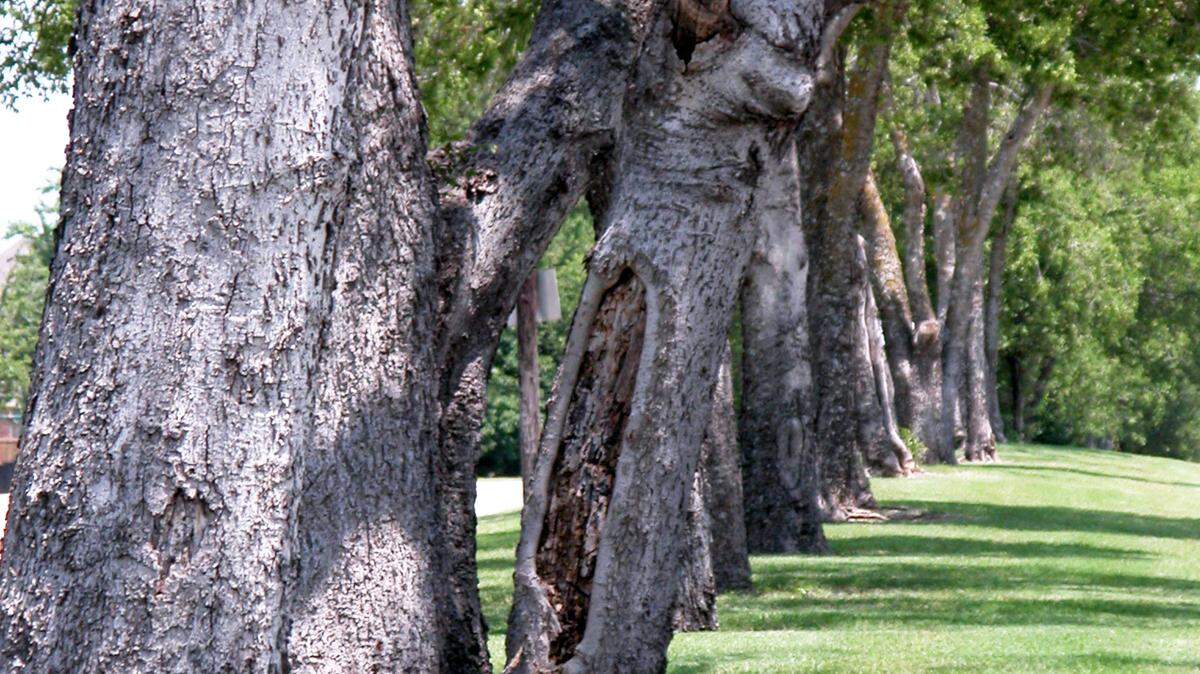
Even plant professionals make mistakes in placing shade trees in landscapes.
We see it all the time, with live oaks planted alongside busy streets and bald cypresses planted beneath powerlines (or, for that matter, even planted at all in the blackland soils – they don’t do well in our soil’s alkaline conditions).
So, I thought this might be a good opportunity to point out ways you can get the most out of your shade trees and minimize your frustrations at the same time.
Don’t crowd your shade trees. Know their mature sizes before you plant them. Give them ample room to grow so they don’t cause one another to become misshapen. Most modern urban lots only have room for two or three shade trees, and it may not even be the largest types like live oaks, Shumard red oaks or bur oaks, either. If you’re in a development with smaller yards, you may be better served by stepping down to a tree that reaches 25 or 30 feet at maturity. Let a Texas Certified Nursery Professional help you make the best choice.
Give your trees ample room from your house. Again, it depends on the tree species, but for most types you’ll want to be at least 15 feet out, farther if you have a two-story house. Sure, you want the tree to shade your house, but you don’t want it so close that its roots will threaten the foundation or its branches will rub into the roofline.
Don’t align your trees with any manmade structure. In other words, don’t plant them in the exact centers of parts of your yard, in line with the corner of your house, in line with other trees up and down your block, or in line with the fence. You want it to look like nature provided it and the house was just built there so you could enjoy it. Generally, in positioning trees, the old art rule of a 60:40 ratio applies here. That’s called the “Golden Ratio” and the “Divine Proportion.” I’ll let you Google it to see that it dates back 400 years and beyond
Trees beneath power lines. This is a nightmare for the line crews that have to come out after wind and ice storms to repair downed power lines. If only we’d been more responsible in the planting of our major shade trees in the first place. Once again, you need to do your homework before you ever buy and plant a new tree. Know how high the lines are from the ground. You can get a good idea by having someone hold an 8- or 10-foot piece of wood molding or plastic pipe straight up from the ground. You can guesstimate how much higher the power line is. Allow 10 extra feet in case your geometry is off, and buy your shade tree accordingly. And, plant it that same distance away from the power lines so it won’t encroach from the sides.
Also remember, if your shade trees have to be pruned to get them away from the power lines, the lines were there first. We can’t blame the power companies. Honestly, rogue seedling trees planted by birds are the biggest problems of all. That list includes hackberries, mulberries and other basically undesirable landscaping trees.
Keep tree types simple. Trees come in a wide variety of growth forms, textures and colors. Remember that your goal in landscaping your home is to focus attention to the beauty of your house just as a picture frame accents its artwork. You don’t want to draw attention away from the star of the show. Trees with boldly dark red leaves are striking in the nursery, but they may become overwhelming in the landscape. And beware of variegated trees that might look like they’re struggling through some kind of nutrient deficiency.
Rounded or oval growth forms look the most natural. Strongly vertical or columnar trees are visually magnetic. They’re the first things people will notice, and that’s generally not good for your garden design. Weeping plants can be graceful, or they can be quite dramatic. It all depends on the plant type and how you use it in its surroundings. Weeping willows are extremely graceful (albeit very short-lived), while weeping mulberries are visually extremely heavy.
You may be asking yourself why I’d be bringing this up in mid-summer.
It’s not a time when most people think about going to a nursery to shop for a shade tree. However, it definitely is a time when you’re aware of where shade is needed in your own personal landscape. We’re spending more and more time in our gardens right now, and we’re dreaming up ways to improve our places come fall. And by no small coincidence, fall is the best time of the entire year to plant your new shade tree, so our timing simply could not be better.
You can hear Neil Sperry on KLIF 570AM on Saturday afternoons 1-3 pm and on WBAP 820AM Sunday mornings 8-10 am. Join him at www.neilsperry.com and follow him on Facebook.