
Instant racing saved Arkansas horse track: Is Texas next?
Eric Jackson knows how Texas horsemen feel.
He, too, faced an uncertain future — watching crowds at the only Arkansas horse-racing track dwindle and purses for the winning horses shrink as even the most faithful fans headed to casinos in nearby states.
As general manager of the historic Oaklawn track in this scenic tourist town, he tried everything he could think of to keep it running, including a bid to persuade Arkansans to put a casino there.
When all else failed and the track seemed destined to close, Jackson had a new thought.
“I had the simple idea that there ought to be a way we could take old races, put them in an electronic format and make it seem like a gaming product, even though it was pari-mutuel wagering.”
He and others worked on the idea and created a demo machine known as “Big Bertha” to show how the game would work.
After they pitched the idea to horsemen, racing commissioners and various leaders, including then-Gov. Mike Huckabee, officials gave the green light to the experience now known as “historical” racing or “instant” gaming.
The first game went on the floor in 2000, and the concept became so popular that it led to a resurgence of the racetrack. Oaklawn now offers some of the largest purses and draws some of the best horses to this city of 35,000 otherwise known for natural hot springs that some believe have healing powers.
“If this product had not worked … I don’t even like to talk about it,” Jackson said. “We feel like we kind of whistled past the graveyard.”
Texas racetracks, struggling much as Oaklawn did years ago, are hoping that a plan to allow these machines can make it through the courts. A judge recently said they aren’t allowed, but an appeal is expected.
The question at hand: Could historical racing help struggling Texas tracks?
“Yeah, I think it would help,” Jackson said. “Is it the savior? I don’t know. I don’t know.
“It did save Oaklawn. And I’d like to think it could have a similar impact on the Texas tracks.”
‘Ghostlawn’
Oaklawn’s storied history dates to 1904, when a small racetrack opened in Hot Springs, more than 300 miles northeast of Fort Worth.
A small tourist town that would also become known as the boyhood home of President Bill Clinton, Hot Springs was a big draw for horse-racing enthusiasts in Arkansas and nearby states.
Stories are told around town about how the track at times had 70,000 or 80,000 spectators for big Saturday races. Business was strong through the decades, particularly in the 1970s and 1980s.
But when casinos opened nearby — particularly in Louisiana, Mississippi and Missouri — fewer people headed to Oaklawn, Jackson said.
“We were like the Texas tracks are now,” he said. “We were going out of business.”
Business became so bad that a newspaper even wrote a pre-obituary for the track.
“They wrote about the little track with a storied history … and how we were looking at the finish line,” he said. “The big headline on the sports page was ‘Ghostlawn.’”
What Jackson and others realized is that people entering the computer and electronics age enjoyed electronic gaming — the bells, whistles, lights and sounds.
But in 1996, 61 percent of voters in the Bible Belt state rejected a proposal to allow casinos, a decision influenced by lobbyists for casinos in surrounding states and groups such as Arkansas Can Do Better.
“It’s very difficult to compete if you can’t modernize your products,” Jackson said. “Casinos discovered that people like electronic gaming.
“Horse racing doesn’t have that product. But through instant racing, it does.”
Just like a slot machine
Oaklawn’s longtime owners, the Cella family, took extreme measures to try to save the track. They pumped extra money into the purses — above and beyond what contracts called for — hoping to stay competitive until they could find a solution.
The answer came through the natural evolution of horse racing, Jackson said.
The first phase of horse racing was live racing.
The second was simulcasting races run elsewhere to other tracks.
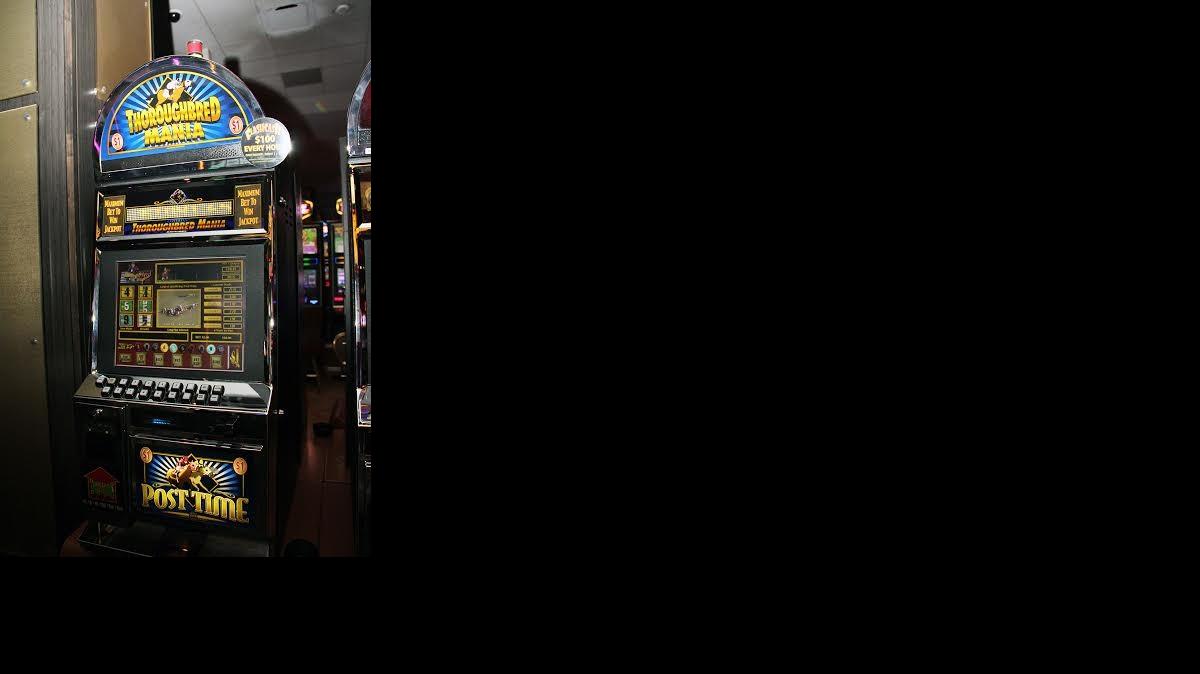
The third is “instant” or “historical” racing, in which past races are rerun on slot-machine-like devices.
On the first machine, Thoroughbred Mania, a bettor puts money into the device and must pick three horses from a field of 10.
All identifying characteristics — names, numbers, dates and race locations — are removed.
But bettors can look at “daily racing form information” delivered through pie charts to help make their picks. In some versions, players can use a “Handi Helper” that analyzes stats and picks the three most likely to win.
Generally, players can choose the type of wager — top finishers, win bets or trifectas. Then they can watch video of the whole race or a short version of the horses crossing the finish line. Reels spin and bells sound to note any wins.
The games are designed to feel exactly like slot machines — which were illegal in Arkansas, just as they still are in Texas, Jackson said.
“We went and studied slot machines to see which bells and whistles people like,” he said. “What is the look people like? We tried to build that into a racing product. And we were fairly successful with that.”
Instant gaming
Oaklawn started with 50 terminals of one game. In six or seven years, that grew to nearly 390 machines featuring perhaps 14 games.
At the peak, the machines generated $25 million, which was divvied up to pay the state, breeders, horses, workers and more.
About 15 percent of the revenue goes to the purse account, which is what the horses run for, said Bobby Geiger, director of gaming and wagering at Oaklawn.
By 2007, Arkansas officials were willing to let Oaklawn use other electronic gambling products, such as video poker and slot machines, which appealed to a broader group.
The number of historical-racing machines has dropped to about 125. Today, they bring in about $10 million a year, officials said.
Oaklawn is remodeling the gaming floor, expanding to about 45,000 square feet — room for about 1,200 terminals — and hopes to finish before live racing starts Jan. 9.
Officials project that Oaklawn, which draws 10,000 to 12,000 spectators per race day, will offer nearly $23 million in purses next year over 57 days of racing.
Jackson said the track can accommodate 1,500 horses but probably didn’t have even 750 in the late 1990s. Now he receives around 3,000 requests from horsemen and can choose which horses come to the track.
“Back in the ’90s, when they hit a slump, it was terrible,” said Linda Gaston, an Arkansas horse owner and president of the National Horsemen’s Benevolent & Protective Association.
As the industry generates more money, and bigger purses, the association gains more funding to help protect the rights of racehorse owners and trainers.
“People want to come here now,” Gaston, who has raced horses in many states, said of Oaklawn. “We fill our horse races pretty good here.”
Enjoying the game
Jay Schapiro, 72, has been playing the machines at Oaklawn since the day they arrived.
He said that he has become pretty good at determining which devices are close to rewarding a jackpot and that he has hit jackpots of $13,000, $8,000 and $6,000.
“You could say it’s like a slot machine because you press a button,” said Schapiro, of Hot Springs, who goes to the track two or three times a week to play the machines. “But the payback is better.
“I just like to play,” he said. “I consider I have a skill to play those machines.”
Dean Applegate, 63, of Hot Springs said he and his wife have played the devices since 2002.
They earn points from playing and generally apply them toward inexpensive steak dinners offered at the racetrack.
“We don’t hunt or fish,” he said. “We don’t win a whole lot, but for the wife and I, it’s entertainment. We just enjoy getting out together.”
Clear opposition
Allowing historical-racing machines in Texas could mean the end of bingo, said Stephen Fenoglio, an Austin-based attorney for Texas charities that benefit from bingo.
“It would devastate charitable bingo as we know it,” he said. “Based on our extended research of casino-style operations located nearby, in a 50-mile radius of bingo halls, bingo revenue is slashed between 25 and 75 percent.
“It doesn’t take a lot to kill bingo,” he said. “There are some [bingo halls] that are just barely hanging on.”
Fenoglio said he has seen the historical-racing machines in Hot Springs and elsewhere and knows how they would affect Texas.
“They may not be a true Class III slot machine like you see in Las Vegas,” he said. “If you run those machines near a Vegas-style facility with full-blown slots, those machines won’t do as well.
“But if you bring them to Texas, bingo players will run out of bingo halls and right to those machines.”
Rodger Weems, chairman of the Arlington-based Stop Predatory Gambling Texas, has long opposed historical racing, saying it will expand gambling, which violates the Texas Constitution.
“The machines themselves are misnamed,” Weems said. “In truth, they are slotlike machines with racing themes.”
Other states
At tracks in other states, such as Kentucky Downs, officials say the games have helped the bottom line.
Officials in some other states, including Nebraska and Maryland, have said the machines are different from pari-mutuel wagering.
And the Wyoming Supreme Court ruled in 2006 that with the machines, “we are not dealing with a new technology here, we are dealing with a slot machine that attempts to mimic traditional pari-mutuel wagering.”
Illinois became the latest state to delve into the issue when a lawmaker filed a bill last month to let tracks install historical-racing machines.
Jackson said the machines can help racetracks.
“We got surprised in the ’90s by casinos opening up all around us,” he said. “We didn’t see it coming. Racing didn’t see it coming.
“And the industry is paying a serious price for that today,” he said. “Fortunately, we were able to find a solution through instant racing.”
Anna M. Tinsley, 817-390-7610
Twitter: @annatinsley
This story was originally published December 6, 2014 at 6:00 AM.