
Employees who expose wrongdoing pay a price
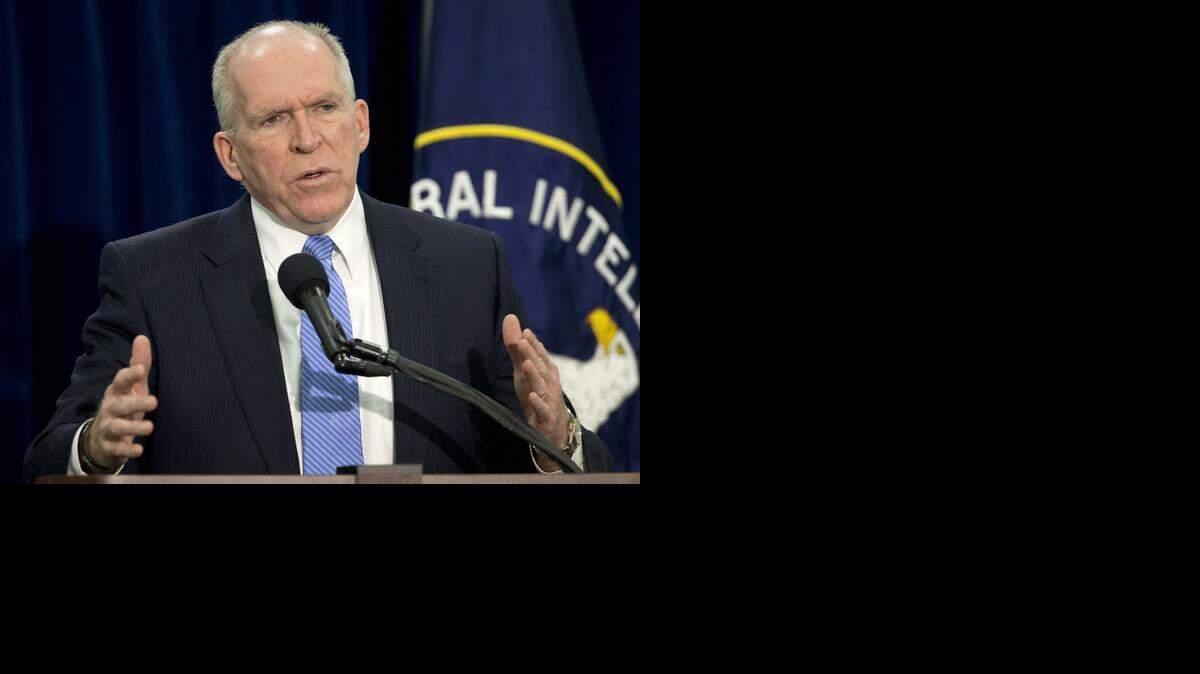
When Ilana Greenstein blew the whistle on mismanagement at the CIA, she tried to follow all the proper procedures.
First, she told her supervisors that she believed the agency had bungled its spying operations in Baghdad. Then, she wrote a letter to the director of the agency.
But the reaction from the intelligence agency she trusted was to suspend her clearance and order her to turn over her personal computers. The CIA then tried to get the Justice Department to open a criminal investigation of her.
Meanwhile, the agency’s inspector general, which is supposed to investigate whistleblower retaliation, never responded to her complaint about the treatment.
Based on her experience in 2007, Greenstein is not surprised that many CIA employees did little to raise alarms when the nation’s premier spy agency was torturing terrorism suspects and detaining them without legal justification. She and other whistleblowers say the reason is obvious.
“No one can trust the system,” said Greenstein, now a Washington attorney. “I trusted it and I was naive.”
Since 9-11, defense and intelligence whistleblowers such as Greenstein have served as America’s conscience in the war on terrorism. Their assertions go to the heart of government waste, misconduct and overreach: defective military equipment, prisoner abuse at Abu Ghraib, surveillance of Americans.
Yet the legal system that was set up to protect these employees has repeatedly failed those with the highest-profile claims. Many of them say they aren’t thanked but instead are punished for speaking out.
More than 8,700 defense and intelligence employees and contractors have filed retaliation claims with the Pentagon inspector general since the 9-11 attacks, with the number increasing virtually every year, according to an analysis by McClatchy, the parent company of the Star-Telegram.
While President Barack Obama expanded protections for these whistleblowers, his changes didn’t go far enough to address the gaping holes in an ineffective and unwieldy bureaucracy for those who claim retaliation, McClatchy found.
The daunting obstacles for defense and intelligence whistleblowers in such cases include:
▪ A battle between investigators and managers at the Pentagon inspector general’s office over the handling of reprisal claims, culminating in accusations that findings were intentionally altered in ways that were detrimental to whistleblowers.
▪ An entrenched and pervasive anti-whistleblower attitude, especially when the claims involve high-level officials or significant or embarrassing wrongdoing.
▪ Delays that discourage even the most persistent whistleblower.
`A Trojan horse'
“Only someone with a martyr complex would submit themselves to this system,” said Tom Devine, legal director of the Government Accountability Project, an advocacy group that’s helped whistleblowers since 1977. “We advise intelligence whistleblowers to stay away from established channels to defend against retaliation. In our experience they’ve been a Trojan horse, a trap that ends up sucking the whistleblower into a long-term process that predictably ends up with the whistleblower as the target.”
Obama rejected such criticism of the whistleblowing system after National Security Agency contractor Edward Snowden pointed to the leak prosecution of an NSA whistleblower as one of the reasons he’d decided to go to the news media about the spy agency’s collection of Americans’ data.
“I signed an executive order well before Mr. Snowden leaked this information that provided whistleblower protection to the intelligence community for the first time,” the president said after the leaks in June 2013. “So there were other avenues available for somebody whose conscience was stirred and thought that they needed to question government actions.”
Officials with inspectors general’s offices also say they already investigated reprisal complaints before the expanded protections. Employees, however, often can’t prove they were retaliated against under the terms outlined in whistleblower laws, they said.
In many cases, employers demonstrate that they took action against an employee for performance-related reasons — not in retaliation for whistleblowing. In just over a decade, five intelligence inspectors general have substantiated only a total of four retaliation claims, according to their own estimates.
“There’s a view that these whistleblower reprisal cases are all these big, huge programmatic issues, when in reality many of them are about things like performance and promotions,” James A. Protin, counsel to the NSA inspector general, told McClatchy. “There are a lot of reasons that action may have been taken that had nothing to do with them talking to the IG.”
Gaps also remain in legal protections despite the president’s revisions. Intelligence contractors, for instance, who are fired still can’t claim retaliation.
But the obstacles whistleblowers face are more than legal technicalities, McClatchy’s inquiry found.
At the Pentagon inspector general’s office, its own investigators accused the office of improperly dismissing, watering down or stalling conclusions in retaliation inquiries, according to five federal officials who are familiar with the allegations and spoke only on the condition of anonymity because of the matter’s sensitivity.
Cases that are controversial, complicated or involve high-level officials are especially prone to being altered in a way that’s unfavorable to whistleblowers, the federal officials said.
For instance, managers and the top lawyer for the office are accused of reversing findings that Mike Helms, an Army intelligence officer, was retaliated against for blowing the whistle in 2004 on inadequate care formilitary civilians wounded in combat.
Cherry-picking evidence
Pentagon inspector general managers also are accused of impeding an investigation into claims by a staff judge advocate in Quantico, Va. Maj. James Weirick accused the Marine Corps of interfering with the prosecution of four scout snipers who were videotaped urinating on dead Taliban fighters in Afghanistan.
The officials said the inspector general’s office had sought for years to avoid investigating claims of retaliation for legal reasons, rather than determining whether cases merited investigation in the first place.
“Managers make the narrative what they want it to be,” charged one official. “They cherry-pick the evidence they deem as `relevant.’“
According to the McClatchy analysis, less than 20 percent of retaliation claims since 9/11 have been investigated. The rest were thrown out after a preliminary analysis or no investigation.
Only 4 percent have been substantiated. In private industry, the substantiation rate is said to be three times higher.
In September, five congressional Democrats and three Republicans wrote to Inspector General Jon Rymer to complain that the office was interpreting protections for contractor whistleblowers “so narrowly” that it had “the potential to preclude meritorious claims of retaliation.”
In yet another sign of the internal problems, the Pentagon’s inspector general office tried – and failed – to suspend the top-secret access of its former director of whistleblowing, triggering concerns in Congress that he was being retaliated against for doing his job.
Officials who’ve raised the concerns about reprisal investigations have alleged that they’ve been retaliated against themselves.
“It’s not surprising there are so few substantiated reprisal cases at the Pentagon,” said Sen. Charles Grassley, an Iowa Republican who’s pushed for more aggressive whistleblower investigations. “There is an inherent bias against whistleblowers in the inspector general’s office.”
Officials with the Pentagon inspector general’s office said they couldn’t comment on specific cases but that investigations underwent “a rigorous quality-review process” to ensure that final reports were accurate, complete and “legally sufficient.” As a result, findings might be modified or “conclusions changed.”
To ensure cases don’t slip through the cracks, managers have doubled the staff assigned to the unit that handles retaliation, officials said.
“This office is dedicated to providing a thorough and fair analysis of every complaint submitted,” said Tolek, who oversees reprisal investigations.
More obstacles
Yet even whistleblowers who prove they’ve been retaliated against face recalcitrant agencies.
Agencies may ignore reprisal findings because inspectors general can’t enforce their recommendations. The Office of Special Counsel, which is able to sue on behalf of whistleblowers, often cannot do so in intelligence or defense cases because the retaliation involves revoking or suspending a security clearance. (The office has no jurisdiction over decisions on security clearances.)
Appealing to a panel overseen by the intelligence community inspector general is a new option in such cases. Whistleblowers can ask to get their security clearances or jobs back and to be awarded back pay and other compensation. Employees must wait for their own agencies to investigate the complaint before appealing, however.
The intelligence community inspector general decides which cases the panel will hear, and he urged whistleblowers not to “have a misperception that blowing the whistle provides a shiny badge or a force shield preventing adverse actions.”
“Protection comes after the damage has been done and only if an investigation substantiates wrongdoing and the agency provides corrective action,” said the intelligence community inspector general, I. Charles McCullough III.
This story was originally published December 30, 2014 at 1:32 PM.