
Musk's SpaceX project needs Central Texas farmer
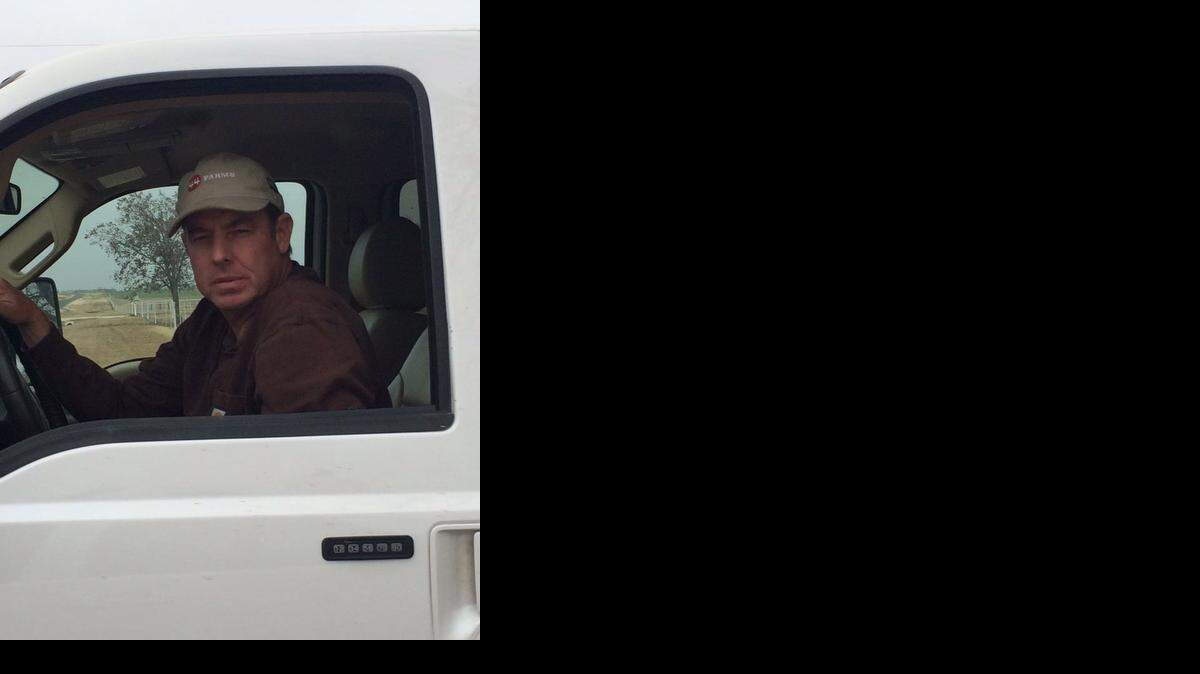
Elon Musk’s ambitious SpaceX project is looking for a farmer.
Its job posting doesn’t aim for just any skilled agrarian. Rather, the commercial space firm wants someone who possesses a “rare mix of drive, passion, scrappiness, intelligence, and curiosity to seek what’s beyond the stars.” It hires team players who want to pave the way to Mars, the online posting says.
But all the sowing and harvesting will be purely terrestrial — in a corner of rural Central Texas, between Waco and Gatesville, about 100 miles south of Fort Worth.
On Sept. 1, the space venture leased thousands more city-owned acres in McGregor, a community of 5,000 where it has tested rocket engines for more than a decade.
SpaceX spokesman John Taylor declined to explain the venture’s motives. But securing a hefty agricultural-tax exemption is not one of them, since no tax is paid on municipally held property.
McGregor Mayor Jim Hering said SpaceX leased the additional property because of the difficulties alerting and clearing out local farmers and others in a 1-mile radius each time a rocket engine is tested.
The need for a buffer zone became clear in August when a straying prototype rocket self-destructed in midair over the McGregor test site. The recent land deal had been in the works for years, Hering said.
“Three engine F9R Dev1 vehicle auto-terminated during test flight,” Musk tweeted afterward. “No injuries or near injuries. Rockets are tricky …”
The South African-born entrepreneur is CEO of SpaceX, as well as Tesla Motors, which he launched after making a fortune as a co-founder of PayPal.
Job applicants must be able to handle John Deere equipment, must have a decade of farming experience and a high school or GED diploma, and must be able to work at least 50 hours a week. They’re also required to handle 50 pounds, climb ladders, operate in tight spaces, deal with inclement weather and whip through computer spreadsheets, the post said.
Oh, and the prospective farmer must not have dabbled in international arms trafficking in the past and must promise not to do so in the future. This apparently is a government requirement of all SpaceX employees.
“Being part of what SpaceX is working toward would be intriguing,” said Gene Hall, director of public relations for the Waco-based Texas Farm Bureau. “Talk about going where no one has plowed before.”
But Hall said many farmers now see themselves in managerial roles and might be reluctant to give up active control.
Besides the other requirements, the new hire must be able to work only after sundown, according to a local farmer, Kevin Huffman, who was approached by SpaceX at one point to grow wheat and corn there but turned the offer down.
“I don’t mind working at night, but not every night,” he said. The job posting explains its farmer would have to work an “extremely flexible” schedule that doesn’t interfere with rocket engine testing.
Huffman knows something about the land. He has been growing grain on parts of it since 2007 after outbidding other farmers twice.
But SpaceX, he said, was able to lease the land without a bid, displacing him and Gatesville rancher Charles Graham.
Huffman, whose family has lived in the area for more than three generations, is not happy about losing the acreage through a no-bid deal. The loss translated into a 30 percent drop in his operation’s revenue, forcing him to lay off a $50,000-a-year farm manager, he said.
SpaceX has already missed the fall planting, which would make any farming unprofitable in 2015, he asserted. In an interview with the Star-Telegram, Huffman said he fears that the land will not be properly maintained, which could mean years of recovery when it finally goes back into production.
But the private space venture, which also plans a launch facility at Boca Chica in South Texas, issued a statement, saying: “SpaceX intends to do our best to leave this land better off than we found it. This is part of our commitment to being a good neighbor in communities where we work and live.”
Hering, the mayor and a practicing attorney, said competitive bidding wasn’t necessary because the land, once home to a Navy weapons-testing site, is part of a defense economic readjustment zone.
The land was first used as an ammunition depot for the Army in 1942, called the Bluebonnet Ordnance Plant, and later as an Air Force facility before being turned over to the Navy, which used it until 1995. At one point, it employed 1,400 workers as the area’s largest employer. Beal Aerospace, owned by Dallas banker Andrew Beal, developed kerosene-fueled rocket engines on the site from 1997 to 2000, when the company folded.
The whole farm lease issue has been a quandary for Hering, a close friend to Huffman, to whom he has leased some of his own land.
“Kevin is a great guy and a great farmer, but I have to do what’s best for all of the people of McGregor,” he said.
SpaceX is paying far more than what Huffman and Graham had, Hering said.
Still, why does SpaceX want the land farmed?
Hering said the city made it mandatory in the lease agreement, necessitating the need for a farmer.
SpaceX is McGregor’s “biggest and best” corporate employer, but “if business goes south, we can then turn the land over to a farmer in good shape,” the mayor replied. “I don’t want it to go fallow — with mesquite trees, sunflowers and Johnson grass.”
Barry Shlachter, 817-390-7718
Twitter: @bshlachter
This story was originally published December 7, 2014 at 9:00 AM with the headline "Musk's SpaceX project needs Central Texas farmer."