The new statue the Texas Rangers display should be of this player not a lawman
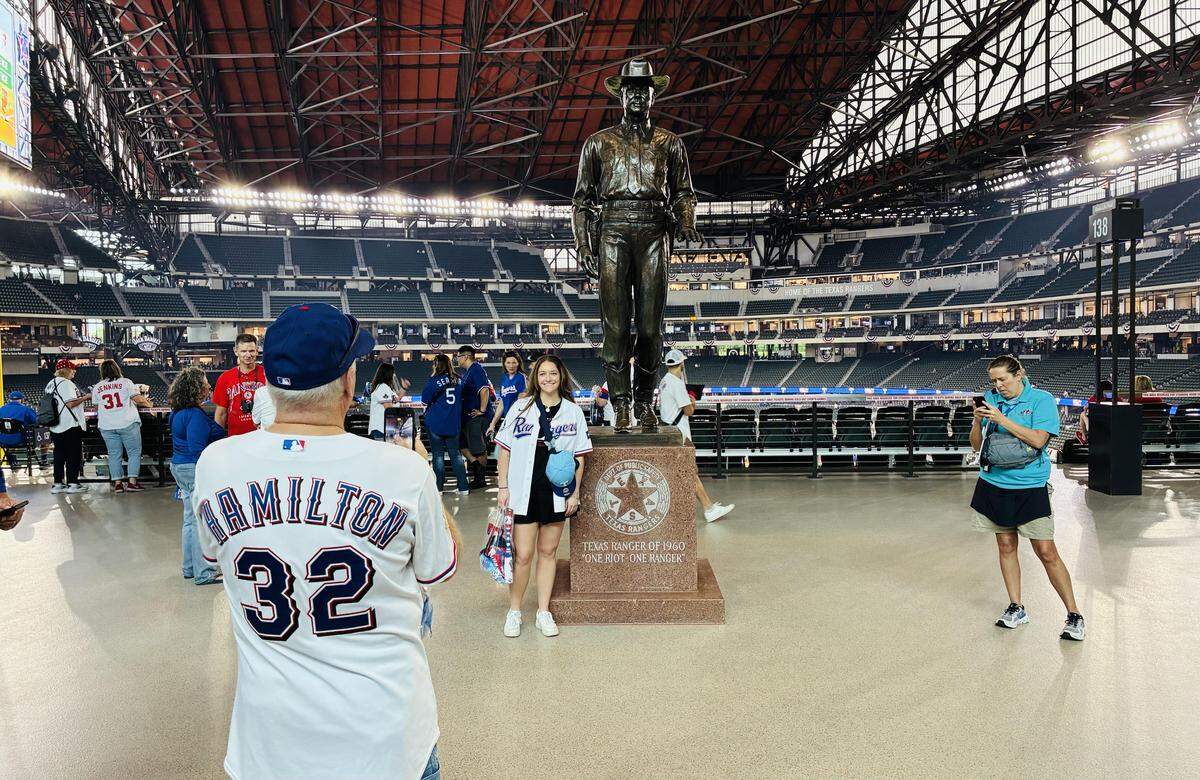
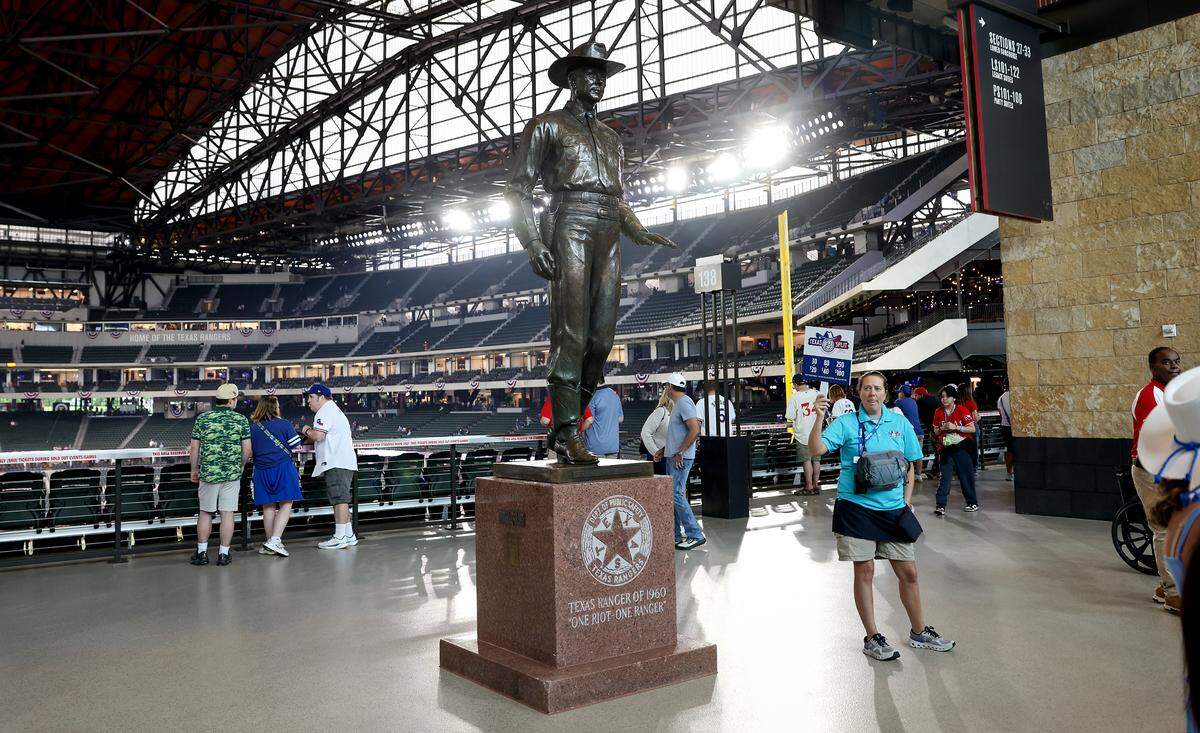
The new addition to Globe Life Mall drew a crowd for the home opener, the statue modeled after a lawman who famously opposed racial integration at a school in Mansfield.
How ironic.
In the summer of 2020, when there were calls for the Rangers to change their name, the team issued the following statement: “While we may have originally taken our name from the law enforcement agency, since 1971 the Texas Rangers Baseball Club has forged its own, independent identity. The Texas Rangers Baseball Club stands for equality. We condemn racism, bigotry and discrimination in all forms.”
And they now display a statue of a man who once did his best to ensure racism, bigotry and discrimination had a place in Texas.
Let’s play ball!
Three hours before the Rangers threw the first pitch to the Cincinnati Reds on Friday afternoon, Texas Rangers fans posed for pictures in front of the new statue of an actual Texas Ranger in the left field plaza. The Texas Rangers are the only franchise in MLB that does not host a Pride Night, so the fact that it found a place for this statue tracks.
The statue should be of shortstop Corey Seager’s game-tying home run from the 2023 World Series rather than a lawman from a state government agency that is outdated, and should be closed.
The Rangers unveiled the Love Field trash back on March 6, and Friday was the first time the “One Riot, One Ranger” statue was available to the public during a regular-season game. By the looks of it on Friday, a lot of fans enjoyed the statue, and most likely have no clue the history behind it. Or, they don’t care.
The statue is placed in between an area where former Rangers manager Johnny Oates is honored with a picture and a plaque, the same for retired catcher Ivan “Pudge” Rodriguez, as well as the teams that won the American League pennant in 2010 and ‘11 and World Series in ‘23.
This statue has no place at a baseball stadium. To quote the great archaeologist Indiana Jones, “It belongs in a museum!”
Texas Rangers historian says to put the statue here
Professor Benjamin Johnson grew up in Texas, and he walked around this statue where it was previously displayed, Love Field in Dallas, so often he lost track. A professor of history at Loyola University Chicago, Johnson’s latest book, “Texas: An American History” covers much of the Texas Rangers.
The truth about the Rangers is that for a long time their mission was to wipe out Native Americans, and eventually they applied similar measures against Mexicans and Black people.
“With the Mexicans there was more murder and brutality, but eventually they had restrictions on that against the Rangers because [the Mexicans] were useful as a labor force,” Johnson said in a phone interview. “In the late 1910s, their brutality was out of control.”
Does that sound like a statue appropriate for a baseball stadium? A statue who is based on Sgt. Jay Banks, who in 1956 was the supervisor in charge of blocking integration at Mansfield High School, and one year later at Texarkana College.
“That is not ancient history. My parents were in school then, and I find it distasteful that this iconic monument is modeled after this guy who is on the wrong side of history,” Johnson said. “Having this at an airport, or now a baseball stadium, is not a place set up for historical context.
“You shouldn’t throw it away. It should be at the Bullock Museum.”
The Bullock Texas State History Museum in Austin is the appropriate place for a statue of a Texas Ranger, not 10 feet away from a photo of the 2023 World Series Texas Rangers Major League Baseball team.
Why the Rangers would want this statue
The Rangers put this statue here in left field because owner Ray Davis is no different than so many Americans who love the idea of the American Old West.
Who love the pop-cultured, Hollywood-ed image of the Texas Ranger: The cowboy wearing his Stetson, firing six-shooters at bad guys — usually Native Americans. Or, “The Lone Ranger.” Or, “Walker, Texas Ranger.”
And captains Woodrow F. Call and Augustus McRae, the two Texas Rangers from Larry McMurtry’s brilliant novel of Texas “Lonesome Dove.”
And real life Texas Rangers Frank Hamer and Maney Gault, the two who killed murdering bandits Bonnie Parker and Clyde Barrow.
“Those images, movies and TV shows are a lot more popular and influential than a history professor talking about the facts,” Johnson said.
When the franchise moved from Washington, D.C., to Arlington in 1972, and changed the name from Senators to Rangers, the new moniker was protested then because of the law enforcement agency’s ugly history.
During the eventful summer of 2020, when statues were taken down, the Washington Redskins NFL team announced it would retire that controversial name. One year later, the Cleveland Indians announced they would change their name. In the summer of ‘20, pundits suggested the Rangers change their nickname.
The Rangers don’t need to change their name, but they should take this statue and put it where it belongs — a museum.
This story was originally published April 3, 2026 at 5:24 PM.