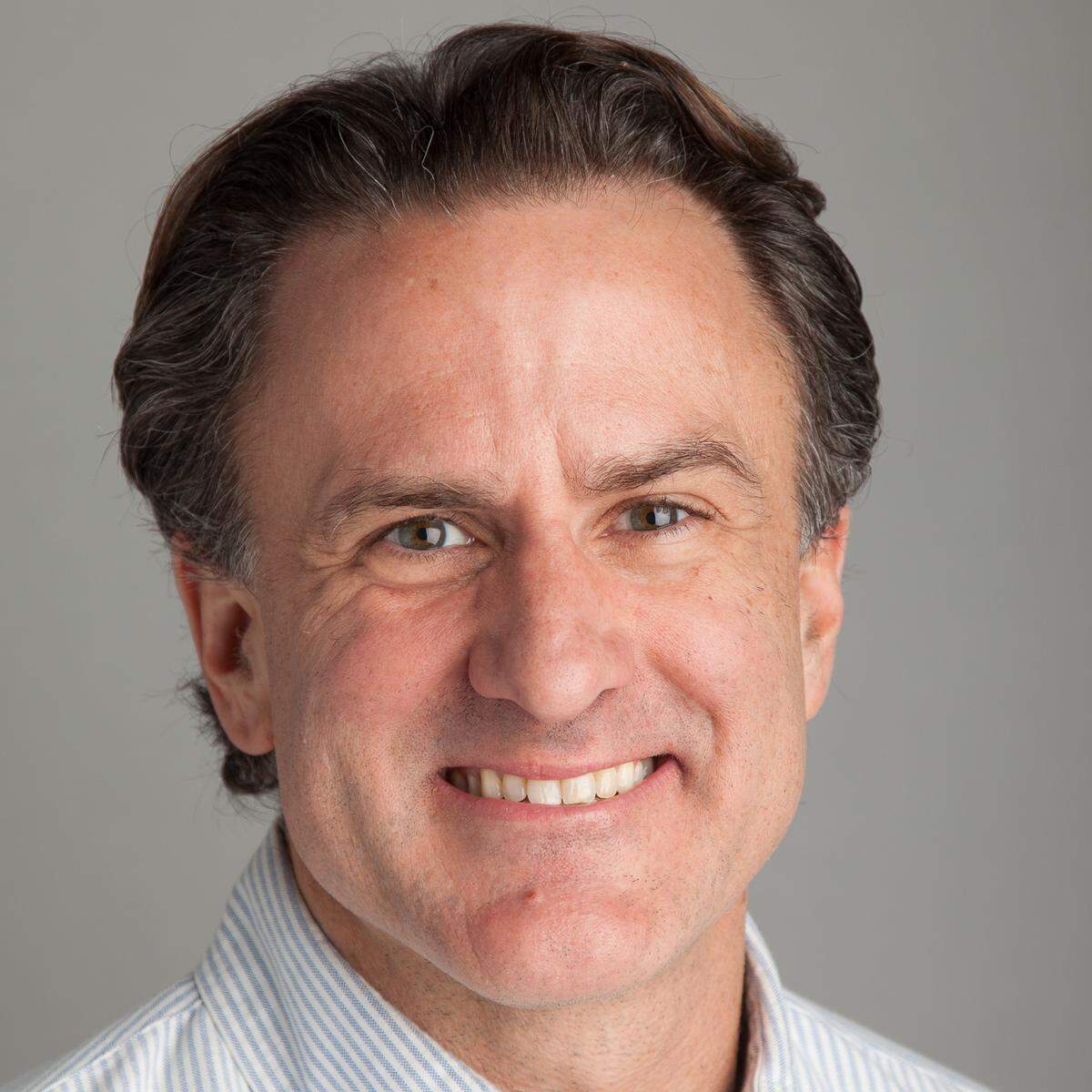
A Fort Worth runner’s journey from overweight to the New York City Marathon
En route to training to run his first marathon, a middle-aged husband and father of two realized two things — one that should be obvious; the other, not so much.
1.) Exercise has as much of an impact, if not more, on your mental state than your physical well-being.
2.) When you lose a lot of weight, people treat you differently.
“I think that one I am still working out,” Fort Worth resident David Aspinall said. “I was really, really surprised how people were around me. When I meet new people, I think maybe they treat me differently after I did lose all of this weight.
“It’s really made me pause in how I see and treat people as well.”
Aspinall, 51 and 6 feet tall, lost 65 pounds and is down to his current 185. Proving he’s all in and there is no going back, he has donated his larger-size clothes.
Earlier this year, he took to running and on Sunday will run the New York City Marathon. This will not only be his first marathon, but his first attempt to run more than 20 miles in one shot. (Don’t worry; he’s been working with a coach in his effort to check this box).
He is running with Team Gladney, the national adoption agency which each year sponsors a group of runners who fundraise for the organization. He hit his goal to raise $10,000, and now his target is to finish the race itself, hopefully with a time that “starts with a four,” he said.
“Four” as in four hours.
Aspinall is one of an increasing number of Americans over 50 who have realized that one of the priorities for a healthier life is moving. Exercise. Physical activity. To be stationary for too long is not to die, but it’s a good way to get there quicker.
“I’ve always been good at things I can measure, but the one thing I was not measuring was my health; as the years go on, the family and professional life is seemingly going well, but the weight piles on,” he said. “I was not focusing on my health enough. I’m smart enough to know and believe people when they say mental health and physical health are connected.”
There are now scores of medical professionals whose basic prescriptions are exercise and daily activity. It’s deeper than that, but those basic tenets are the root principles that good mental health means taking care of yourself physically.
Dr. Peter Attia, who has a globally popular — and very expensive — “Longevity Clinic” in Austin, was recently profiled by CBS News’ “60 Minutes” for his approach to aging, and maximizing the years one has remaining as good ones.
A great portion of his mantra is exercise.
Aspinall, who was born and raised in England but has lived in the United States since he was 26, did not spend hundreds of thousands of dollars to realize the path he was on wasn’t the best one.
He started gravel biking on the Trinity Trail, and paid more attention to what he was putting in his body. With a wife, two children, and a social calendar that often includes unhealthy food and alcohol, the diet can be one of the hardest elements to control.
“That has to be part of the education process is understanding the greater the work the greater the reward, but the reward sometimes is moderation,” he said. “I was guilty of this. We go to a steakhouse and get a loaf of bread before we order food. We understand value and portion size has become, ‘Give me enough food where I can take it away, because I have to see the value in what I am getting.’”
After weeks of riding the bike on the gravel trails, and watching what he was eating and drinking, he started to see results. Results that affected the waistline. Results that started to affect his mind.
“I’m not second-guessing myself after I catch my reflection in the mirror,” he said. “I feel more confident. I’m healthier. I sleep better. I feel more prepared for the day. More present for my family. It’s everything that people said it was; the connection between the physical and mental well-being.’”
What he lacked was a tangible purpose. It’s one thing to “get in shape,” or “lose the weight,” but it can get boring once you arrive at either destination. The art of “maintaining” can be an exercise in conquering monotony.
That’s what sparked his interest in running; achievable goals and markers. The first 5K becomes the first half. A half then grows into a 20-miler. Then a full marathon. Along the way you collect a medal, a T-shirt, experiences and friends.
It’s one of the reasons running is the most popular recreational sport in the United States; all you need to do is walk out the front door and it’s all possible.
Aspinall did not begin this journey to New York City with that idea that he would cross a 26.2-mile finish line in front of a crowd at Central Park.
He began this journey to take care of himself, and to improve his physical health, which in turn has done wonders for his head.