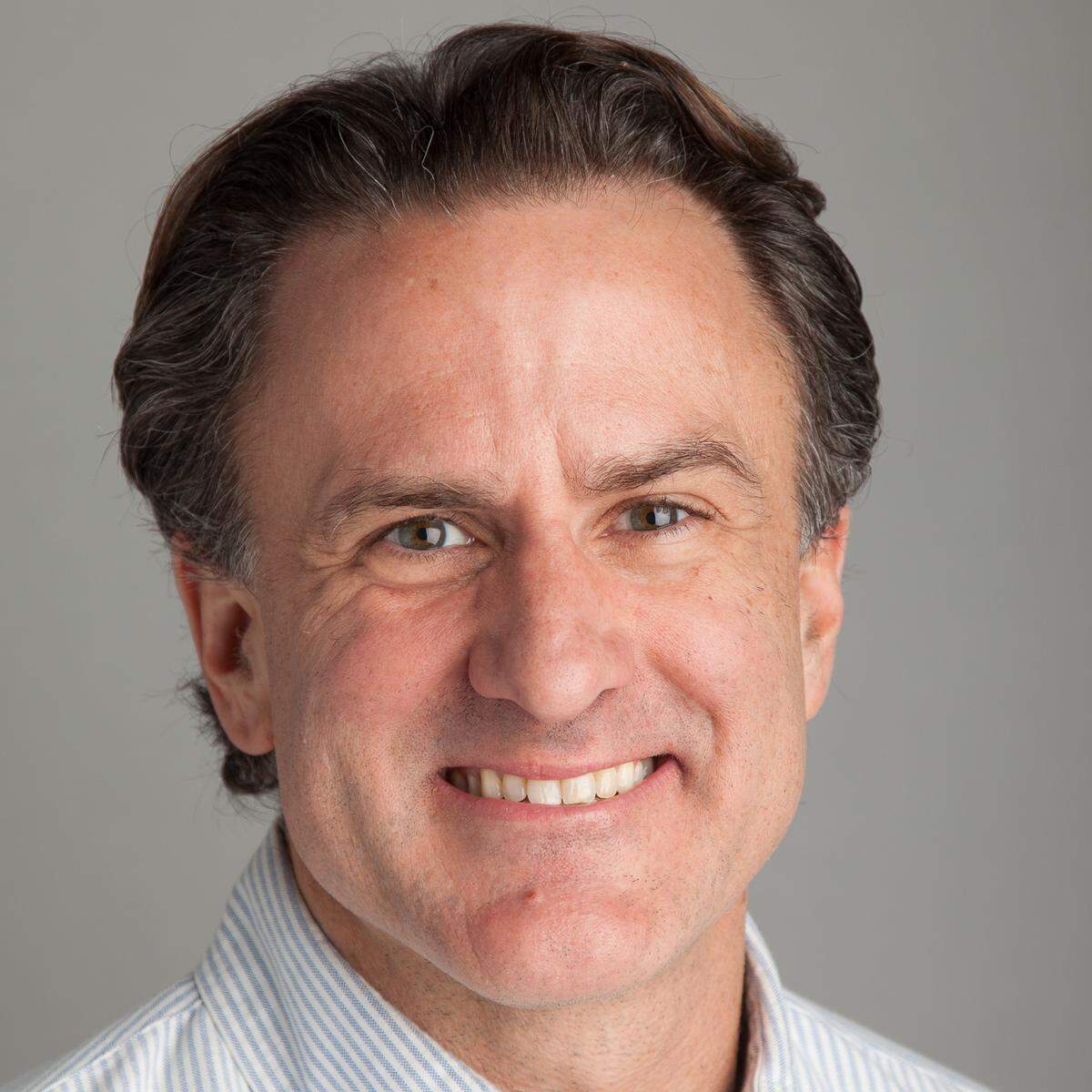
Once a Nashville reject, Robert Earl Keen was welcomed back. He needed it.
Along with New York City and Los Angeles, Nashville is a destination where dreams not only go to die but are brutally murdered by a killer who is always gets off.
Their victims are all over this earth, each one with a hole somewhere in their hearts.
Celebrated singer Robert Earl Keen has his, and while he is a well established country singer and song writer, his heart never forgot Nashville.
“I lived in Nashville in the ‘80s, and I didn’t have any success there, so I never thought I would be part of the people who graduated to the Grand Ole Opry,” Keen said. “When I was there every person said, ‘I don’t think we can do anything for you, why don’t you move back to Texas?’ Someone told me I couldn’t get through a door if it was made of paper.”
Keen moved back to Texas, and made the name, and career, he wanted. He didn’t need Nashville. But he wanted Nashville. He wanted the place that rejected him to want him.
In March, the 69-year-old who has been performing since the late ‘70s played the Grand Ole Opry for the first time in his life. Friend Tyler Childers introduced Keen to the audience. The kid out of Texas A&M was no longer a kid, but in that moment he felt like one.
“I never thought it would happen,” Keen said. “It was by far beyond my expectations. When Tyler walked out and the people just freaked out it made it explosive. ... It’s like that Rolling Stones song, ‘You can’t always get what you want; you get what you need.’ In that context, I needed it.”
Keen is touring, and scheduled to play Fort Worth’s Billy Bobs on Friday, June 27.
From his home in the hill country, he spoke to the Star-Telegram about a career that no longer needs any validating.
Any place left you want to play?
No, not really. I’ve played everything from a garage sale to the Kennedy Center.
You have played with, among other notables, Willie Nelson. In those situations, do you fight being deferential, or do you make sure you’re on the same plane?
It’s more the latter. I have so many songs I can go so many ways. Specifically with Willie, I just try to think of what blends in with what he does. What makes the show an entire experience for the audience. Our performance ramps up into what he’s doing, and we are not over shadowing him or, ‘look at me, look at me.’
I try to blend in with those people. To play with those people I have tremendous respect for.
Do you still recall fondly a ‘I can’t believe I’m here’ moment?
I was never totally blinded by celebrity. I do remember playing in some places and playing for big artists and trying to make a show of myself. I found that was swimming upstream. The answer is ‘Yes,’ but it’s hard to put myself in that position right now.
The only one I can say I was in this play, ‘Chippy’ that Jo Harvey and Terry Allen wrote. I was an actor and every night one of the scenes required us all to be on stage at the same time. I would stand there and think, ‘Hold on to this moment for as long as you can.’
With all of the technology that exists, is creating a song easier, harder, or the same?
To create a song in this climate you have to let go of all the thoughts about, ‘Where does it go and how does it relate to what other people are doing?’ You can’t out guess what is going on now.
The biggest difference is the world of the song writers that just write songs for other people is almost dead. There is no money. That all changed in 2005. Nobody makes any money off record sales any more, or performance royalties. They say 1 percent of the song writers make 90 percent of the money today. Which, it’s Taylor Swift basically.
Is AI a threat to the music industry?
Of course. Ten years ago I remember seeing someone in Japan had developed a hologram that had 175,000 songs in it. There was that movie with Al Pacino (‘S1m0ne,’ in 2002, about an artificial actress).
You can’t beat the system. What works for me is touring. It’s really the only source of income an artist has these days. You have to think in terms of that. My daughter, who is in the music business, always tells me when I get down and out about it, she says, ‘Dad, it’s your job as an artist to chronicle your own life artistically.’ I think of it that way.
When in your career did you physically feel like you could breathe? That you had ‘made it.’
It was 1989. I got off a plane in San Antonio. I was playing in Los Patios. It wasn’t a venue. It was a summer series. My plane was late. My guitar getting off the plane was late. I got there and there were 2,000 people there. Up until that point I was playing in front of 100 people.
So I get there and I’m in the back of the line like everyone else. I asked a guy, ‘What’s the deal here? Why is there this long line? He said, ‘There is this guy, Robert Earl Keen, and he’s playing.’ I’m like, ‘Oh my God.’ There is this immediate exhilaration followed by a moment of great fear.
I’m by myself in front of 2,000 people and I thought, ‘How am I going to do this?’
When did you accept that some songs you may write and produce just may be duds?
That’s happened to me a lot of times. I am loathe to give up on things. Even to this day. I still try to push a song and you can do it from coast to coast and it doesn’t matter where I am, the audience in Portland or Corpus Christi, they’re going to like the same songs.
Then there are songs that you love you, and you think you are a genius when you wrote it. It doesn’t work. I did ‘Over the Waterfall,’ which is an alternative rock song. I loved the imagery and the metaphors and I thought it was just brilliant. To this day if I say to the band we’re doing it, they all get a long face.
You did a ‘farewell’ tour a few years ago and here we are in 2025 and you are still at it, what made you remove the farewell part?
I went into recovery on Oct. 9, 2023, so that combined with there was no income. For financial reasons I had to go back and stuck my toes in the water at first, and I found out it was the only thing I do well. I’m a mess. I can’t organize (bleep). I can’t work a wheelbarrow.
I get on stage and something happens for me. I can capture this whole other level of thinking and projection. I’d say it happens 80 percent of the time. That’s where life works for me.
You are on the right side of 50; what left do you want to do?
I want to put out this record we are working on; we’re about half way there with it. I feel like it’s real solid, beautiful and interesting. The other thing is I enjoy my time off these days. I live in the country with my dog. There is nothing I like better than hunting when it’s hunting season and hanging out with my dog.
Thanks for your time today and we wish you the best of health and hope you continue to perform
Thanks a lot for this and I hope to see everybody at the show.
This story was originally published June 23, 2025 at 9:02 AM.