How Drew Robinson turned surviving a suicide attempt into hope for those who struggle
Drew Robinson understands the question, the need to ask it, but his answer is more frightening than the inquiry.
What are the signs if a person is suicidal?
“First and foremost there is no sign,” he said. “Sometimes the signs just aren’t there.”
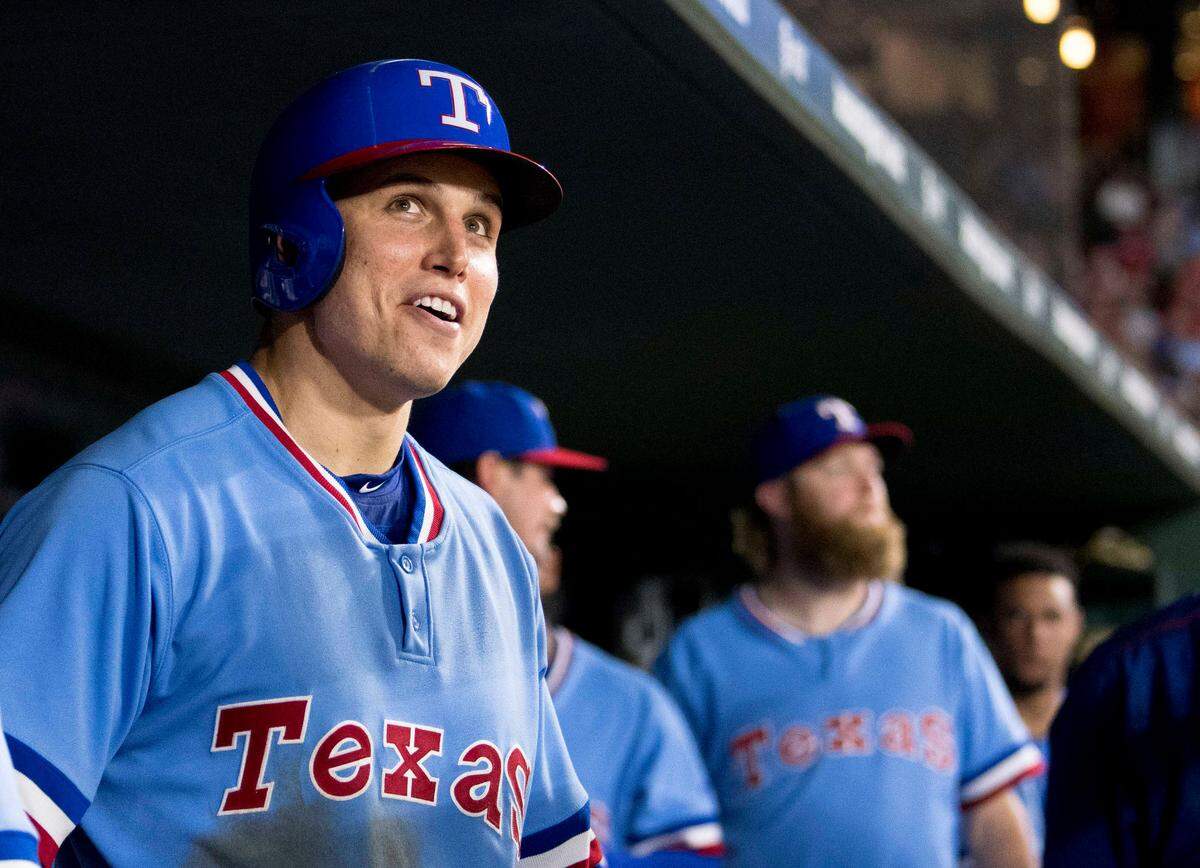
Robinson was the Texas Rangers fourth round draft pick in 2010 who, in April of 2020, pointed a gun at his temple. Overwhelmed by depression he pulled the trigger. Twenty hours later, he woke up.
He woke up knowing that he wanted to live. While he did return to playing baseball, his life’s mission is his story and sharing his struggle with depression. That means talking about all of it, which includes the reality that sometimes no one can see what’s coming.
“Looking back, you can nitpick, or assume or attach some signs but at the end of the day, I was a very charismatic person who interacted socially with family and friends,” Robinson said in a phone interview with the Star-Telegram. “There wasn’t a sign.”
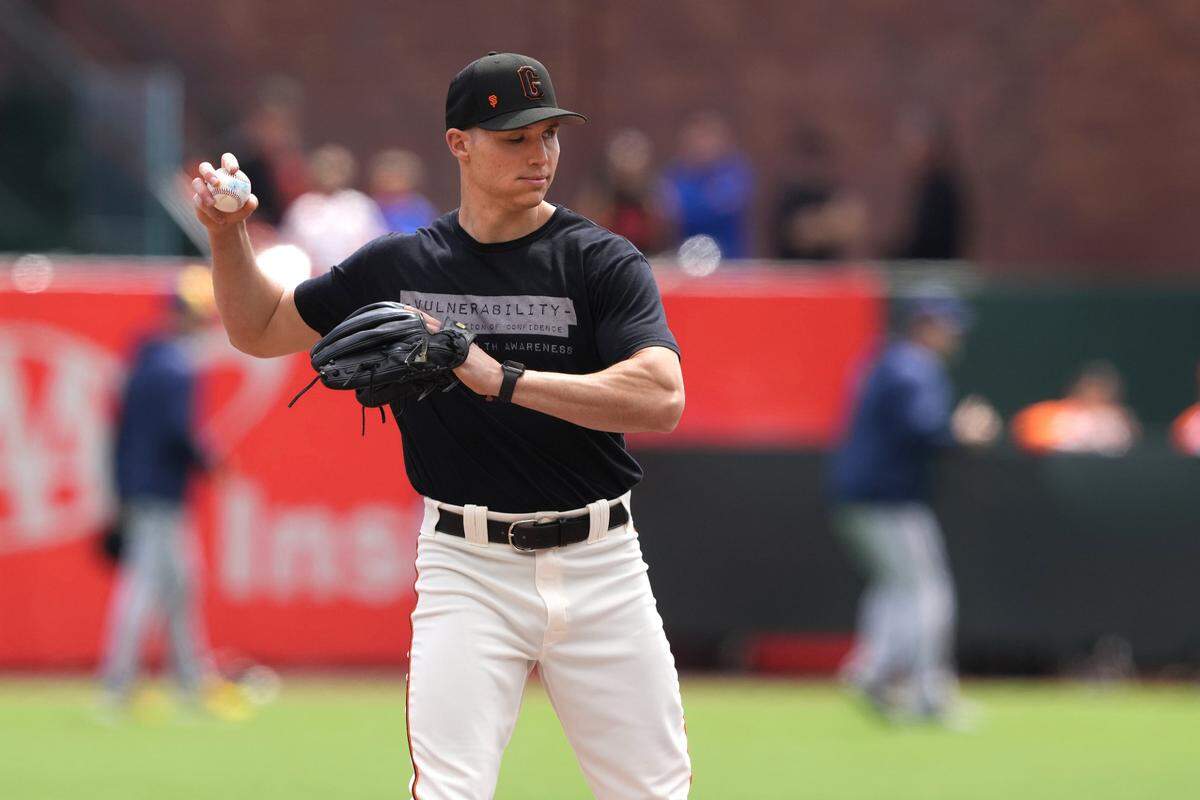
Robinson will be the featured guest at the Grant Halliburton Foundation’s 16th annual Beacon of Hope Community Luncheon on March 25, at the Omni Dallas Hotel. Now a mental health advocate with the San Francisco Giants, Robinson will discuss his life with Texas Rangers’ radio voice Eric Nadel, who is a strong mental health advocate as well.
From his home in Las Vegas, Robinson, 32, talked to the Star-Telegram about his life, mental health, and forgiveness.
What prompted you to turn this moment of your life into a mission and sharing this with an audience?
Having survived what I did and how extreme of an attempt it was, it was nothing to lose, really. There is no way I can hide what I was struggling to deal with. The healing part wasn’t just the physical but emotional.
(Talking about it) pushed me because if I was feeling what I was feeling, while I was living the life I was living, there must be a ton of people who are dealing with (depression). I just felt I could turn this into something positive.
When we made the documentary (on ESPN, in 2021), that was the first time I talked about it in a structured way. The depth and the clarity isn’t nearly what I have now. There are a lot of practice reps that I have been unknowingly getting in the process. It’s a natural progression like any skill.

When you first started talking about it in groups, was it good?
I have a pretty hyper critical mind so it was a lot of internal judgments when it was happening. It was, ‘What the heck what I was doing?’ It was in the beginning stages, that’s when I was new to (talking about this) in a group. I try to give myself grace.
If a person wears a cast for a broken arm, a stranger will automatically ask, ‘What happened to your arm?” With your eye injury, do people ask?
It still happens, maybe not as often but it’s pretty quick I get that question, ‘What happened to your eye?’ Or someone who knows the basics of my story, maybe they ask curious questions. Sometimes I go into it, or I give them fair warning. I’ll say, ‘How willing are you to get uncomfortable with deep stuff?’ Or, I just refer them to the documentary.
Does it feel like five years since this incident, 50 years or five minutes?
Sometimes it doesn’t feel like the same lifetime.
Did you forgive yourself?
Unfortunately the hardest part to this is not to live in a regretful state. Some days, or weeks, or months, it’s pretty hard not to feel shameful, or regretful, about the decision I made. In the last five years, I’ve been regretful; I wish I had continued doing it and finished the job, and it’s an intense memory to think and to reflect on it and process it.
I continue to do it and then it can lead me to a grateful moment. I can weigh in after that moment, and feel connected. It’s an array of everything. Depending on the time and place I am in, it’s hard to forgive myself.
You said ‘There is no sign;’ what can a loved one possibly do to help prevent these sorts of situations?
Blind checking in at some point. It can open a door that plants a seed with a person that maybe a month later they’re open to having a conversation with you. Maybe it’s that vulnerable spot, or a natural comfort to talk to you and having that blind opening to communicate. Have that constant contact in some way.
Mental health awareness has now become a point of discussion and a priority, has the umbrella of ‘Mental Health’ become too big in any way?
It’s a starting point. I don’t think it needs to be so definitive. It’s a door opening into taking care of ourselves, or having a baseline education.
I agree to an extent to where it’s trendy where it comes around to a lot of different realms, but it is a starting line to taking care of yourself; or strengthening parts of your life that are otherwise neglected that can become a life or death situation.
Do you ever just get tired of talking about it?
I think of ‘compare suffering.’ There is not a competition in this. Every day everyone is feeling what they are feeling, and that worse could be the worst. In some ways telling my story has become my super power; I feel so empowered by it, not my (suicide) attempt, but the journey after, seeing the impact I’ve had on people.
If do feel I am low on energy, as soon as I am down, this is something I see, the spark happens, or the encouragement that takes place; a willingness for people to work on themselves so they avoid doing what I did. Or when a person says I saved a life; telling my story has become a weird version of a comfort zone.
Do you ever find that you have talked about this experience so much that where you are now it can sound like a different person?
There are times when I look back on memories, or see pictures or the video, and it doesn’t feel like the same person. It feels like I’ve come so far, and my focus and shift is so far away from that. There is a level of openness, or vulnerability, or basic education, that I didn’t have then.
At times I do become numb to it. I like to call it a familiarity zone. I’ve become so used to it and the vulnerability as a lifestyle, and I think that maybe the person doesn’t need all the bolts of the story.
For me, looking back I was very irritable. I had disproportionate reactions to the situation that was happening; that was my biggest downfall. The the most challenging thing now can be the loneliness and isolation.
What do you do these days for enjoyment?
To be honest I work a lot on myself to stay out of that place. Not to be such a downer, but there are hours of my day, or weeks of my life, I am doing things to just stay alive, and deal with my struggles. This mental battlefield that I put myself into.
I live with my amazing dog. I live alone. I love doing house projects. I work out. I stay in communication with my people. I am an active person. I am very committed to taking care of my mental health; weekly therapy and exercise. I’ve turned into a 65-year-old man who watches the birds and feeds the bird feeder.
Thanks for being so open about your journey and we wish you the best.
It’s not a problem; I am happy to do it.
This story was originally published February 27, 2025 at 10:17 AM.