TCU’s St. Louis Cardinals success story: Luken Baker earned every bit of his promotion
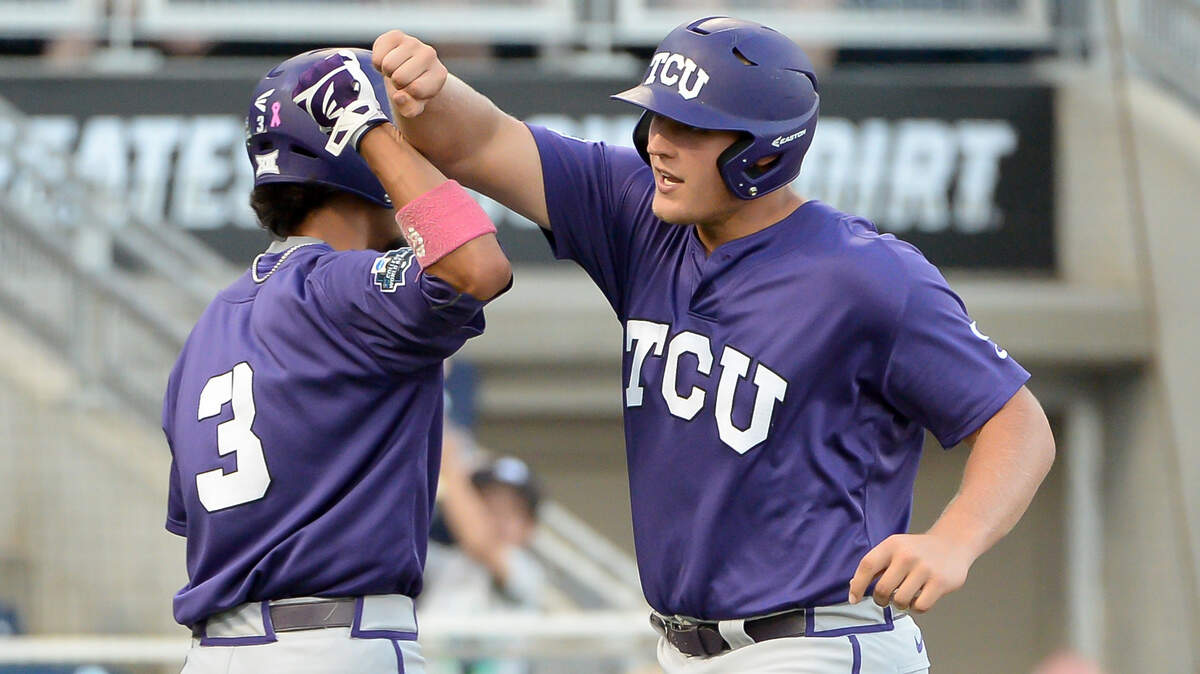
Luken Baker walks through the St. Louis Cardinals clubhouse and nothing about this young man suggests he’s a rookie, or that he’s young.
“I’m 26,” he said.
Old man.
“Feels like it,” he said. “Sometimes it feels like I’m older, and sometimes it doesn’t.”
(Get used to it.)
Twenty-six is not old. Twenty-six is also about two years older than the average MLB rookie.
As TCU’s baseball team celebrates its trip to the College World Series in Omaha, it also commemorates its latest big-league call-up, who found out his good news in ... Omaha.
Baker is the most recent TCU alum to receive the MLB promotion, when the Cardinals gave him the call on Saturday, June 3.
“We were having a series and (his minor league team manager) calls for a lineup change, and 10 to 15 minutes later he brings me in to his office. The whole coaching staff was in there and he told me; it was pretty neat,” Baker said in an interview last week when the Cardinals played a series against the Texas Rangers in Arlington.
“I called my wife. Called my parents; they were all able to get to Pittsburgh the next day. It was really neat having everyone there.”
With his family in the stands at Pittsburgh, Baker made his MLB debut; in his first at bat, he singled. He finished 2-for-4. Took a few days, but he eventually received the special ball from his first big-league hit.
From early in his career at TCU, when he was a freshman in 2016, Luken Baker in the Major Leagues felt inevitable. His promotion is one of those surprising, non-surprises.
Not surprising that it happened; surprising that it took this long.
Baker was a second-round pick of the Cardinals in the 2018 MLB amateur draft. He was a big, hulking type who flashed Major League power on the NCAA level to the point MLB players and managers noticed.
Early in Baker’s playing days at TCU, then Texas Rangers manager Jeff Banister took note of Baker’s power and could only say, “My goodness.”
Baker was headed towards becoming a first pick in the 2018 draft until he suffered a broken left leg and torn ligament in his left ankle when he slid awkwardly into second base during a game against Abilene Christian.
There was some thought that Baker would return for a senior season, but he opted to turn pro once the Cardinals selected him.
His first two or three years in low level minor league ball were not great. In 2019, at high level A ball, he struck out 112 times in 112 games.
The power was there. The eye wasn’t.
He learned, quickly, what every other minor leaguer learns. Minor league baseball is hard.
“The minor leagues are tough; there are cities you don’t always want to be in. Empty stadiums,” he said. “You do well, you don’t do well. You do well, you don’t do well. You struggle. The toughest part, for me, was being mentally able to deal with the fact there are good times and there are bad times, and limiting how long the bad times last.”
There was no minor league season in 2020 (thanks, COVID).
In 2021, he struckout 105 times in 93 games.
In 2022, he started to show signs of getting it. The power numbers started to climb.
“From the start of the season my goal was not to think about what could happen but what is happening, and trying to be successful with the intent of everything I did,” Baker said. “I wasn’t worried about what was going to happen, because I couldn’t control it.”
In 2023, at Triple A Memphis, he did what a top minor league player is supposed to do: Prove that he has nothing left to prove against that level of competition.
In 54 games, the man had 18 home runs with 53 RBI. The strikeouts are still there, but in this era of power hitting you can live with a K as long as there are extra base hits.
At the time of his promotion, Baker’s slugging percentage was .641 (Babe Ruth’s career slugging percentage was .689).
He earned every bit of this promotion.
Baker has about a semester worth of credits remaining to earn his college degree, something he aspires to do. There’s this little problem of a day job interfering with his remaining course work, all of which must be completed in person.
Expect him to complete it.
When he does, he will just be a little bit older than the average college graduate.