TCU’s run to the national title game started by contemplating dropping football
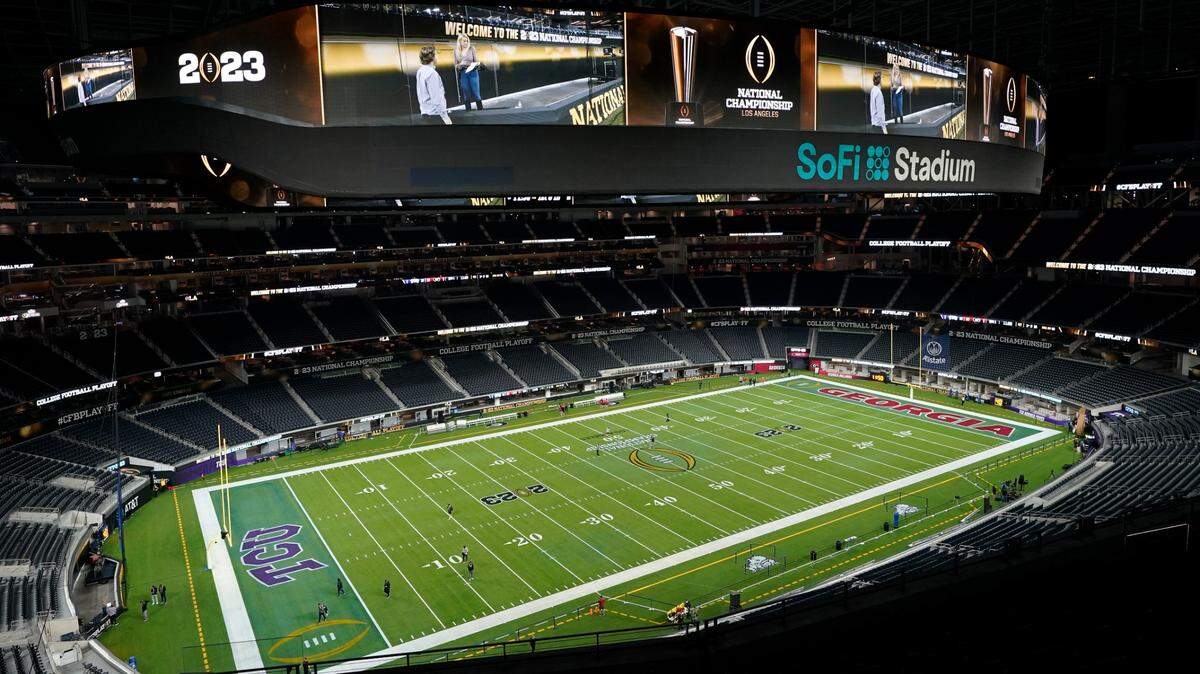
To appreciate TCU’s place in Monday’s national title game, you must go back to the discussions when TCU contemplated if having a football team was worth the hassle, and the money.
“There was some discussion (among the university leadership), early in my career, ‘Is athletics really that important to a university?’” said retired TCU assistant athletic director Ross Bailey, who is a TCU alum and worked at the school from 1976 to 2020.
In the mid-’90s, after the breakup of the Southwest Conference, TCU kicked around the same proposal as Rice University.
“Rice actually went to a vote (to drop football), and TCU quite never got to that,” Bailey said.
Said former TCU board of trustees member Malcolm Louden: “I don’t think it was ever really that serious. That came more from the religious (members of the board).”
Even if the concept never went to a vote among the board, TCU football in the ‘90s was so bad for so many decades (think four) that dumping it was plausible.
Georgia has had its ugly moments in the last 40 years, but never so bad as to contemplate dropping football. Not even Kansas tabled such an idea.
Former TCU chancellor Bill Tucker, who died last year, made it known that dropping athletics, or football, was a bold N-O. In about 1998, former TCU provost Bill Koehler made sure that TCU made athletics, and football, a priority.
They both recognized that athletics was the school’s best chance at nationwide advertising. If it worked.
For anyone who is familiar with TCU from 1959 to 1997 it is inconceivable that the Horned Frogs reached a national championship in any sport, much less football.
In the mid-’90s, TCU’s football program and entire athletic department was one of the worst in the country. Morale was due south of Depressing.
From 1996 to 1998, when TCU was in the WAC, I served as a graduate assistant in the athletics media relations office. We all knew we were small time, one click north of Division I-AA.
Attendance for home football games looked to be no more than 12,000 per game. At many games we would just make up attendance figures, knowing the figure was a lie and no one would notice.
It was a sad sight to see the parking attendants, minutes before home football games, sitting in chairs at the gates without any traffic to direct.
In the fall of 1996, there was an athletic staff party consisting of students and graduate assistants; I took an informal poll of the attendees to see if they wanted the football team to lose.
Every hand was raised; they wanted then football coach Pat Sullivan to be fired.
“My joke was the best modality I’ve got is maybe a 2x4 to get some of the football players out of the training room,” said Bailey, who was the school’s head athletic trainer from 1978 to 2000 before he moved into a role overseeing facilities. “No one was motivated to play at the time.”
Pat, God rest his soul, resigned in the middle of the 1997 season.
Shortly thereafter TCU acknowledged the obvious.
TCU gets real
The story has been told and re-told, but one detail of TCU’s ascension that has been mostly private was the school’s boldness with bowl games.
After finishing 6-5 in 1998 under first-year head coach Dennis Franchione, the Sun Bowl was willing to take TCU, due in large part because of its business plan.
Basically, TCU promised to fill X-number of seats. It did, and TCU upset USC, which generated national attention.
“We went to the Houston Bowl and the (Poinsettia Bowl) in San Diego and changed the management of those bowls,” Louden said of TCU’s appearances in the Houston Bowl (2005) and Poinsettia Bowl (2006).
“We got those bowls thinking we could make them some money. Then we started looking at new conferences and (then) athletic director Eric Hyman was great about it. We sat down with the people from ESPN one day at Colonial (Country Club) and we were talking about doing a Fort Worth Bowl. We made a deal with them, and they said they would pick us up in bowl games.”
It was exposure.
And when TCU wasn’t budgeted for certain expenses, people like Louden spent money out of their own pocket to make whatever projects a reality.
Under head coach Gary Patterson, TCU kept winning.
TCU creates a new, national image
For the men and women who worked at TCU in the mid-’90s, and ever since then, seeing the university in a national title game in football is beyond rewarding. It’s validating of the time and effort invested to make such a scenario possible.
Frank Windegger is a TCU alum who played and coached baseball at the school, and served as athletic director from 1975 to the spring of 1988.
He was often blamed for TCU’s exclusion from the new Big 12, even though the school had 00.001% chance at the invitation. The school wasn’t spending the money, and the athletic department was treated with the same priority as the school of communications.
“They have done a great thing and it’s a great thrill to see this,” said Windegger from his home in Fort Worth. “Anything in life is possible, and you have to live with that kind of hope and adage.”
Windegger agreed that the TCU that exists today bears little resemblance to the school he attended or worked at for decades.
After Hyman left TCU for South Carolina in 2005, he was replaced by Danny Morrison. Morrison served as TCU’s AD from 2005 to 2009 before he left to become the president of the Carolina Panthers.
It was Morrison who often used the phrase to sell TCU, “Big enough to compete, and small enough to care.”
He and his wife Peggy will attend the national title game as guests of TCU chancellor Victor Boschini.
“The kind of continuity they’ve had with the same chancellor for 20 years is one of their most underrated assets,” Morrison said. “I’ll qualify that; it’s the continuity that’s always striving to get better. That fits TCU to a glove.”
One person who was invited to the game by Boschini but cannot attend is Morrison’s successor, Texas athletic director Chris Del Conte.
When Del Conte was hired in 2009 he was tasked to move TCU into a BCS conference, and to build a new football stadium. Both happened.
“The common denominator to all of this is their board has been super focused on reinvesting and a big part of that is athletics,” Del Conte said. “Gary built a successful program.
“This is not a flash in the pan. This has been an odyssey for 25 years. The board made a difficult decision to move on from an iconic coach last year, and this is all a testimony to all of them. I am proud to play a small part of that infrastructure.
“But this is not a Cinderella. This is who TCU is.”
To think it all unofficially started by asking, “Is football really worth it?”
This story was originally published January 8, 2023 at 5:00 AM.