How Texas Tech’s Joey McGuire is forever grateful to the TCU coach who made the time
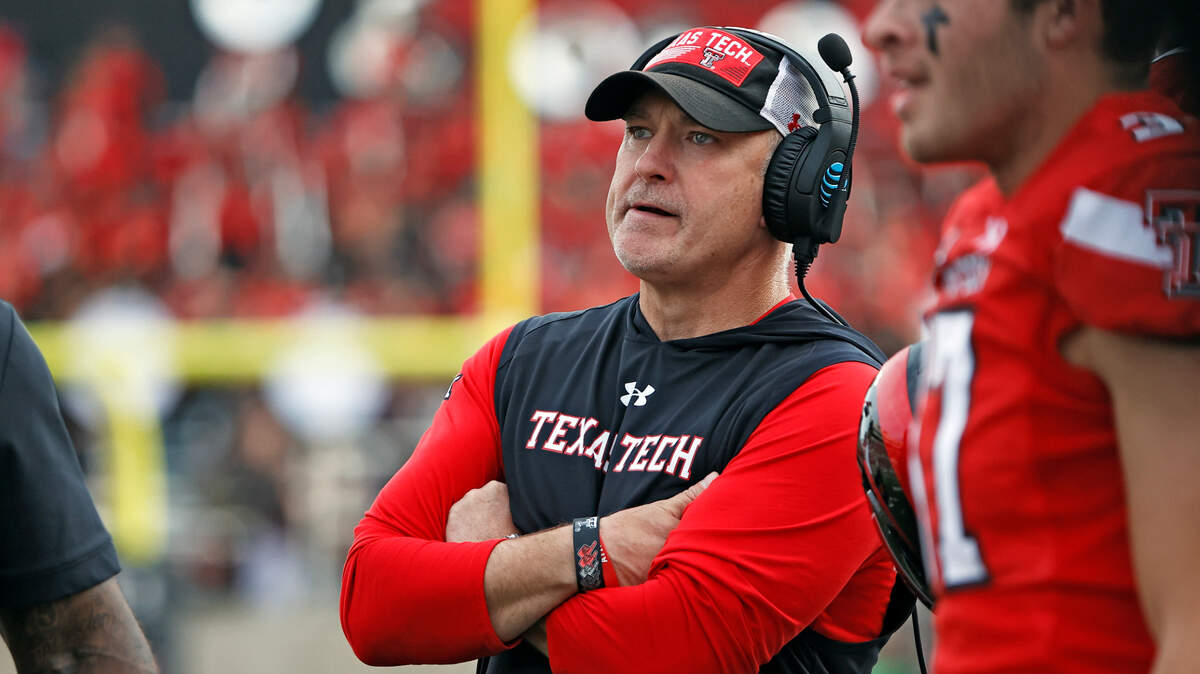
As a leader and coach of young men, it’s hard to envision that at one time these tough, assured figures were often shy, quiet kids and far from the models of confidence they portray every day.
When Joey McGuire was a young teenager, he was far from the person who went on to become one of the most successful football coaches in Texas high school history.
The person who was plucked from a high school job to be a hired as an assistant at Baylor who in five years would be named the head coach at Texas Tech.
McGuire is at Texas Tech for a variety of reasons, one of them being at some point in his life, long before he had a career, he met a coach who affected him when he needed it.
When McGuire steps on the field at Amon G. Carter Stadium on Saturday for Texas Tech’s game against TCU, it will take him back to that time, and to that coach who changed his life.
A coach who is gone, but whose legacy lives in guys like Joey McGuire.
Former TCU coach Jim Wacker died in 2003, but he would take great pride in knowing what a difference he made in the Red Raiders’ first-year head coach.
When McGuire was in middle school, in the mid 1980s, his family moved from Texarkana to Fort Worth. The transition was not good for McGuire.
He wanted to go back to the town, and to the people, he knew.
That wasn’t going to happen.
In the summer of his seventh grade year, he attended the Jim Wacker football camp held at TCU.
“At the time, he was bigger than life,” McGuire said this week in a phone interview.
McGuire lived in Fort Worth when TCU was on the pendulum of a Bluebonnet Bowl high, and NCAA penalty low.
Wacker coached TCU from 1983 to 1991, when the Southwest Conference was almost as clean as a landfill. With the possible exception of Rice, even the teams that didn’t cheat, cheated.
Wacker coached the Horned Frogs to the 1984 Bluebonnet Bowl, the team’s first winning season since 1971. TCU finished 7-4 in 1991, and Wacker left for Minnesota.
He was at Minnesota for five years, and never did finish with a winning record.
After a long fight with cancer, the former coach at Texas Lutheran and Texas State died in August of 2003 at the age of 66.
His players loved him.
In his prime years, Jim Wacker looked like a coach. He sounded like a coach. He’s one of the few coaches who could make those unwatchable weekly coaches’ TV shows slightly entertaining.
“Would you believe we finally found out, after all of these years, that Cinderella is a Horned Frog? And a beautiful Horned Frog at that?” Wacker said to open one episode of The Jim Wacker Show in 1984.
Wacker was known for his silly personality. He was also known was the coach who, in 1986, agreed to turn his team in to the NCAA for infractions that eventually led to a three-year bowl ban, revenue and scholarship reductions.
TCU fans called it “The Walking Death Penalty.”
Whatever TCU was doing, McGuire didn’t much care. He didn’t want to be in Fort Worth.
“I was really struggling. I just hated it. I wanted to be back in Texarkana,” McGuire said.
Then he attended Wacker’s football camp at Amon G. Carter Stadium.
Attending the college football camp of the big-name coach can go one of two ways; sometimes, the big-name coach puts his name on the brochure, collects a check and spreads the revenue among his assistants, and shows his face at the end of camp to take pictures and sign a few autographs.
If there is a potentially attractive high school recruit attending camp, the head coach shows his face more often.
Then there are the camps where the coach actually wants to be there, and gets on the field with the kids and participates and coaches.
Wacker was a corny salesman, but he loved coaching any kid, from middle school to college.
“I don’t know what he knew (about McGuire’s situation), or if it was just him, but he really took the time to talk to a seventh grader and to say good things to him,” said McGuire, who graduated from Crowley high school before going to UTA. “It was a week long. We spent the night in dorms. I’ll never forget any of it.
“I won a camp award. He could just breathe confidence into people unlike anybody else. Just being in that situation at the time, and just how new the whole area was to me. Those are the memories I have of TCU.”
Jim Wacker’s legacy in football will always be associated with TCU and Minnesota more than anything else, but there’s a coach in west Texas will forever be grateful that he took the time to get to know a seventh grader who needed someone of his stature to believe in him.
In the end, that’s bigger than reaching the Bluebonnet Bowl.