Sports does not need any more sad stories about young athletes blowing millions
The rookie minimum in the NBA $1 million, college players are signing NIL deals that pay beyond that of an NFL rookie salary, which is $705K.
The minimum rookie salary for an MLB and NHL player is $700K.
The scary part is not the money the players make, but what they do with it once it hits their bank account.
Sports does not need any more tales of young players who come into life-altering wealth only to blow it all on stuff, due in part because of an inability to say “No.”
As money pours into pro and, now, college sports, educating teenagers what to do with all of this new cash should become either the first or second priority. Not third.
Former Dallas Mavericks draftee Pete Mickeal operates the NBA Draft NTX Combine, which is going on this week in Frisco.
It was recently approved by the NBA, and the three-day event features a loaded lineup of college stars and some international players, all of whom are sure they’re going to make six or seven figures in a matter of months.
As much as Mickeal (pronounced Michael) emphasizes what the players need to do to make the NBA, or any league that pays money to play basketball, he has made educating the invitees on what to do with their money a priority along the same lines as nutrition and what to do after 10 p.m.
“I have financial advisers from Morgan Stanley come in and speak to all of the players,” he said in a phone interview.
That’s great.
Are the players listening to the two financial advisers?
“I’m telling you they are locked in,” Mickeal said. “They tell them, ‘You are going to come into a lot of money. And you are going to want to buy this and that and this and that. You only need one of everything.’
“’You want to buy a car, or a house, and you only need one of those.’ It is the truth, and they need to hear it.”
Every single sport is littered with stories of young people who make it to the NBA, NFL, MLB or NHL and sign that life-changing contract, only to squander all of it.
Much like the lottery winner who comes into money, too often young players are not equipped with what to do with their cash and they spray it like garden hose until the water runs out.
NFL running back Adrian Peterson made tens of millions of dollars in his 15-year pro career; in 2021, he defaulted on a loan from 2016, and was ordered by a court to pay $8.3 million.
In 2009, Sports Illustrated reported that 60% of ex NBA players are broke within five years of retirement; the same report said that within two years of retirement, 78% of ex NFL players were bankrupt, or under “financial stress.”
In 2012, ESPN produced a “30 for 30” documentary on this very issue, simply titled, “Broke.”
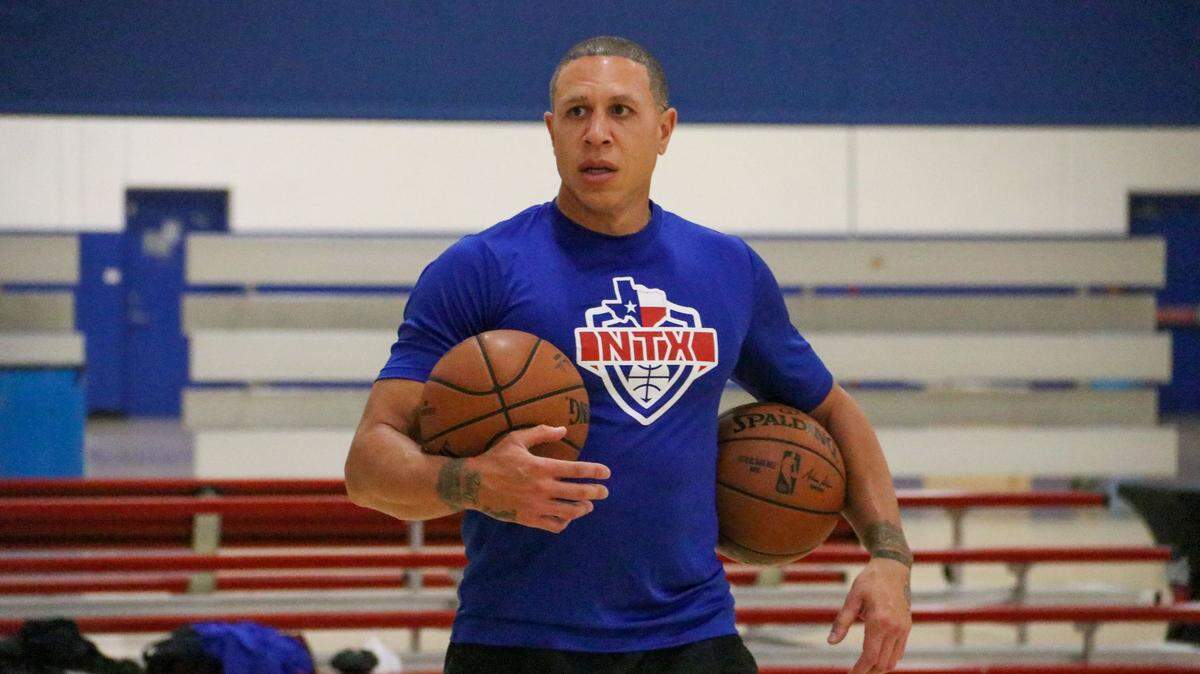
“Those mistakes will keep coming,” said one of the NTX coaches, former NBA star Mike Bibby, who was the second pick in the 1998 NBA Draft.
“A lot of these kids have never been with this type of money before. It was the same thing when I came into the league; you listen to what people tell you how to handle it, and when that money comes in, there is just different stuff going around.
“Your mom needs this. Your dad needs this. Your brother needs this. Your kids need this. It doesn’t matter how young you are, it matters what situation you get in. Everybody always needs something, and sometimes you have to be the guy who helps, and sometimes you have to learn to say no.”
In the last decade or so, leagues, players unions and college programs have made financial literacy readily available to anyone who is interested.
Players are better today talking about the subject among themselves, whereas for previous generations it was a taboo topic.
“You don’t have to be in the NBA to make a good living; I was fortunate enough to be a Euro league player when the minimum salary was $350,000,” Mickael said. “If you are playing in Barcelona, or a top team in some other country, you can make $1 million to $3 million a year.
“Now, if you are making $3 million over there, that’s going to be closer to $7 million in the NBA. Either way, it’s still a lot of money and you can provide a lot of security with it, if you know how to handle it.”
Mickeal is 44, and the world has changed considerably since he was a second round pick of the Mavericks in the 2000 NBA Draft.
Back then, a player’s goal was to be drafted and to play in the NBA.
Today, a college player is comfortable not being drafted. The goal is the NBA, but the priority is to make a living playing basketball anywhere on Earth.
“The players today are so much more educated than when I came out in 2000,” Mickeal said. “Now the players are going to school, and if it’s not the right place they are transferring and still getting their degrees.
“People forget there is a big bonus for coaches to graduate players, so they’re graduating.”
In 2020 87% of Division I men’s basketball players earned a degree, according to the NCAA.
It’s a nice statistic, but it doesn’t always equate to financial awareness.
Guys like Mickael, and every school, league and conference are trying to make sure that the players lucky enough to come into six or seven figures don’t become just another sad stat.