
Former TCU, Colonial leaders created an eternal legacy in Fort Worth
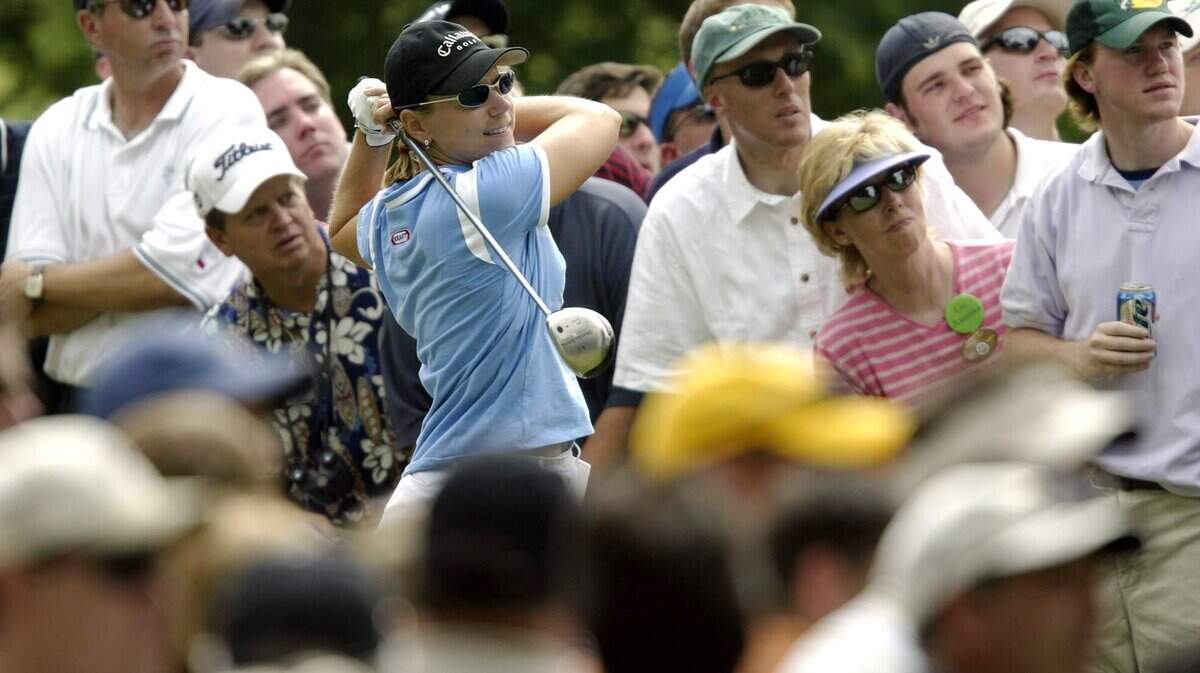
Dee Finley and Sonny Campbell were two Fort Worthians with no direct ties to the other yet both created a legacy in sports for women.
Finley is a former University of Texas golfer who was the tournament committee chairman at Colonial when Annika Sorenstam made her historic appearance at Hogan’s Alley in 2003.
He wanted her there.
Campbell is a former TCU wide receiver who pushed for the inclusion of women in the TCU Lettermen’s Association. He wanted women in the club.
Finley graduated from Paschal, Campbell from Haltom High.
They both died in the past 11 days, each at age 73.
"He was a great, great guy and it was a blessing the good Lord took him," former TCU athletic director Frank Windeggar said of Campbell.
Campbell had been dealing with the slow crippling effects of Multiple System Atrophy (MSA) for several years.
“I never heard the man ever complain about his situation or the hand he was dealt,” Campbell's former TCU teammate, Frank Horak, said. “He was a great receiver. He was a guy who could get it wherever they threw it. And he was a great person and a wonderful friend for 50 years.”
Campbell was TCU’s leading wide receiver from 1964 to ’66. That was a time when TCU didn’t exactly throw the ball much. Or win much, either.
TCU was 12-19 in Campbell's three years, with one winning record: 6-5.
Nonetheless, Campbell was named to Dan Jenkins’ 100-year team. When Campbell graduated, he held the school record for career receptions (100), and receiving yards (1,381).
To give you an idea of how little TCU passed the ball in his era, his most productive season was 1964 when he had 35 receptions. In 2015, TCU receiver Josh Doctson caught 78 passes for 1,326 yards.
Campbell went on to become a successful executive in sales. He also became the President of the TCU Lettermen’s Association in 1992.
One his initiatives was to push for the inclusion of women to the group.
“Sonny recognized the time and the need for it,” said Dr. Don Smith, who played at TCU right after Sonny’s career, and the two were lifelong friends. “He saw that it was the right thing to do and he pushed for it.”
The TCU Lettermen’s Association is a club comprised of former TCU student athletes who lettered in a sport for at least one year. It had existed for decades exclusively for men, mostly because that's who played sports on the college level.
The NCAA did not sanction women's sports until the 1980s. Women's basketball was not an NCAA sport until 1982.
Shortly after Campbell pushed for the TCU Lettermen's Association to include females, the club passed a measure to open it to all former TCU athletes.
Roughly a decade later, Dee Finley was the Colonial tournament chairman when he received a phone call from Annika Sorenstam’s agent.
By that time, Sorenstam had made it known she desired to play an PGA Tour event. It was merely a matter of finding the right course, and a tournament that would give her an exemption.
Finley was receptive to the idea of the world's best women's golfer playing at Colonial. He proposed the idea to Colonial's tournament committee, only not everyone was as eager as Finley to sign off on a decision that would generate unprecedented publicity amid plenty of controversy.
"It was great leadership on Dee's part to provide the type of leadership that was needed to pull that off," said Colonial's long time publicity director, Dennis Roberson. "We knew it was going to be more than just the golf world that was going to come to Colonial to see this; the world was coming."
The world did indeed come, and Sorenstam's arrival at Colonial remains one of the most significant in the history of a sport Finley loved.
Finley was a golfer from a young age. He won the City Junior Championship in 1963, and went on to play at Texas.
While Campbell did not have a direct relationship with Finley, the impact they made on women's sports in Fort Worth, and beyond, links them forever.
This story was originally published May 10, 2018 at 7:15 PM with the headline "Former TCU, Colonial leaders created an eternal legacy in Fort Worth."