NFL Draft: McMillan, Golden or Egbuka? Cowboys have crucial decision to make at wide receiver
Of the many roster needs that the Dallas Cowboys have going into next week’s NFL Draft, it’s hard to make an argument against wide receiver being the most pressing requirement coming out of the first round.
Sure, the cornerback, running back and defensive line positions could use some boosting, but giving CeeDee Lamb a running mate in the receiving corps is crucial toward offensive success in year one under head coach Brian Schottenheimer.
During the draft process, the Cowboys have put in extensive work on a large handful of receivers, including just about every name at the top of the draft. They hosted Texas’ Matthew Golden for an individual 30-visit on April 10 and Arizona’s Tetairoa McMillan for an individual 30-visit on April 11 in addition to hosting Missouri’s Luther Burden III and Ohio State’s Emeka Egbuka among others during their 30-visit weekend on April 4-5.
If every receiver still remains on the board when the Cowboys are on the clock with the No. 12 pick, it won’t be an easy decision for the war room to land on one player. Aside from Travis Hunter’s two-way ability, the Cowboys have hosted each of the top four receivers for visits in recent weeks in McMillan, Golden, Egbuka and Burden.
Which one makes the most sense?
Tetairoa McMillan, Arizona
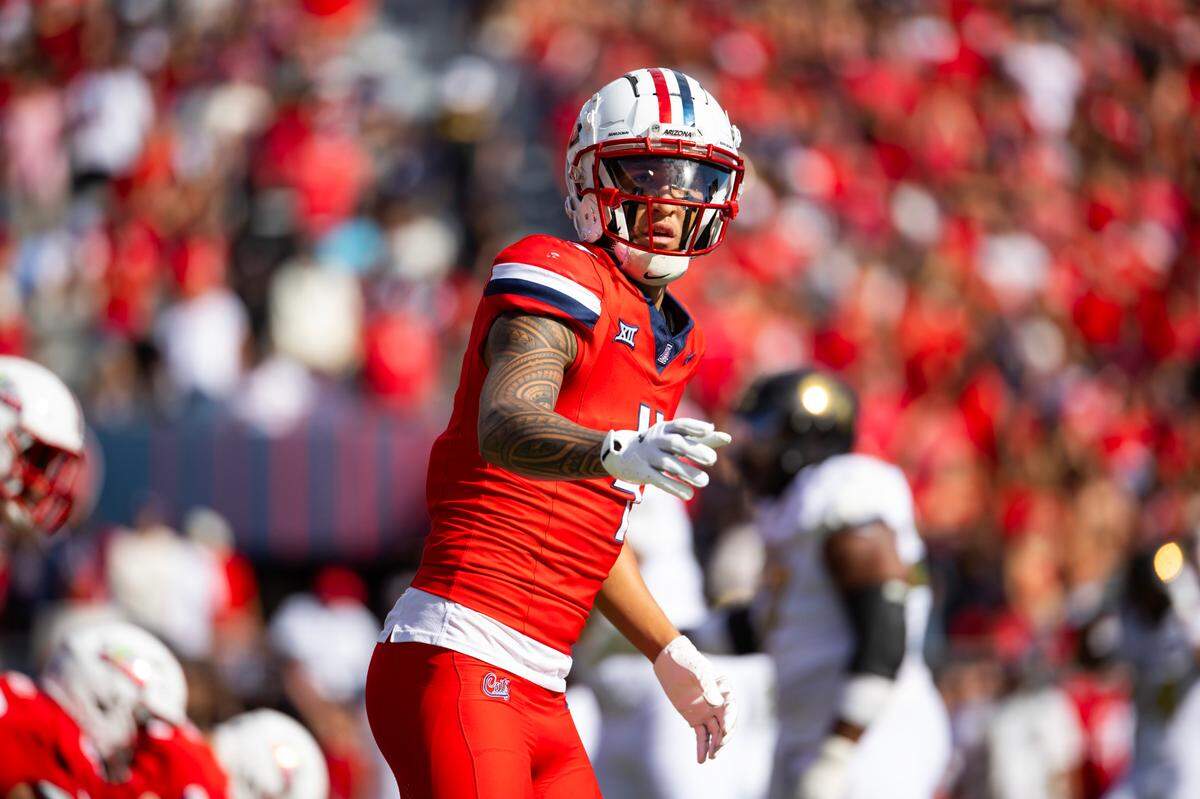
Why it would make sense: One of the freakiest vertical receivers in the draft class, McMillan could bring the athleticism that made him one of the top high school volleyball recruits in the country to the field to give Dallas a true possession threat at wide receiver that it hasn’t had since Dez Bryant. His size at 6-foot-5, 212 pounds could make 50/50 contested catches at the NFL level feel more like 80/20 situations for Dak Prescott. He would provide an immediate impact to the offense without overlapping CeeDee Lamb’s specialities in the receiving game.
Why it wouldn’t make sense: Other than the decent chance that McMillan is off the board when the Cowboys are on the clock, the only way it doesn’t make sense for Dallas to turn in his card is if the scouting department and coaching staff value the speed of the other top receivers more than the athleticism of McMillan. At his individual Pro Day, McMillan was clocked in the range of a 4.5-second 40-yard dash, which is by no means slow, but is the slowest of the top four receivers. Some teams prefer speed over size, and the Cowboys could be one.
Matthew Golden, Texas
Why it would make sense: At the NFL Scouting Combine, no player ran a faster 40-yard dash than Golden at 4.29 seconds, and that kind of speed could open a Pandora’s box of possibilities in the passing game for Schottenheimer and Prescott. His versatility in the slot and on the outside would make him a chess piece alongside Lamb to maximize playmaking ability and run-after-catch in the receiving game for the Dallas offense. While it could be a complicated process to find specific discerning roles for Golden and Lamb, it would be a dangerous weapon when the potential of that duo is fully realized.
Why it wouldn’t make sense: If you’re taking a receiver in the first round, you’re taking someone you know will provide immediate production. With Golden, he failed to post 1,000 receiving yards in any of his three collegiate seasons despite playing 16 games for Texas last season. When the moment is big, Golden shows up and provides clutch performances without question. But would Dallas have that same reliable presence on a random Sunday afternoon in, say, Carolina?
Emeka Egbuka, Ohio State
Why it would make sense: Despite never leading his team in receiving in any of his four seasons at Ohio State, Egbuka walked away as the program’s all-time leader in receptions. He’s played second-fiddle to Jaxon Smith-Njigba, Garrett Wilson and Jeremiah Smith throughout his college career, yet he produces at the level of a first option. In an offense that already has it’s established No. 1 in Lamb, Egbuka would slide right into the No. 2 role that he grew accustomed to maximizing during his time in Columbus. He’s a compact slot option that can terrorize the short-to-intermediate game to open up the downfield action for Lamb and other weapons.
Why it wouldn’t make sense: Egbuka can pack a punch at 6-foot-1, 202 pounds when defenders attempt to bring him down, but the speed isn’t something that will blow NFL defenses away. It will limit his ability to be an after-the-catch weapon in the NFL, which could take route packages out of the offense when he is on the field. If Lamb were to go down with injury, can Egbuka prove that he can be a reliable option without defensive attention being dedicated elsewhere?
Luther Burden III, Missouri
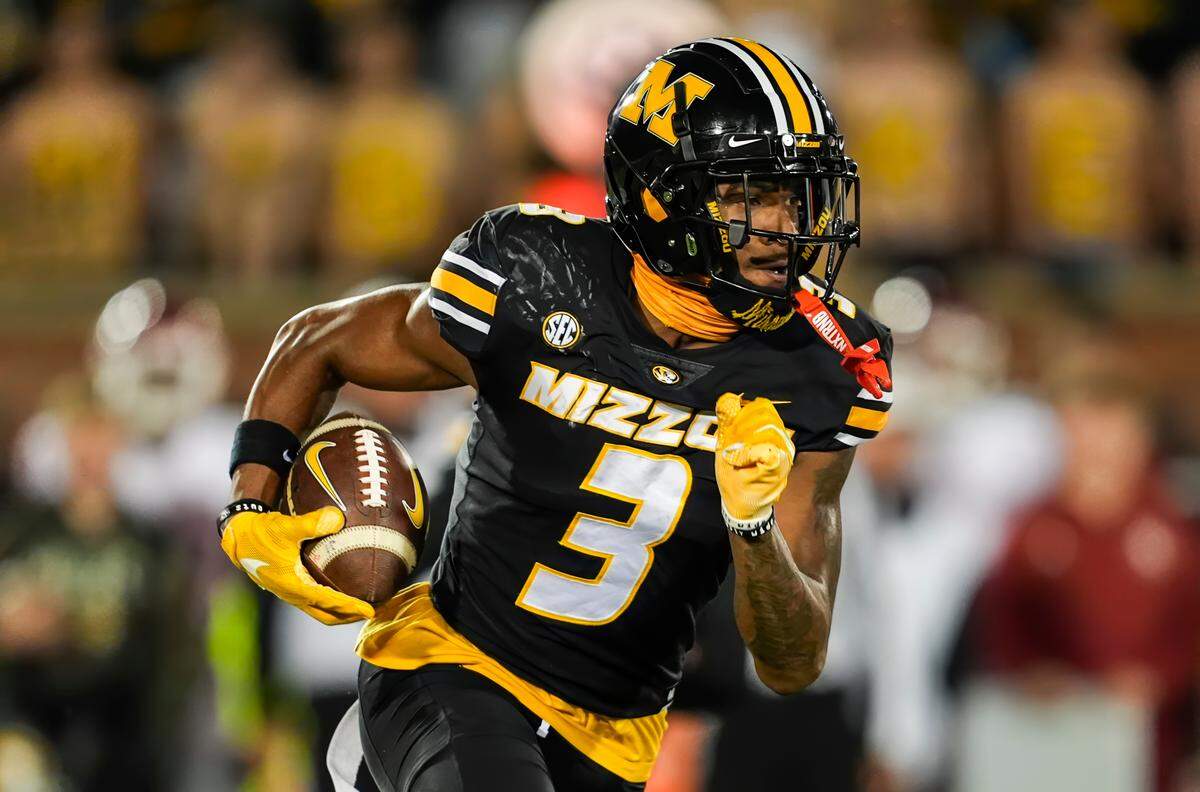
Why it would make sense: One of the smoother route runners in the draft class, Burden can attack defenses with his after-the-catch ability to produce for an offense. His versatility to play inside and outside along with the potential to run a plethora of route combinations with Lamb could be like deciphering an ancient hieroglyph for opposing defenses. His ball skills, play strength and ability to create big explosive plays out of nothing would provide the exact type of playmaking ability that the Dallas offense desperately needs out of its 2025 draft class.
Why it wouldn’t make sense: At times, Burden can be knocked out of games by increased attention by opposing defenses. How much of it is a credit to Missouri’s personnel last season? Probably some, but other top receivers, such as McMillan, also had to work through similar issues and found more success. Nearly 75-percent of Burden’s targets came inside 10 yards, which could limit what he’s able to do over the top of defenses in the NFL. Alongside Lamb, Burden would be a similar weapon which would further the need for a big-bodied receiver later in the draft or in free agency.
This story was originally published April 15, 2025 at 5:27 PM.