Jerry Jones says his decisions with Dallas Cowboys are based on business not race
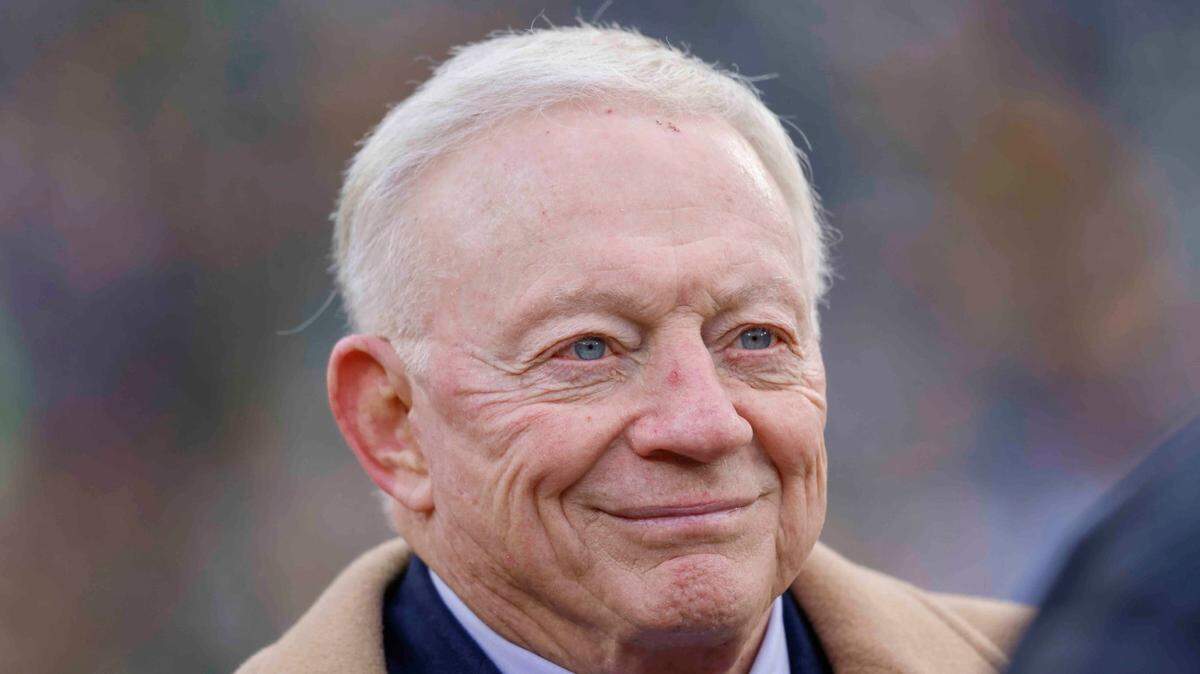
Dallas Cowboys owner Jerry Jones refuses to apologize for his presence in an recently resurfaced photo of a 14-year-old Jones in a crowd, consisting of white students, attempting to deny access to six Black students at North Little Rock High School.
The photo is 65 years old.
Jones said he was simply a curious kid.
“I didn’t know at the time the monumental event really that was going on. I’m sure glad that we’re a long way from that. I am,” Jones said after the Cowboys’ 28-20 victory against the New York Giants on Thursday and one day after the Washington Post published on a story his lack impact on racial issues in the NFL, while using the photo as background into Jones’ mindset. “That reminds me to just continue to do everything we can to not have those kinds of things happen.
“That was just curiosity. I got criticized because I was more interested in how I was going to be punished my coaches and everybody for being out front, but nobody there had any idea frankly what was going to take place. We didn’t have all the last 70 years of reference and all the things that were going on and so you didn’t have a reference point there. Still, I’ve got a habit of sticking this nose in the right place at the wrong time.”
Jones said he got punished by his football coach for being at the protest after being told to stay away.
“Well, I was a young sophomore trying to make the team and they kicked my ass,” Jones said.
Jones said he didn’t fully understand the issues of the day but does know the presence of his classmates didn’t represent a welcoming committee.
“That was 65 years ago, and I had no idea when I walked up there what we were doing. It just is a reminder to me of how to improve and do things the right way,” Jones said.
But those kids were just trying to go to school?
“Yeah, you want to ask me what I was thinking? I was thinking I’m going to get in trouble for being up here, and I didn’t know what was going on,” Jones said. “I was 15 years old and so having said that, that’s all that I can remember.”
Jones doesn’t believe the full context of his story and life were portrayed correctly in the Washington Post article.
He said he spent the early years of his life in tiny College Station, Arkansas, raised predominantly, around African-Americans.
“My growing up through my early years until junior high school was principally in a Afro American neighborhood, period,” said Jones while growing increasingly emotional. “My friends, my aunts and uncles were the only Caucasian family in all of College Station. And so I’ve spent my life growing up very small in and around the African American community and where I grew up. And so I asked the questions like everybody did. Why didn’t they come on and go to school? So the all of those kinds of things were part of that and that’s just a that’s just a fact. And so, those things are there in those times. I’m not cavalier about it. I’m genuine about it.”
“What that has got to do with it is I have a very long relationship in that world where I grew up as a kid, as a kid. And those years certainly marked me and made me. As we all stand here today, we look for ways to get better, ways to do it better. You may have noticed in the same article I was only one that volunteered, all the owners I was the only one to talk about it and I’ll talk about it all day long. I’m not afraid.”
And while the Cowboys are one of seven NFL franchise who have never hired a Black, Jones said all the decisions he makes are based on business, not race.
He said that was the case when opposed the NFL players protests against police brutality during the national anthem from 2017-2020.
“I was sideways on the anthem because it wasn’t good business,” Jones said. “I wasn’t sideways over for anything that got to do with race. If you look back and look at anything, I’m 100% about gaining on it strategically, professionally, getting the best one out there. It is absolutely one million percent colorblind to me.”
Jones pointed out that the Cowboys’ current coaching staff is among the tops in the NFL in terms of minority hiring.
And he also pointed to his relationship with his Black players during their career and as an business advisor after retirement.
“I want it to work. I want it to work. I want it to work for my players,” Jones said. “When I consult and am with them, I’m with them on a business basis. I was with them on a business basis on the sideline. I’m business. I want business. I know that if they end up and have some financial viability, they can step out of me from when they’re through or when they’re done playing football and they can influence a lot of people. Influence a lot of people. I’ve seen it done. All of my relationships are as an advisor of using any skill or talent I’ve got financially. That’s what it’s about. Pro football is financial. A draft pick is financial. Everything is financial. It’s about the money. Always has been. So the better you got that pot right, the better that you can. . .”
Where I’m going with this is that I’ve never thought about some of the issues that you want me to be or about which you’re asking me to be sensitive. My goal when I get up in the morning is to make it work. That’s where I go. As far as who makes it work, what they look like who makes it work, that has no place in my life. No place. It isn’t even a thought about who makes it work.”
This story was originally published November 24, 2022 at 9:38 PM.