
Game saver: Rangers closer Keone Kela remains perfect in 2018
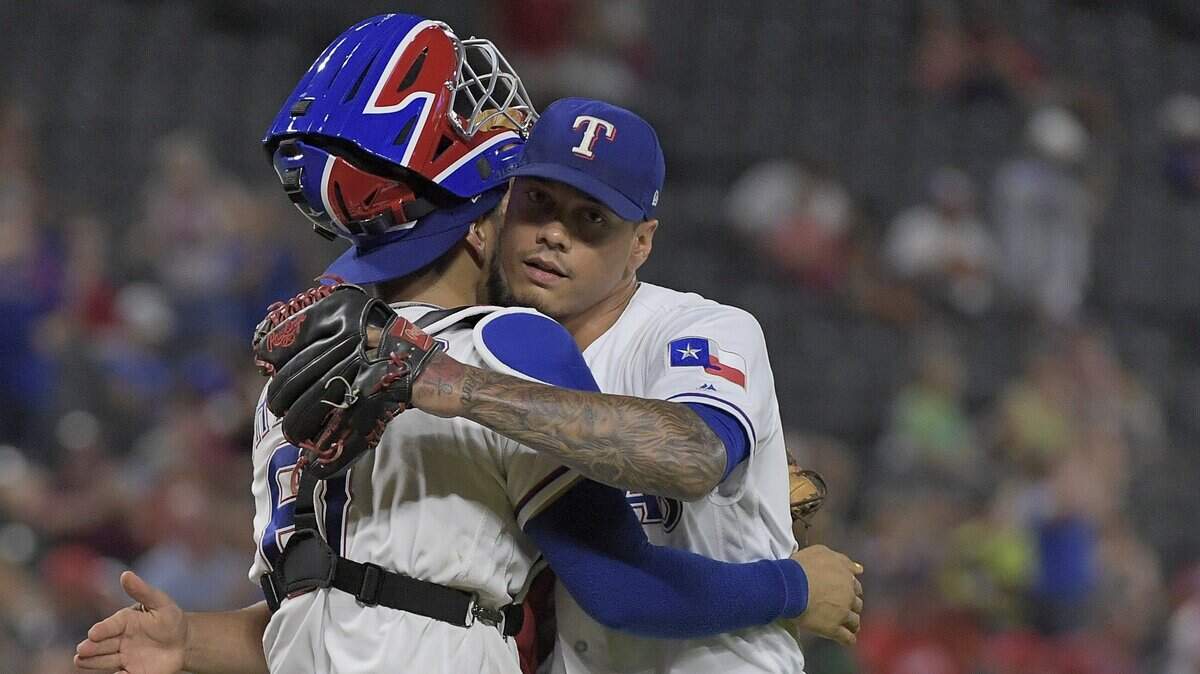
How good has closer Keone Kela been in 2018?
In a word: perfect.
The Rangers' right-hander saved his 20th game in 20 chances Wednesday night, the longest season-opening streak in club history. Kela broke Francisco Cordero's 2004 record of 19 consecutive saves.
It's also the longest saves streak in the majors in '18.
Kela has allowed runs in six of his 31 appearances, a total of 11 runs in 29 innings. Six of those runs came on two different swings, including a grand slam in Cleveland on May 1 and a two-run double against the Mariners on April 20. Both of those were non-save situations.
Rangers' save streaks
Here's a look at the longest consecutive save streaks in Rangers history. Keone Kela's 22 consecutive converted saves includes a club record 20 consecutive converted saves to start 2018, breaking Francisco Cordero's 2004 record.
Games | Pitcher | Dates |
31 | Joe Nathan | April 15-Sept. 12, 2012 |
25 | John Wetteland | July 25, 1997-May 20, 1998 |
22 | Keone Kela | May 21, 2017-current |
21 | Francisco Cordero | June 23-Aug. 28, 2004 |
When he's been called on to close a game with a save on the line, Kela has a 0.49 ERA in 18 1/3 innings. In non-save situations he has an 8.44 ERA.
"It's a nice comfort zone to have," Rangers manager Jeff Banister said. "Most of them have been clean innings. [It has been fun] to watch the maturation process of Key out there on a nightly basis being able to calm it down and just go pitch by pitch."
Kela has saved 22 consecutive games going back to May 2017. The last time he blew a save was May 2, 2017 at Houston. The 22 consecutive saves is the third-longest streak in Rangers history. He's nine saves shy of tying Joe Nathan's club record of 31 consecutive converted saves in 2012.
This year, Banister noted, Kela has slowed himself down on the mound. There's less walking around between pitches but he's no longer working with a hurried pace. Those two things at first may seem incongruous but make sense.
He's staying in the moment with each pitch and not taking time to over analyze what he's doing. Instead, he's remaining more focused on his next pitch. Put another way: He's staying trained on the task at hand while not rushing himself.
"He's kind of slowed himself down and thinks about what he wants to do," Banister said.
This story was originally published June 28, 2018 at 4:38 PM.