
Glen Garden: Forever sacred ground
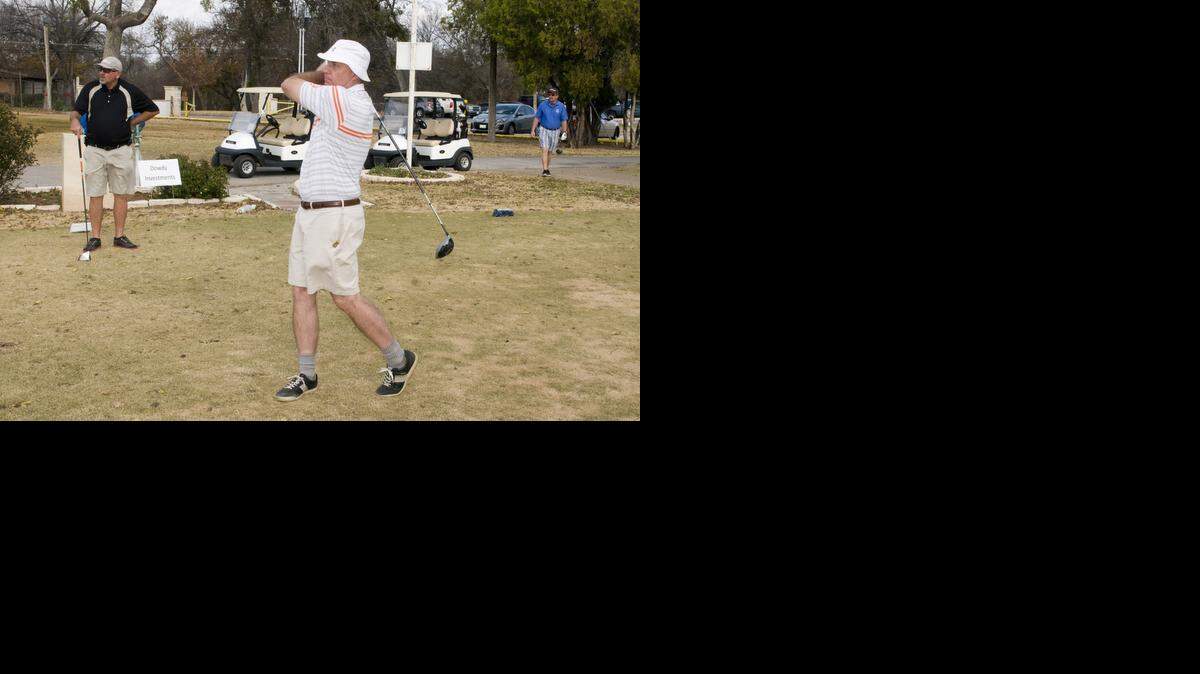
Presumably not one to pout, H.H. Cobb, denied entry to River Crest Country Club, packed up his golf clubs and opened his own country club.
Though his Glen Garden Country Club never achieved the status of Fort Worth’s most esteemed social circles, it was his who gained world renown because of two boys who became among the finest performers and most prolific winners in the history of golf.
Ben Hogan and Byron Nelson are gone and so too now is the second-oldest country club in Fort Worth.
The 102-year-old Glen Garden is set to close its doors Wednesday. Having lived through the Prohibition of the 1920s, the golf institution on Fort Worth’s southeast quadrant will become home to a whiskey distillery.
Progress to one is heartache to another.
Glen Garden is sacred ground as the boyhood home of Hogan and Nelson, who were caddies at the course in the 1920s.
“I loved that old course,” said longtime golf writer Dan Jenkins, a Fort Worth native who got to know Hogan as a student at TCU. “Played a lot of golf there. The Glen Garden Invitation was one of the best tournaments on the West Texas amateur circuit.
“Texas’ best amateur and college players always entered. They were true celebrities in those days.”
It was also the site of the last of Nelson’s historic 18 victories in 1945, one of golf’s least-known coincidences of history considering it was at Glen Garden where Hogan and Nelson learned to play the game.
As one writer has observed, the first golf instructions “Hogan and Nelson heard were not in Texas twang but Scottish brogue.”
That first instructor was the club’s first pro, James Orchar Kidd, a Scot who immigrated before World War I.
The last pro is Jason Rocha, who took over in 2011.
“That’s one thing I pointed out,” Rocha said. “This place is like family, dysfunctional sometimes, but family.
“It’s been a wonderful home for me.”
Ben vs. Byron
Over the generations, Glen Garden has proudly promoted its association with both Hogan and Nelson.
It’s revisionist history.
Glen Garden represented a terribly painful memory for Hogan, who arrived at the club as a 9-year-old. Nelson arrived two years later.
They came because the prosperity of the Roaring ’20s bypassed both the Hogan and Nelson family homes.
They both needed work, especially Hogan, who moved to Fort Worth with his widowed mother and brother.
They found a path in golf, though like Glen Garden’s founder and River Crest, Hogan faced rejection here.
At the time, it was merely a provincial controversy, but the 1927 caddies tournament became more than a footnote in history.
Hogan and Nelson finished tied. Hogan won what he thought was a nine-hole playoff. Hogan, according to Jenkins, remembers two members racing up to say the playoff was actually 18 holes.
Nelson, who went on to win by sinking a 30-foot putt on 18, always thought it was 18 holes.
“What angered Ben the most was that Byron was given a junior membership in the club and Ben was told he could not use the practice range,” Jenkins said. “I don’t think he ever got over it.”
Said Rocha: “He wasn’t embraced by the members like Byron was. I think that’s well known.”
Hogan left as a 16-year-old, not to return for decades, taking his game and his drive to Katy Lake, the course a few miles away that became a shopping mall on Seminary Drive.
What part, if any, the experience shaped him as a competitor, no one really knows.
“He liked to say his mother told him not to forget that he was as good as anybody, and he set about proving it,” Jenkins said. “Golf was his way of reaching a higher social level.”
A golfing legacy
Hogan and Nelson, of course, realized their American dreams using the John Bredemus-designed track as a launching pad. So, too, it must be noted, did Sandra Palmer, the 19-time LPGA and two-time major winner.
Palmer might not have been joking, but since the statute of limitations has expired on truancy, it’s safe to say now that Palmer once quipped that she spent more time at Glen Garden than high school.
Suffice to say, it all worked out for her.
The Glen Garden legacy has been an inspiration for many others.
Jon Drago, tournament director at the AT&T Byron Nelson Championship, is a Fort Worth native who learned the game on the courses that span the city.
The Hogan-Nelson history played a significant role in his decision to pursue golf as a career.
“I’ve always been aware of the special history Glen Garden has held,” Drago said. “To be afforded the opportunity to play a small role in perpetuating the legacy of Byron Nelson through the tournament is special.”
One of the club’s current owners, Malcolm Tallmon has a 68-year association with the club, beginning as a caddie in 1945.
Tallmon and Clarence Dowdy have owned the club since 2001.
The decision to sell wasn’t easy but the time was right, Tallmon said. The Firestone & Robertson Distilling Co. has also agreed to buy the club’s memorabilia so it can maintain an appreciation of the past.
What happens to the 18-hole course, only the new owners know, but it will presumably be developed. There has been talk of keeping a hole or two on display, but as Tallmon said, “if you can’t play on them...” what’s the point?
Considering all the temptations of youth, Glen Garden “really got me started in the right direction, said Tallmon, who also went on to work at River Crest.
One other boy who was here before Tallmon and is still here is Wendell Waddle, 84, who began as a caddie as a 9-year-old in 1939. Waddle has been the club’s de facto historian over the years.
He was also an assistant pro long ago.
He remained active in the club’s golfing community up until its last day.
Both men talk about their days as caddies as if it were yesterday. These men, who have lived for eight and nine decades, some of their favorite days were as caddies at Glen Garden.
“I want to give up golf,” said Waddle, 84, who is ending a 75-year love affair. “It’s heartbreaking.”
Waddle won’t give up golf, but he and all the others who have spent decades honing their craft at Glen Garden will not go on without a period of mourning.
“As a lover of the game and all the good that it stands for, there’s something kind of sad about losing that bit of history in our town,” Drago said.
A different time
Glen Garden opened as a nine-hole layout with sand greens. Without the watering system we all enjoy today, none existed in those days and greens keeps couldn’t water.
The course expanded to 18 holes and includes, almost all agree, the most unique — wacky really — back-nine holes in golf.
Nos. 12 and 13 are back-to-back par-5s, followed by par-3s in four of the final five holes.
The integrity of the layout remains as it was originally designed, save for the tee shot on the par-3 No. 18, which was longer than today’s 152 yards.
“Ben and Byron both used to laugh about it when I would bring it up,” Jenkins said. “A lunatic couldn’t have designed anything more baffling.”
Nelson said tournaments at Glen Garden didn’t begin until the 240-yard, par-3 No. 14. Only shotmakers need apply for the final five holes.
Glen Garden held professional tournaments in both 1945 and ’46. Club president Tom Brown, who kept the club afloat during some meager years in the 1940s, was the underwriter for the payouts and appearance money
It was hoped, as the board said later, that with these tournaments Glen Garden would take her place in the eyes of the city and the nation as a first-class country club.
“We received national publicity, which will place this club out in front in future tournaments and in the eyes of the golfing world,” the board wrote.
The 1945 event was remembered as Nelson’s 18th victory of his magical year. The final event in 1946 was as much remembered for how golfer Doug McSpaden arrived: in a plane landing on the No. 1 fairway.
It was a different time.
Nelson, the “Man O’ War of golf,” won the December 1945 Glen Garden Invitational and the $2,000 first prize with an 8-stroke victory over Jimmy Demaret. Sam Snead was fifth.
Ben Hogan played in 1945 and finished seventh.
He didn’t return in 1946 for the renamed Fort Worth Open, won by amateur Frank Stranahan.
“I saw every shot Byron hit when he won” in 1945, said Jenkins, then a freshman at Paschal High School. “I never saw anyone play that fast or hit so many drives in the fairways or so many approach shots so close to the pins.
“He truly was ‘golf’s mechanical man.’”
There was “always a game at the Garden.”
The last will take place today.
Though Glen Garden goes away, this spot in southeast Fort Worth will always be sacred ground.
“Once they take over, I’ll go over by myself and cry about it,” Tallmon said. “But I’ll be by myself. And that’ll be it.”
This story was originally published December 9, 2014 at 8:01 PM with the headline "Glen Garden: Forever sacred ground."