
How has UIL’s new split-division playoff format impacted Texas high school basketball?
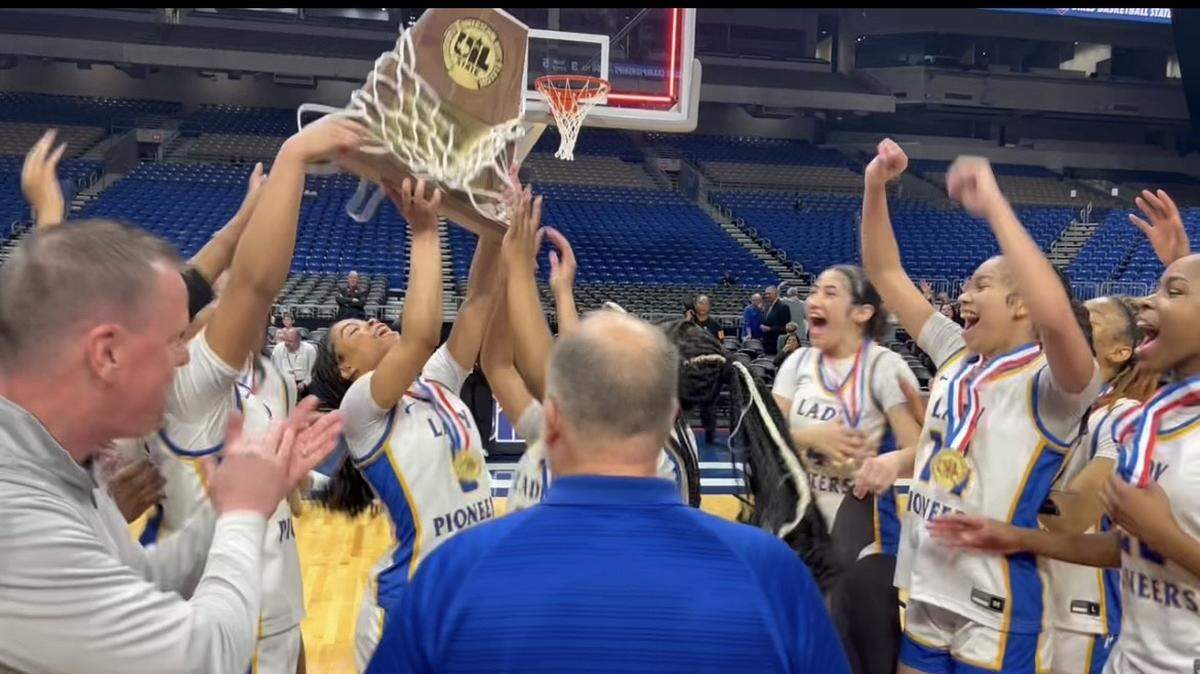
The University Interscholastic League’s newly implemented split division playoffs changed the landscape of Texas high school basketball.
The girls’ state championships at the Alamodome marked a new era for the UIL basketball.
With the first basketball state championship weekend in the books, a question should be raised: Is split division worth it?
Regardless of opinions or perspectives, the changes were drastic, which can be a difficult adjustment for longtime coaches and fans.
It doubled the amount of state championships from six to 12, which, on paper, makes winning a state championship more attainable. The regional quarterfinal round was removed, so championship teams must win one less game, too.
With the separation of small and large schools, there is no guarantee that the best teams in every classification will meet.
If you’re an old-timer with an appreciation for the history books, you may be bothered that twice as many teams can add state championships to their resume. With split divisions, some teams that would’ve ended the season as runner-ups end their campaigns with gold medals around their necks.
What it means to be a state champion is evolving.
Instead of being a champion of an entire classification, a team is champion of a division within a class.
With a split-division format, 64 schools are included in a bracket. In years past, it used to be 128 schools.
Although winning a state title is easier on paper, that certainly doesn’t make it easier in reality.
Fort Worth Boswell is an example. The Pioneers defeated four ranked programs in a row to win the Class 6A Division II championship.
Denton Ryan also had a challenging path to a state title. The Raiders, an unranked team, went on a Cinderella run and capped it off by taking down No. 1 San Antonio Wagner.
To Ryan coach Monesha Allen, the victory is one of the highlights of her life and career.
“I thank God for this win,” Allen said. “I’ve prayed for this win, I’ve dreamt of this win, and it’s here.”
Although more teams play in a championship, there are now plenty of state semifinalists that no longer get to experience the grand stage of the Alamodome. State semifinal games are now played at other neutral sites.
Boswell head coach John Reese, a supporter of split division, brought up this counterpoint, saying that playing only one game at the Alamodome takes away from the “luster” of the traditional state tournament experience.
“Maybe we can change (the semifinal format) and keep the state tournament together,” Reese said. “Because the split of it — I don’t think it really gives the young ladies an opportunity to enjoy the full weekend.”
The split division adjustment period may take some time. The UIL can fine-tune the process. After all, the 2024-25 season is the guinea pig year.
The UIL’s split division format change could be likened to the 12-team College Football Playoff; you will never make everyone completely happy.
All things considered, there is one group that undoubtedly benefits from the split division: The players.
The effects of a state championship
At the end of a state championship game for any sport, there are two staples: The winner with tears of joy and the loser enduring the sting of defeat.
That did not change with the split division format.
At the girls’ basketball state championships, the players experienced the same ultimate joy after the final buzzer sounded. And although the runner-ups endured heartbreak, twice as many players got the life-changing experience of playing in a title game.
After Fort Bend Hightower lost to Boswell, coach Jasmine Brewer emphasized that she was grateful for the experience. Before the game, she told Hightower players to be present in every moment.
“It’s the best feeling ever,” Brewer said of state. “I love the fact that (the athletes) were able to experience (the state championship). I remember as a senior doing this exact same thing and interviewing after the game. That’s something my teammates and I still talk about 15 years later.”
For most players and coaches, a format change is the last thing on their minds. They just want to play the sport they love and work toward a challenging common goal with their teammates.
According to Reese, the additional championships give more opportunities for kids to become champions, which is a “beautiful thing.”
“Anytime that you can reward more teams with the ability to win state, I think it’s always great,” Reese said.
With more championship games, more teams can make history for their high school, school district and community. Denton Ryan, Decatur and Boswell won their first state titles.
Boswell’s title gave the city of Fort Worth its first in 18 years. Now, middle school and underclassmen athletes have new role models within their community that prove success at the highest level is attainable.
At the heart of high school sports, the most important aspect was never a championship win. Instead, it’s about the development of character on and off the court or field.
When the game ends, many players choose not to reflect on the game itself but on the entirety of their high school careers, which is a once-in-a-lifetime experience; a four-year span of growth, learning, development, friendships and hard work.
Lubbock Monterey senior Aaliyah Chavez, the nation’s No. 1 recruit with a bright future ahead of her, didn’t think she would cry after the game. When she checked out to a standing ovation moments before winning a state title, she couldn’t contain her emotions.
“That was my last high school game ever,” Chavez said. “… I was happy. It was happy tears at the end of the day. It’s kinda crazy that I’m done with high school.”
Many players, including Boswell senior Camille Williams, value a state championship for multiple reasons. A state championship proves a team is the best within that classification. It also represents the culmination of all the behind-the-scenes work and the obstacles they’ve had to overcome.
“That’s why it’s so hard to process,” Williams said. “We knew we were going to get here, but it’s just an amazing feeling because we work so hard. We’ve had off days, but y’all seeing us playing together — you think we look so good.
“There’s bad times too, but it’s just how we get past that that is amazing. (The championship journey), honestly, is a memory I’ll hold on to forever. I’ll never forget. And it’s an amazing feeling.”
A state title reinforces the value of the championship process and showcases that sacrifice, dedication, and preparation are worthwhile. The split division format allows more players to see their ultimate goals become a reality.
“This is where everybody wants to be,” Denton Ryan junior Kinley Lewis said of state. “Everybody at home right now wants to be us. I’m just trying to soak it all in. This is a great achievement for me.
“A couple of years ago, I never would’ve thought this was possible. Making it happen — it shows me what I can really do. It gives me a great confidence boost knowing that I can be the best.”
The split division format is far from perfect, but when are playoffs ever perfect in sports?
State titles have a different meaning, but the emotions, sacrifices, and memories tied to them remain the same.
.jpg)