
What temperature has to be reached for Texas high schools to cancel football practice?
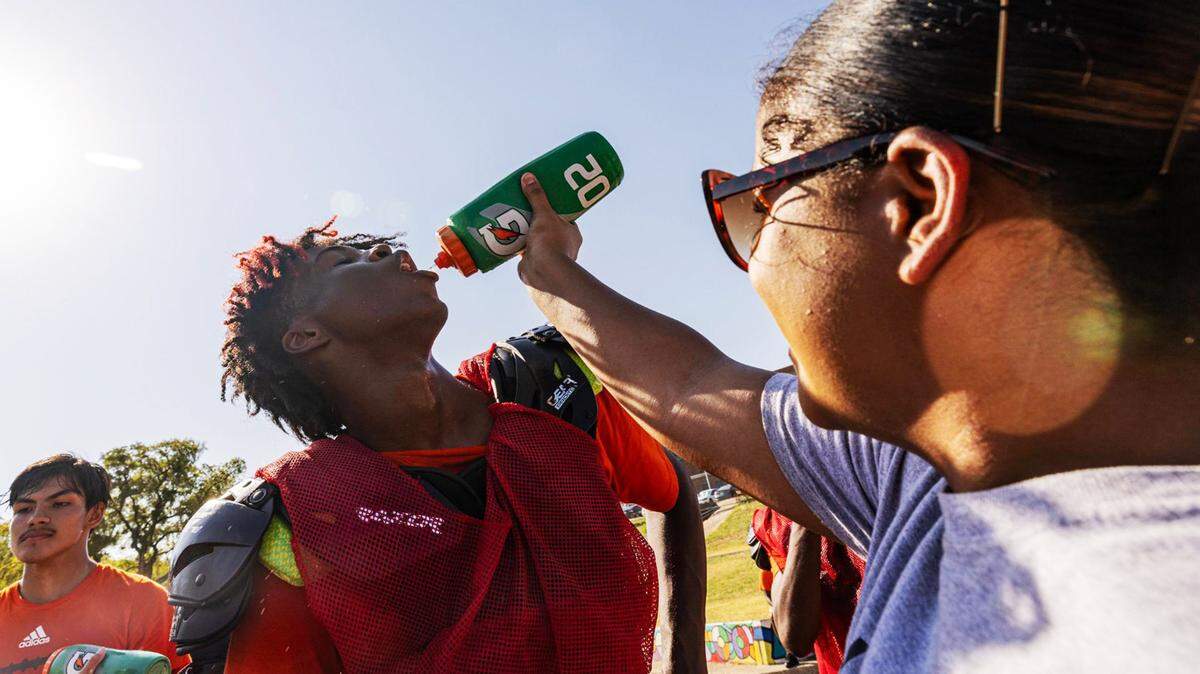
With the high school football season beginning on Aug. 24, teams are prepping to be competition ready while navigating a troublesome obstacle: the Texas heat.
On Wednesday, the National Weather Service issued an excessive heat warning with temperatures reaching 107 degrees in Fort Worth.
Triple digits are expected for the rest of the week.
How are programs without access to indoor practice facilities supposed to practice? Well, they have to wait until the wet bulb globe temperature index is below 92.1 degrees, according to the UIL’s heat stress rules and regulations.
The UIL website says the wet bulb globe temperature index, also known as WBGT, is “based on the combined effects of air temperature, relative humidity, radiant heat and air movement.” It can be measured with a WBGT device.
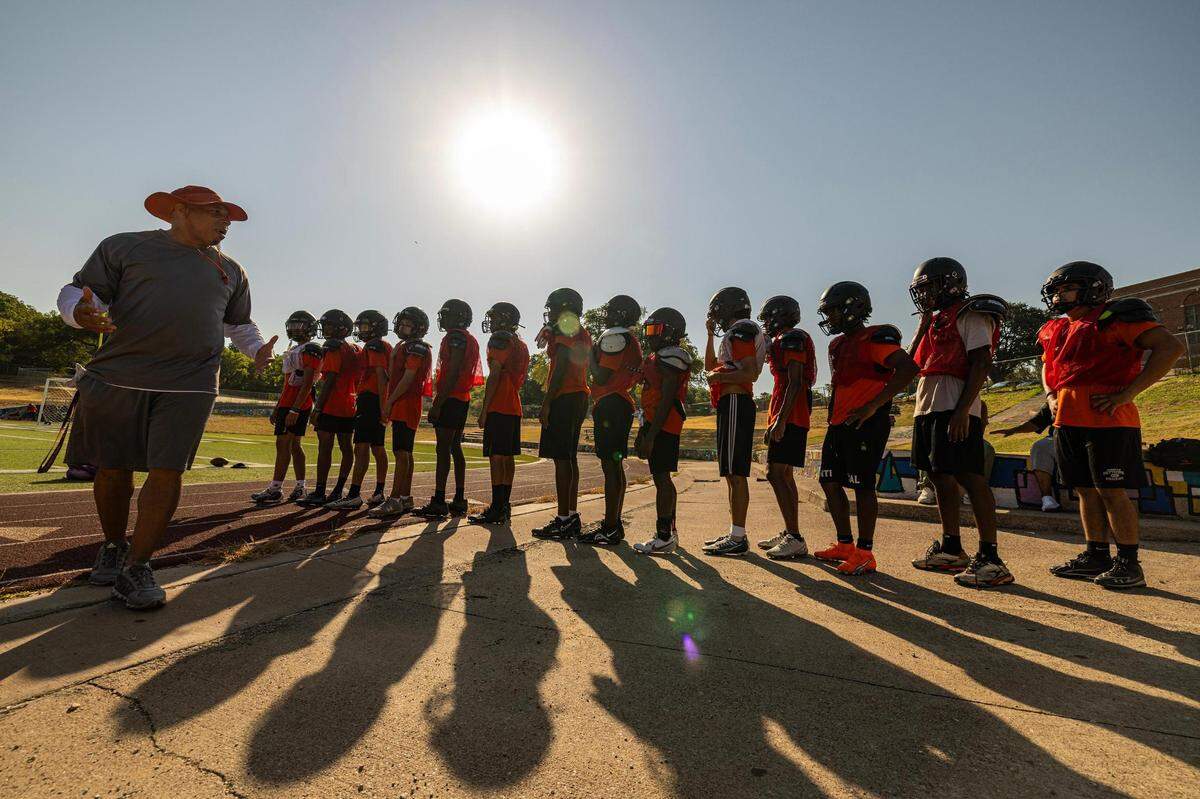
Joe Martin, the Texas High School Coaches Association President, said it’s incredibly important to follow the UIL’s guidelines. He said a goal is to ensure coaches have full awareness of the consequences of heat related illness.
Martin said there are likely coaches who do not follow every guideline, comparing the rules to speed limits.
“Is there anyone driving faster than 70 miles an hour on on the highway?” Martin said.
Martin urged coaches to pay closer attention to the guidelines, saying teams should adhere to every rule and regulation.
“Do everything you can to protect our kids,” Martin said.
Martin said he believes most of the Texas high school football coaches have the best interest of the kids at heart. He added that competitiveness and the desire to win should not come before the athletes’ safety.
“Most of our coaches do a great job of adhering to these guidelines,” Martin said.
It’s impossible for the UIL to enforce the rules and regulations in every high school, and Martin said it’s up to the coaches and trainers to protect the players.
“This is on you as a professional,” Martin said. “This is one you as a school district, but here are the guidelines, and it’s pretty simple to see it.”
Combating the heat
High temperatures can lead to heat cramping, heat exhaustion or heat stroke. The UIL requires a five day acclimation period that prepares athletes for the weather conditions and full contact.
It allows athletes to slowly build toward wearing full pads, building conditioning and resistance to the heat. Five days of acclimation, however, is not enough time to adjust, according to the National Athletic Trainer’s Association.
Dr. Leigh Romero, a sports medicine physician with Ascension Seton, said coaches should consider helping acclimate athletes by practicing indoors or finding shaded areas, if possible. She emphasized the importance of a 14 day acclimation period.
Romero said coaches and trainers should watch for muscle cramping, one of the main symptoms, as well as other signs.
“They’ll be profusely sweating,” Romero said. “They may have a headache, they may feel a little nauseous, a little lightheaded or dizzy.”
Romero said coaches and trainers should monitor players behavior for acts of confusion, which is a sign of heat stroke. Unlike heat exhaustion, heat stroke is a medical emergency.
If coaches can identify confused players, they can help save a life with with a quick cool down.
“They look like they don’t know where they’re at,” Romero said. “They don’t remember the plays. That’s when we start really getting concerned.”
The UIL’s safety policy’s recommends that athletes dealing with heat related illness are cooled as quickly as possible, preferably via ice bath. If the bath is not available, coaches can use cold, wet towels.
Martin said coaches have been advised to have cold baths, automated external defibrillators, and replacement fluids readily available.
Hydration is key
The UIL requires water to be readily available at all times.
“The old idea that water should be withheld from athletes during workouts has no scientific foundation,” the UIL website states.
Romero said coaches should go the extra mile when it comes to hydration. She mentioned coaches should make it a point to encourage athletes to drink water.
“We recommend kids hydrate before, during and after practice,” Romero said. “They should have availability to water at any point in the practice. They shouldn’t be restricted in any way and the coaches should have built in water breaks. “
The UIL says athletes should weigh themselves before and after practice to monitor the water lost.
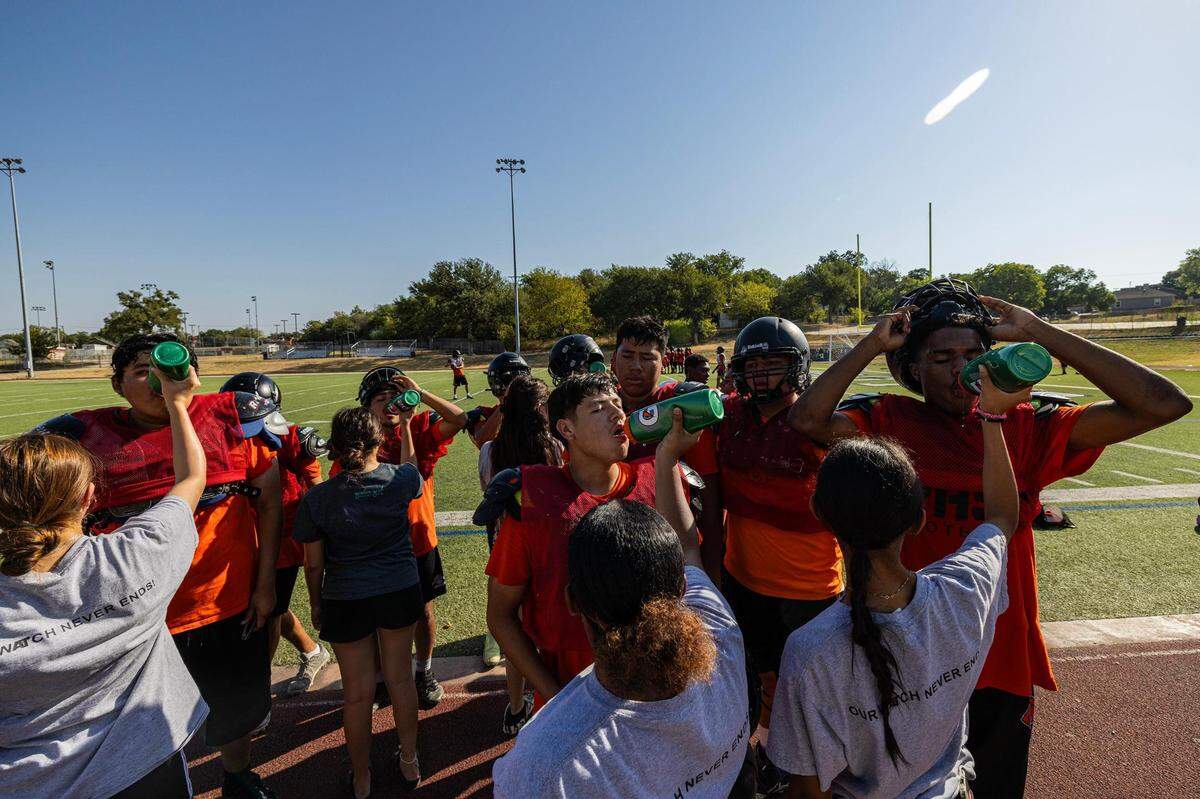
“Generally a three percent weight loss through sweating is considered safe and over a three percent weight loss is in the danger zone,” the UIL website states.
Romero said consuming a beverage with added electrolytes such as Gatorade or Liquid IV is more hydrating than water alone. She said you can consume these beverages before, during and after physical activity, but it’s important to monitor sugar intake.
Regardless of the type of beverage, the UIL recommends that athletes focus on replacing the fluid lost through sweating.
“Water breaks two or three times per hour are better than one break an hour,” the UIL Website states. “Probably the best method is to have water available at all times and to allow the athlete to drink water whenever he/she needs it. Never restrict the amount of water an athlete drinks, and be sure the athletes are drinking the water.”
This story was originally published August 10, 2023 at 2:43 PM.
CORRECTION: This story has been updated to reflect that the UIL prohibits outdoor activities when wet bulb globe temperature reaches 92.1 degrees.
.jpg)