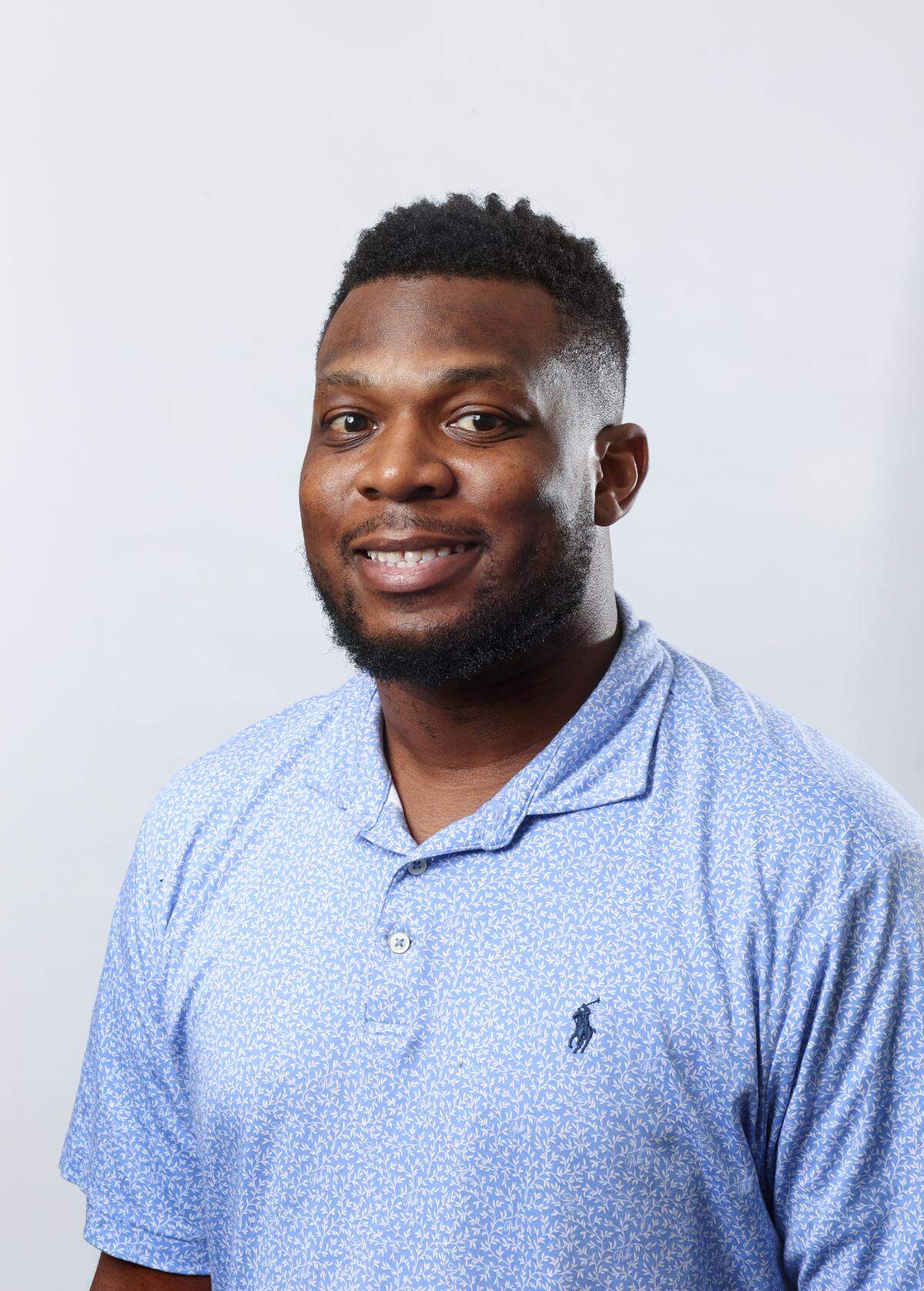
Analysis: What is TCU football getting with its new offensive coordinator?
TCU football finished a quick search for its next offensive coordinator with the announcement of the hiring of UConn’s Gordon Sammis on Thursday.
Sammis will arrive in Fort Worth after the Huskies’ bowl game on Dec 27 to replace Kendal Briles, who departed for South Carolina earlier this week.
Sammis’ arrival has met with mostly positive reviews after he helped UConn win 18 games the past two seasons as the offensive coordinator under Jim Mora.
In many instances, head coaches are quick to bring in a former assistant or old coaching buddy to fill an open vacancy, but TCU’s Sonny Dykes went outside his comfort zone to find one of the best candidates on the market.
Sammis has no ties to Texas or Dykes, but the willingness to bring Sammis in during a pivotal offseason shows that Dykes isn’t afraid to think outside the box to get TCU back into Big 12 title contention.
So what exactly is TCU getting in its new offensive coordinator? Let’s take a look at why the move could pay off for the Horned Frogs.
Trench specialist
The Horned Frogs were never able to find a consistent rushing attack under Briles, ranking 13th and 14th the past two seasons in the 16-team Big 12. It was a surprising result considering Briles’ track record of fielding elite rushing attacks and the amount of talent TCU had in the backfield.
The biggest culprit for the struggles was the play of the offensive line. TCU hasn’t produced an All-Big 12 offensive lineman since 2023 when Brandon Coleman made the second team before he was drafted in the third round by the Washington Commanders. The year prior, Steve Avila and Alan Ali earned first-team honors during TCU’s run to the national championship game.
The Horned Frogs need to get back to producing on the O-line, and Sammis is uniquely qualified in that regard.
A high school All-American, Sammis played offensive line for Virginia from 2003-07. He began his coaching career as a graduate assistant with Virginia from 2010-12 before getting his first offensive line coaching job at Columbia in 2013. Since then, Sammis has overseen offensive lines at Virginia Military Institute, William & Mary, Lafayette and UConn.
Sammis produced two NFL draft picks and an All-American at UConn while having another player sign in the NFL as an undrafted free agent, plus another who made it to the Canadian Football League. If Sammis can do that with the talent at UConn, what could he do in Fort Worth?
With the arrival of Sammis, the addition of Oklahoma State transfer Noah McKinney and starting guard Cade Bennett receiving another year of eligibility, TCU’s offensive line could see immediate improvement in 2026.
Balanced approach
Before Sammis took over as coordinator, Mora was just 9-16 with the Huskies, but Sammis’ balanced approach helped UConn spark an instant turnaround.
Historically, Sammis’ teams have excelled at running the ball, and that trend continued with UConn. In 2024, the Huskies rushed for 2,590 yards and passed for a 2,579. You can’t get more balanced than that.
What made the 2024 output even more impressive was that Sammis had to switch quarterbacks midseason. Oklahoma transfer Nick Evers was named the starter out of camp, but struggled with five touchdowns and five interceptions. Sammis turned to Joe Fagnano, who came in and finished with 20 touchdowns and four interceptions, and UConn had three running backs finish with more than 670 rushing yards. The Huskies averaged 31.9 points per game last season.
The offense was even better this season as Sammis also showed he could help develop quarterbacks. Fagnano improved across the board, completing 69% of his passes, throwing for 3,448 yards, 28 touchdowns and just one interception. Fagnano’s production could be a major selling point to Josh Hoover, whom TCU is expecting to field lucrative offers from other teams.
Briles’ offense traditionally operated at its best with a dual-threat quarterback like K.J. Jefferson. It always felt like that aspect of the Briles offense was missing, with Hoover being a more traditional pocket passer like Fagnano. Sammis made the game easy for Fagnano, and he could do the same with Hoover. The Huskies also had a 1,000-yard rusher in Cam Edwards and a Biletnikoff Award finalist in wide receiver Skyler Bell. UConn averaged 36.9 points per game this year.
Versatile scheme
Dykes has long been associated with the Air Raid offense, and while Sammis uses elements of that, he runs more of a multiple scheme that relies on different formations. In the Huskies’ win over Duke, UConn used standard spread formations from the shotgun, but the Huskies also had success with Fagnano lining up under center, along with multiple plays from the pistol formation.
Beyond different formations, Sammis has shown a tendency to be able to create wide open passing lanes with the alignment of his receivers and using motion. Against the Blue Devils, the Huskies had three receivers lined up to the left with the inside slot receiver faking a bubble screen. The second receiver ran a slant into the wide open lane in the end zone after the defender was forced to commit to the screen.
Later in the game, UConn was lined up in the pistol and brought a receiver in motion across the formation. Instead of just running a route into the flat, the receiver cut up field at the snap and found himself matched up with a linebacker. The wideout easily won that matchup with a double move for a chunk play.
These are just glimpses of what Sammis’ offense looks like when it’s operating at a high level. As for it how fared against Power Four competition, the Huskies scored 37 against Duke, 38 against Boston College and 20 against Syracuse in overtime this season.
A different last name
It was always going to be difficult for Briles to be fully embraced in Fort Worth due to his ties with Baylor and its scandal under his father, Art. Unless TCU was winning Big 12 titles or ranking as a top-15 offense Briles’ tenure was always going to be one that polarized the most vocal parts of TCU’s fan base. The split will probably end up being the best move for both parties.
Many fans are already back fully engaged with the program, and now the focus can solely be about what’s happening on the football field and not what happened in the past. It represents a clean slate to start over for Dykes after he used a lot of his goodwill to hire Briles after the national championship game in 2022 to replace Garrett Riley.
As for Briles, he’ll walk into a situation in the SEC that comes with risk if the Gamecocks have another bad year. But if he revitalizes quarterback LaNorris Sellers, that could be what he needs to finally land a head coaching gig.
The TCU offense had its flaws under Briles, but ultimately it was productive and a good scheme. The question for Sammis will be, can he elevate the unit to the elite level it reached in 2022?
This story was originally published December 12, 2025 at 1:56 PM.