Analysis: These fatal flaws could hold TCU football back from Big 12 contention
It’s been said that the NBA playoffs are the ultimate truth revealer; it’s the stage where the superstars separate themselves from the All-Stars.
Well, the same thought process could apply to college football and conference play. There are a lot of teams that look like contenders in the nonconference portion of their schedules with a 3-0 or 4-0 start. But what happens when you start playing teams that are equally talented and more familiar with your personnel — and, let’s not forget, more games on the road?
After defeating Colorado 35-21 on Saturday, TCU sits at 4-1 and 1-1 in the conference two games into its Big 12 slate. Based on what we’ve seen, the Horned Frogs can win a lot of football games this season with quarterback Josh Hoover and an opportunistic defense that has shown a tendency to make clutch plays when needed.
But the Horned Frogs have a number of critical flaws that will hold the program back from its goals of contending for a Big 12 title unless they’re addressed.
Lack of improvement on the ground
It’s apparent that the 258 rushing yards TCU produced against North Carolina were more about how bad the Tar Heels are than any improvement the Horned Frogs made with their rushing attack. North Carolina is battling with Oklahoma State as the worst Power Four team in the country, and the Horned Frogs haven’t come close to replicating that performance since.
TCU failed to rush for more than 150 yards against Abilene Christian or SMU and has been held under 100 yards in back-to-back games. Yes, some of that has to do with the injury to Kevorian Barnes in the first half of the win over Abilene Christian. Barnes missed the SMU and Arizona State games and most of the first half against Colorado before he finished the win with 48 yards on 16 carries.
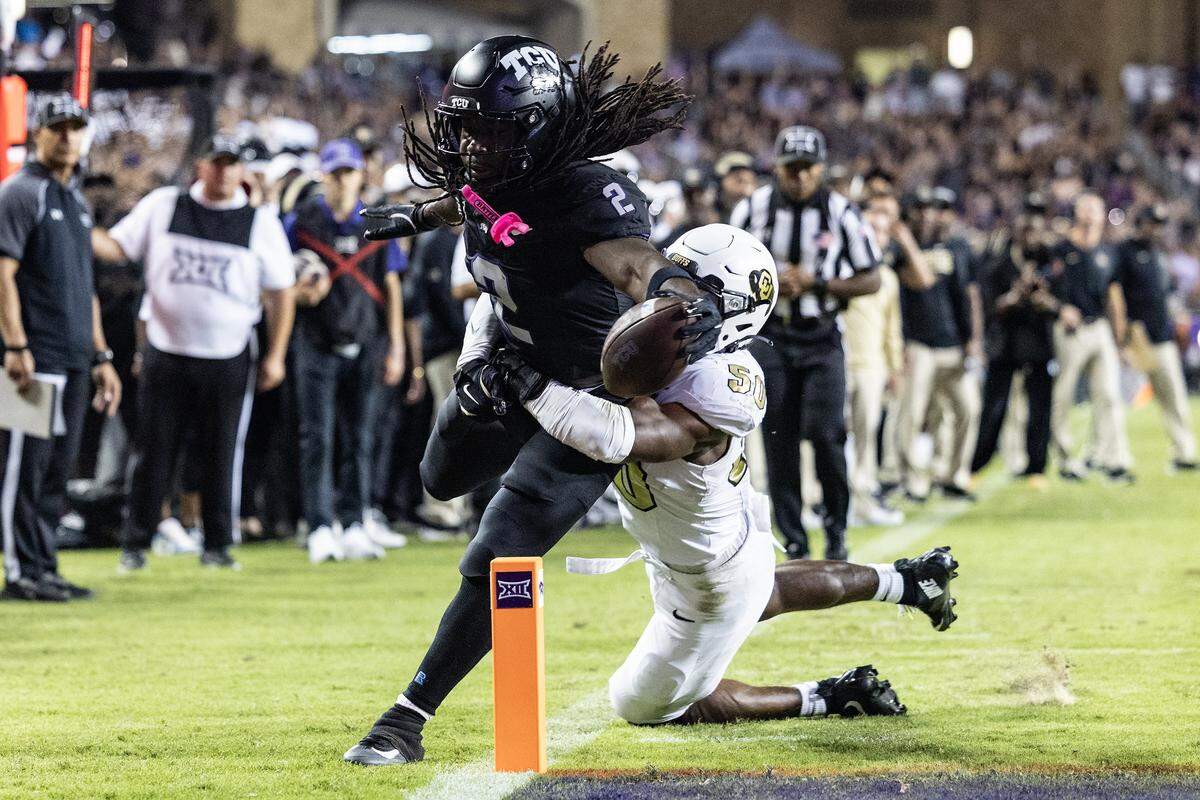
Barnes is the most powerful running back on the team, which allows him to shed more tackles, and his jump cut also has helped him finding running lanes despite the offensive line’s inconsistencies with creating them. But Barnes, and the rest of the running backs, are often forced to make a defender miss in the backfield or at the line of scrimmage.
Despite Colorado being one of the worst run defenses in the country, the Buffaloes lived in TCU’s backfield, with unblocked defenders crashing down and Colorado’s defensive line winning the battle at the line of scrimmage most of the night. TCU had to scrap and claw for 94 yards on the ground, and it begs the question, if you can’t run on Colorado, how will you be able to run on BYU, Iowa State or even Cincinnati?
Last year, the Horned Frogs were bailed out by the emergence of Savion Williams as a wildcat quarterback/running back, but Williams was one of the best athletes in the country and was selected in the third round of the 2025 NFL draft.
It also doesn’t help that former Horned Frog Cam Cook is on pace to rush for nearly 1,500 yards at Jacksonville State. Yep, it’s a drop down in competition, but it still shows that Cook wasn’t the only issue with the run game last season.
Ultimately, it’s not about who’s running the ball for TCU. The Horned Frogs’ offensive line must improve quickly, because as good as Hoover and his receivers are, TCU’s passing game isn’t elite enough to get to the Big 12 title game without more help from the rushing attack.
Shaky third-down defense
Despite making strides in key areas like the run defense and overall depth, TCU’s third-down defense now has to be considered a problem. The Horned Frogs have been able to overcome it by forcing 2.5 turnovers per game against FBS opponents, which is No. 2 nationally behind only Texas Tech.
Creating turnovers is important, but so is getting off the field, which TCU hasn’t been able to do consistently. After allowing Colorado to convert 9 of 14 third-down opportunities, the Horned Frogs rank 15th in the league in third-down conversion defense. Opponents are converting 44.3 of their chances on third down, and only Oklahoma State has been worse on third down this season.
So what’s been the issue? It’s a combination of shaky play at cornerback and a pass rush that is at its best when it sends more than four. The Horned Frogs have a strong core at safety with Bud Clark, Jamel Johnson, Austin Jordan and Kylin Jackson, but the cornerbacks have been a bit of a disappointment.
One of the reasons TCU ranks near the bottom of the league with 33 penalties is because nearly a quarter of them were pass interference calls on the cornerbacks. The Horned Frogs’ corners have struggled in 50-50 situations against receivers starting with the Abilene Christian game, and it hasn’t improved with the step up in competition. There were two more pass interference calls against Colorado that kept drives alive.
Too often this season TCU has allowed third downs to be converted with chunk plays through the air. The cornerback unit is dealing with injuries, with Avery Helm and Elijah Jackson missing most of the season, but the unit hasn’t lived up to expectations yet.
It’s not all on them, though, as TCU’s primary pass rush has been inconsistent. The Horned Frogs are third in the Big 12 in sacks, but the three sack leaders are Kaleb Elarms-Orr, Namdi Obiazor and Jackson. Two linebackers and a safety leading in sacks shows how much the defense is relying on extra defenders to generate pressure.
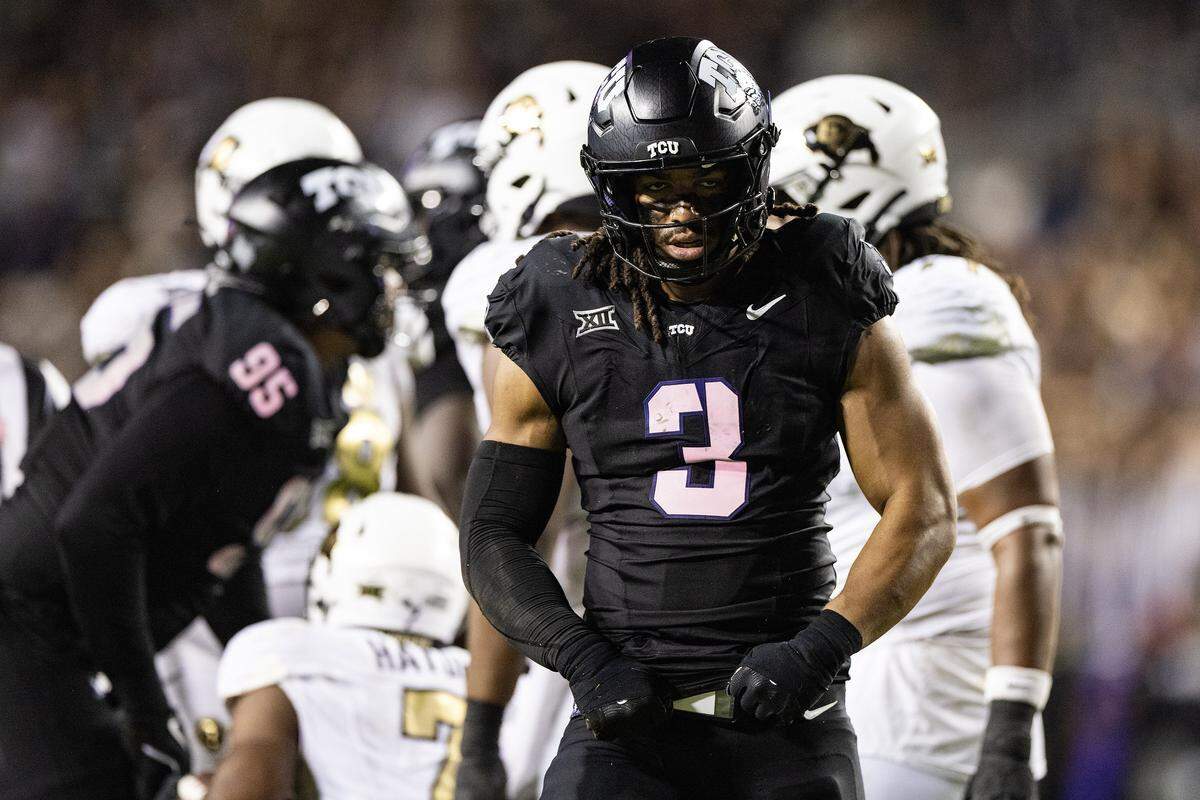
It’s always a gamble sending an extra man after the quarterback and leaving your corners on an island, but it feels like TCU has to do that more often than not. The four-man rush improving would allow more defenders to drop back in coverage and take pressure off of a banged up cornerback room.
TCU’s defense deserves credit for its playmaking ability, creative blitz packages and overall clutch play in key moments most of the season. But there are better offenses waiting on the schedule, and the defense must be able to consistently get off the field if TCU wants to contend for a conference title.
Special teams
TCU is in bad shape on special teams, and it could eventually cost the Horned Frogs a game.
Backup kicker Nate McCashland missed a chip shot field goal from 30 yards against Colorado and also had a kickoff go out of bounds, which set up a touchdown drive for the Buffaloes.
It was telling that the Horned Frogs opted to throw a jump ball to Eric McAlister on fourth-and-6 to ice the game instead of kicking what would’ve been a 38-yard field goal. How close would McCashland need to be for TCU to trust him to make a field goal? Inside the 10? The 15? The lack of a reliable kicking game will only put more pressure on an offense that can’t run the ball.
It’s unclear how long starting kicker Kyle Lemmermann will be out, but the impact of his injury has been more significant than anticipated.
Despite these flaws, TCU is fully capable of matching last season’s win total of nine games and even exceeding it. Aside from Texas Tech, everyone in the Big 12 has question marks and is beatable. But the margin for error for playoff contention is razor thin, especially in a conference that won’t get the benefit of the doubt like the SEC or Big Ten.
With a loss already on TCU’s resume, one game is all it takes for the Horned Frogs to go from contending for the College Football Playoff to settling for a spot in the Alamo or Liberty Bowl.