
Australian Open could signal beginning of the end of Big 4
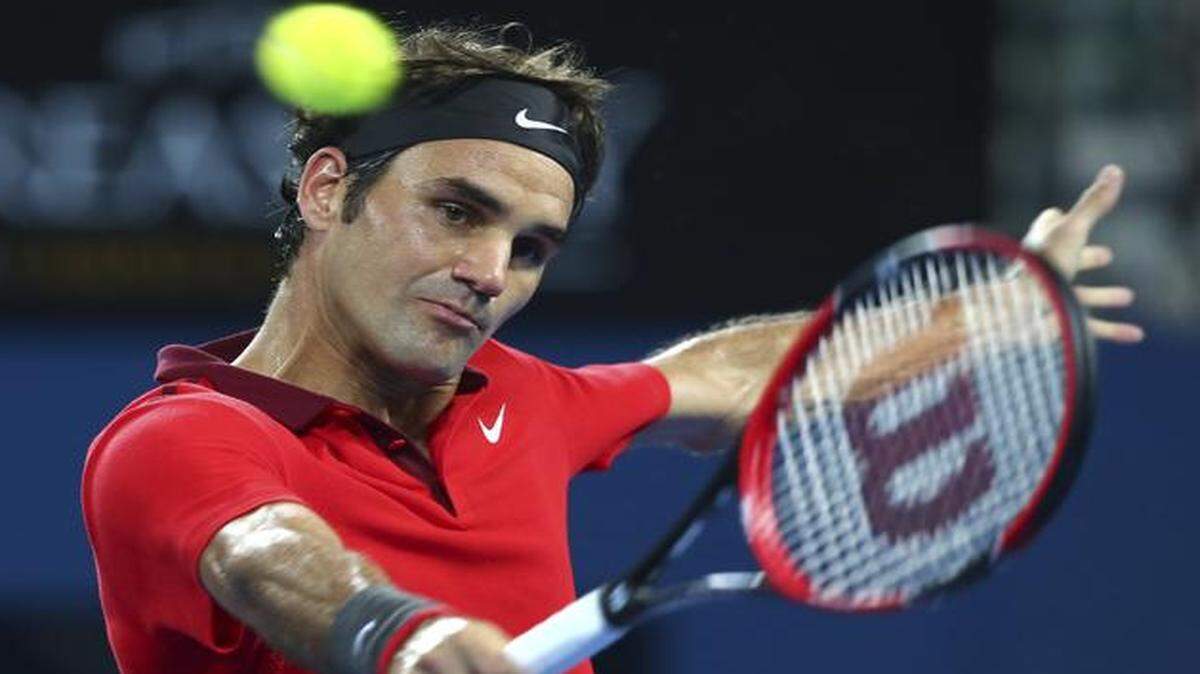
Could this be the first year since 2003 that a member of the Big 4 — Roger Federer, Rafael Nadal, Novak Djokovic and Andy Murray — doesn’t win one of the four tennis majors?
It’s possible. All four players have the talent to win any given tournament, but that appears to be increasingly difficult for them. Age, injuries and improving competition are slowly changing the landscape at the top of the sport — albeit at a glacial pace.
The first chance for one of the four to prove they are still the kings of the court begins Sunday night (U.S. time) with the Australian Open, which runs through Feb. 1 in Melbourne.
Last year, Nadal won the French Open for a record ninth time and Djokovic added his second Wimbledon crown, but Stan Wawrinka and Marin Cilic finally cracked the Grand Slam ceiling. It was the first time the sport had two first-time Grand Slam champions in a year since 2005, when Marat Safin won in Melbourne and Nadal won his first title at Roland Garros.
Federer has a record 17 majors to his credit and defined the past decade, but the 33-year-old Swiss is becoming less of a force on tour. His last Grand Slam title came in 2012 at Wimbledon, but he has been slow to fade from the scene, a fact highlighted last week in Brisbane, where he joined Jimmy Connors and Ivan Lendl as the only players in the Open Era to win 1,000 career singles matches.
“To think that this great athlete at the top of the men’s game has two sets of twins and is juggling it all with his usual incredible class just means that we’re lucky to have him, and we’re lucky to still have him as a great force,” ESPN commentator Pam Shriver said during a conference call Friday. “He’s entering the year as a 2 seed, and it wouldn’t surprise me if he was able to win another Australian Open. He’s not my pick, but it’s certainly possible.”
For Nadal, his mastery of the French Open might make that Grand Slam the hardest for an outsider to crack. Only once in the past decade has the Spaniard not kissed the trophy in Paris. Injuries and illness, however, have been the chink in the Spaniard’s armor. His physical style of play has taken a toll, first on his knees, then a wrist kept him from defending his U.S. Open title last year. Tack on an angry appendix that cut his 2014 season short, and Nadal will be in comeback mode in Melbourne.
“He’s very, very underdone coming into the Aussie Open,” ESPN commentator Darrin Cahill said. “The first two or three matches, obviously, all eyes will be on Rafa to see how his game is. … His game is rusty. … He’ll be vulnerable in the early rounds. But you know Nadal, if he can find his legs and find his way into the second week, he becomes more and more difficult to beat as time goes on.”
Top-ranked Djokovic is closer to his prime than either Federer or Nadal, but the loss to Wawrinka in the finals last year in Melbourne and falling to Nadal at Roland Garros prove Djokovic is beatable. Still, Djokovic won 61 of 69 matches last year and is 280-35 in the past four years.
“Three wins in the last four years down here for Novak, it’s been a remarkable love affair that he’s had with the Australian Open, and his game suits the conditions down here incredibly well,” Cahill said. “He is the man to beat. It’s a little bit like — not quite as strong, but a little bit like — the French Open when we talk about Rafa. Until somebody can prove they can beat him here, he is the man to beat in my eyes.”
And Murray, who underwent back surgery last year and slipped to No. 12 in the rankings, has faded since his breakthrough victories at the 2012 U.S. Open and 2013 Wimbledon. The 27-year-old Scot will also be looking to make a comeback in 2015.
But the most intriguing storylines of 2015 might not involve the Big 4 at all. This could be the year a new wave of talent steps into the spotlight. Canadian Milos Raonic, Bulgarian Grigor Dimitrov and Japan’s Kei Nishikori proved in 2014 that the next generation is inching closer.
“I feel like [Raonic] made major steps forward in feeling like he belonged on the big stage, in the big situation [last year],” Cahill said. “We saw him move to his first-ever major semifinal at Wimbledon — he got blown away by Roger. But even since [Wimbledon], he’s made several adjustments to his game. … So you’re seeing constant improvement in Milos’ game.”
And there is a group of journeymen such as Tomas Berdych and David Ferrer who will be looking for that magic moment that Wawrinka and Cilic experienced in 2014.
Yes, it’s possible the Big 4’s reign is coming to an end, but greatness has a way of hanging on.
The new breed
Milos Raonic: The No. 8-ranked Raonic is 6-foot-5, 219 pounds with a big serve (1,093 aces in 2014) and penetrating inside-out forehand. The 24-year-old has made gains in his movement and his backhand, but he won just one title last year (Washington) and reached only two finals (Paris Masters and Toyko). Raonic is 1-16 against Djokovic (0-4), Federer (1-7) and Nadal (0-5), but he has a winning record against Murray (3-2) and Berdych (3-1).
Grigor Dimitrov: The 23-year-old Bulgarian is considered by many to be the future face of the game. Dimitrov broke into the Top 10 for the first time last year before slipping to No. 11 to begin the year. He went 50-18 and won three titles in 2014. He reached the semifinals at Wimbledon in July and the quarterfinals a year ago in Melbourne, but he has failed to advance past the fourth round in 15 other Grand Slam appearances and is 3-17 against the Big 4, including 2-4 against Murray.
Kei Nishikori: The 24-year-old Nishikori is coming off a breakthrough season in 2015 that could have been even more impressive. His year was highlighted by reaching his first Grand Slam final at the U.S. Open, and he cracked the Top 10 for the first time on his way to No. 5. That all came after a back injury forced him to withdraw in the semifinals in Miami and retire while leading Nadal in the finals in Madrid. At the U.S. Open, Nishikori defeated Raonic, Wawrinka and Djokovic before falling to Cilic. He is 5-16 against the Big 4.
Americans to watch
John Isner and Sam Querrey remain the highest-ranked American men, but two others have jumped into the picture in 2014 — two-time NCAA champion Steve Johnson and Jack Sock. Johnson, a 25-year-old Californian, made a huge leap last year, shooting up the rankings from No. 160 to start the year to a career high of No. 37 by year’s end. And there’s plenty of potential for upward mobility in Johnson’s immediate future. He went just 1-4 in majors last year and spent the early part of the season playing at the Challenger level. He won the Challenger of Dallas in February and reached the finals in Irving in March. Right on Johnson’s heels is 22-year-old Sock, who is ranked No. 41 and finally starting to achieve the results many expected of him when he turned pro at 18. Sock’s ranking took a big jump with semifinal showings in Newport, R.I., and Atlanta and a third-round appearance at the Shanghai Masters. Both Johnson and Sock worked last year with USTA national coach and former TCU player Craig Boynton.
Women’s field
The women’s field game continues to be wide open, even though 18-time Grand Slam singles champion Serena Williams is ranked No. 1 and still playing some of the best tennis of her career.
Williams has won a Grand Slam title in seven of the past eight years, including two titles in four of those years. Williams has won the Australian Open five times, but she hasn’t won it since 2010, and the field is full of players looking for any opening to slip through.
Leading the list of potential favorites are 2008 winner and No. 2-ranked Maria Sharapova, Romania’s Simona Halep, who is No. 3 and has won nine titles in the past two years, and Wimbledon champion and No. 4 Petra Kvitova.
Others include 2014 comeback player of the year Ana Ivanovic at No. 5, Agnieskzka Radwanska at No. 6, Canadian rising star Eugenie Bouchard at No. 7 and Caroline Wozniacki at No. 8.
But the biggest threat to win the year’s first major might not even be seeded. Two-time Australian Open champion Victoria Azarenka is on the comeback trail in 2015 after a series of injuries spoiled her 2014 campaign and dropped her ranking to No. 41. She is unseeded at a Grand Slam for the first time since 2007.
“The important thing is to go out there and play, seeded or unseeded,” Azarenka told the Melbourne Herald. “What’s important is to get ready, prepare, control what you can control, and that’s what I’m gonna do.”
Americans to watch
While Serena stands at the top of the women’s game, her sister Venus is proving she’s not ready to pack up the rackets . Venus arrives in Melbourne ranked No. 19 and coming off a strong showing last week, when she defeated Wozniacki 2-6, 6-3, 6-3 in the finals in Auckland, New Zealand. The next American women are Varvara Lepchenko at No. 30, Madison Keys at No. 33 and Sloane Stephens at No. 34. For the 21-year-old Stephens, 2014 was a step back after bursting on the scene with a semifinal appearance at the Australian Open in 2013 and climbing to a career high of No. 11. A wrist injury slowed her progress last year, and she will be looking to bounce back in 2015.
Notable
Early injuries are taking a toll on some of the game’s top players. Cilic, the defending U.S. Open champion, is out of the Australian Open with a shoulder injury and Frenchman Jo-Wilfried Tsonga is sidelined with forearm inflammation. Former U.S. Open champion Juan Martin del Potro pulled out Saturday, further delaying his comeback after missing most of last season after surgery on his left wrist.
Rusty Hall, 817-390-7816
Twitter: @RustyHall10s
Australian Open
Sunday-Feb. 1, Melbourne, Australia
Defending champions: Stan Wawrinka of Switzerland; Li Na of China (retired).
Former men’s champions in the field: Novak Djokovic, 2008, 2011, 2012, 2013; Roger Federer, 2004, 2006, 2007, 2010; Rafael Nadal, 2009.
Former women’s champions in the field: Serena Williams, 2003, 2005, 2007, 2009, 2010; Victoria Azarenka, 2012, 2013; Maria Sharapova, 2008.
New arena comes online: The entire Australian Open can now be played indoors, with the completion of a third retractable roof at Melbourne Park. Margaret Court Arena joins Rod Laver Arena and Hisense Arena with a new retractable roof allowing play to continue in extreme heat, rain or hail. The roof on Margaret Court Arena is the world’s fastest — able to open or close in five minutes.
TV coverage
▪ ESPN2 and the Tennis Channel will present daily and overnight telecasts from Melbourne (primarily starting at 8 p.m.) through the women’s semifinals, when the action switches to ESPN. Approximately 40 additional hours will be aired on ESPN2 during the afternoon from the overnight telecasts.
▪ ESPN3 will offer nearly 800 hours from up to 13 courts, adding nearly 300 hours and from six additional courts than in 2013. ESPN3’s coverage starts at 6 p.m. over the first 11 days of the tournament .
This story was originally published January 17, 2015 at 8:57 PM with the headline "Australian Open could signal beginning of the end of Big 4."