Who’s really to blame for deadly ICE clashes in our streets? You won’t like the answer | Opinion
AI-generated summary reviewed by our newsroom.
- Polarization fuels escalation on immigration, pushing parties to extreme stances.
- Political leaders and campaigns drifted further, blocking compromise on reforms.
- Economic demand for cheap labor and political avoidance created policy gaps.
Whichever part of the fatal ICE shooting in Minnesota that shocks you the most probably depends on where you stand politically. That’s not new in America. Polarization is the defining trait of the era.
But it comes with a dangerous, less-explored corollary: escalation. It’s not enough to separate ourselves on issues, temperament or even lifestyle. Some political participants must constantly move further apart, perhaps on no issue more than immigration.
This is not to convict or absolve either federal agent Jonathan Ross or Renee Good, the driver he shot. It’s easy to misread or over-interpret video evidence, and for now, it appears either could have made choices that prevented the tragic outcome. But it’s useful to consider how they ended up together on that icy Minneapolis street.
Polarization requires candidates and activists to position themselves as far as possible from the other side. Take abortion. It wasn’t long ago that, while passions in the ardent pro-life and pro-choice camps ran high, there was common ground for many people.
Now, the most fervent on the right want to punish women who seek or obtain an abortion. Their counterparts on the left want to celebrate the procedure with pride and remove many, if not all, legal obstacles to it. Both are outnumbered, but they drive the conversation. At a minimum, the distant poles prevent leaders from compromising to solve problems because they have outsized influence in primary elections.
Why compromise on immigration was avoided
This has been especially true on immigration, a top issue in American politics for two decades. Escalation makes compromise impossible, even where it seems there is consensus. For years, it would have made sense to pair a Democratic priority — help for the “Dreamers,” young people brought to the country illegally but largely raised here — with the Republican drive for tighter borders. Both sides held out to reserve the issue as an edge in a campaign or because they foolishly insisted on trying to solve every immigration problem at once.
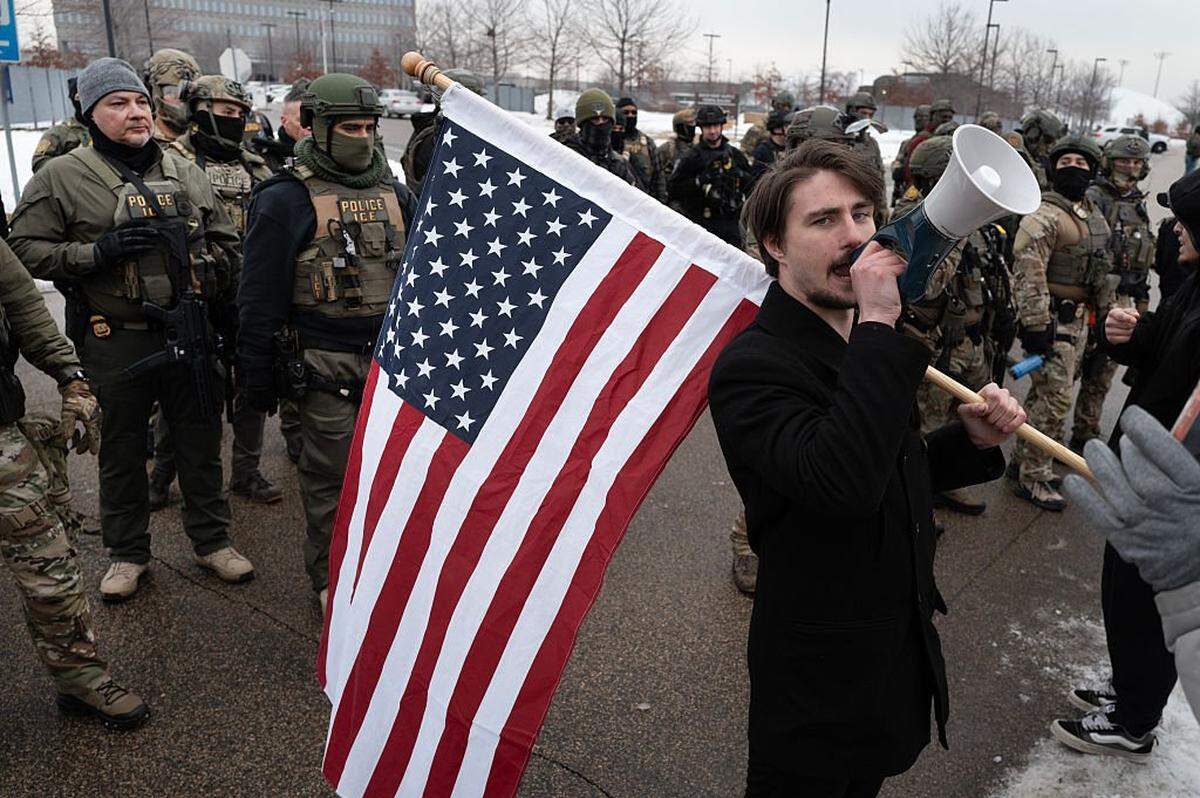
When obvious steps aren’t taken, the majority in the middle disengages, and the poles drift even more. On the right, that meant a push to purge the country of every illegal resident, an impossible task. For some, toughness evolved into cruelty. When Donald Trump returned to power, ICE operations took on a menacing tone and seemingly random approach, as if the point was to make even otherwise law-abiding immigrants go underground or “self-deport.”
Now, taking a hard-line on immigration for some means questioning the idea that someone born here is automatically a citizen, or demanding that anyone here who’s foreign-born, even naturalized citizens, should be scrutinized anew.
On the left, candidates trip over themselves to prove themselves more immigrant-friendly than thou. Some Democratic leaders declare the very act of enforcing immigration law illegitimate. In 2020, every major Democratic presidential candidate declared that unauthorized entry should not be considered a crime, and most embraced social benefits even for those not authorized to be in the country.
In the 2024 campaign, Trump’s “they/them” ad on Kamala Harris’ stance on taxpayer funding for gender-transition treatment helped cast her as far too progressive for most of the country. Most forget, however, that her stance was more radical than it seemed. During the 2020 campaign, she endorsed government-provided surgeries and other care even for those detained as unauthorized immigrants.
It’s hard to imagine escalating beyond that, but President Joe Biden pulled it off. As detailed in a seminal New York Times report that I recently wrote about, Biden embraced open-door policies that his advisers largely agreed would cause a flood of asylum-seekers and illegal entrants at the border. They were right, and it cost Biden dearly. It foreclosed the possibility of addressing illegal immigration through anything other than a closed border and mass deportations.
Biden’s policy became a crucial pivot point. The admittance of millions of people without a thought about the economic and social consequences stoked anger over immigration, making hard-liners of people who might have been open to a milder policy.
Ultimately, Trump deserves the direct blame for the atmosphere now. He and his aides encourage the very aggression that so many are protesting. But Biden opened the door.
It’s not just the politicians. We’re all to blame
The politicians aren’t alone, though. The issue festered with no solution for so long because we all embraced the economic realities that came with illegal immigration. Businesses lobbied to keep a steady supply of cheap labor flowing. Many of us enjoyed the affordability of house-cleaning and lawn-maintenance services that might otherwise be out of reach for middle-class families.
Housing was cheap for so long because low-paid construction workers were always available — from Mexico, then Central and South America. There’s an inexhaustible supply of workers from Asia and Africa who, if they can just get here, live and work in the shadows and are paid (some say exploited) accordingly.
We didn’t demand that our leaders make difficult choices, so they didn’t.
Escalation built up a ton of kindling. If the other side gets its way, we are told, it’s the end of America as we know it.
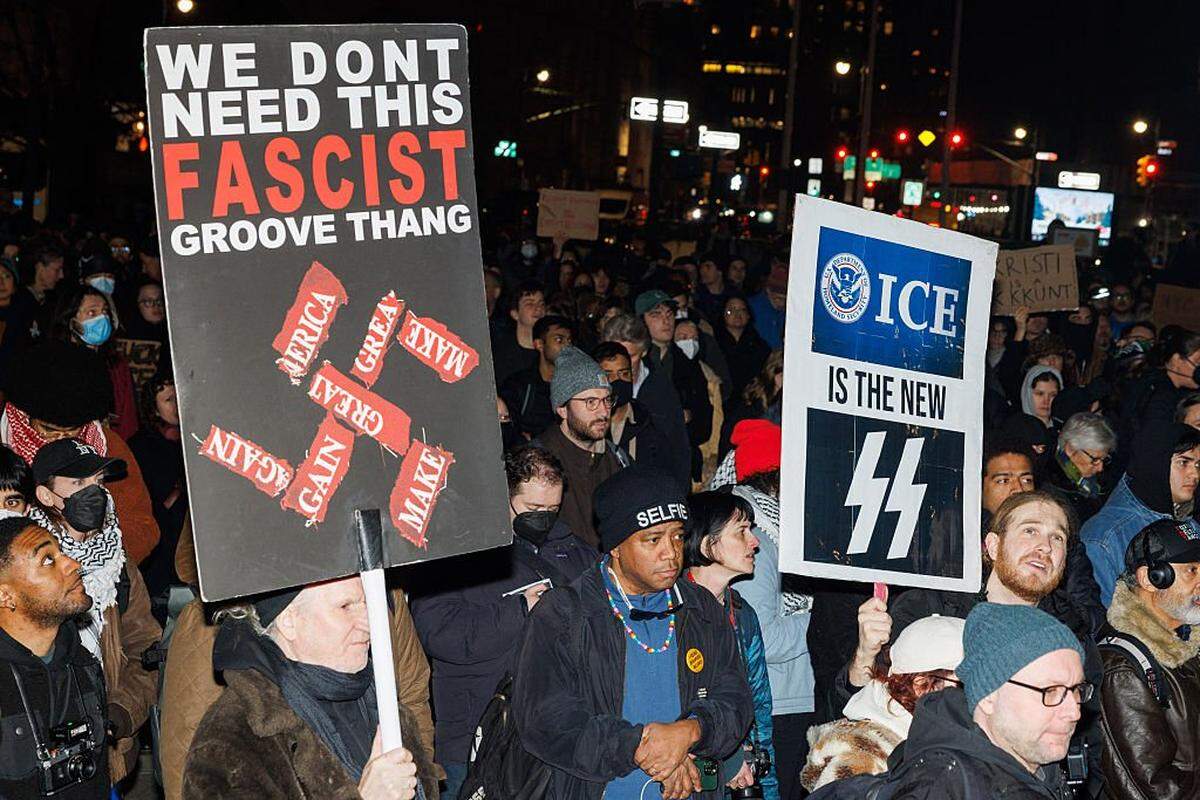
It’s not just that Biden miscalculated how much illegal immigration the country could bear; he wanted, opponents said, to create a new permanent underclass of voters to prevent any future Republican victory. It’s not just that Trump is after immigrants who pose no immediate danger to anyone; it’s that he has stormtroopers in the street in preparation for a dictatorship.
Given those messages, it’s a wonder that more of us aren’t in the streets protesting. And for those who are, the stakes seem high enough to justify dangerous things, like parking your car in front of a police operation or pulling your service weapon instead of backing away and de-escalating.
If it all sounds baffling to you, congratulations, you have avoided the polarization virus. But escalation? We’re all catching a fever from that.
This story was originally published January 10, 2026 at 4:44 AM.